
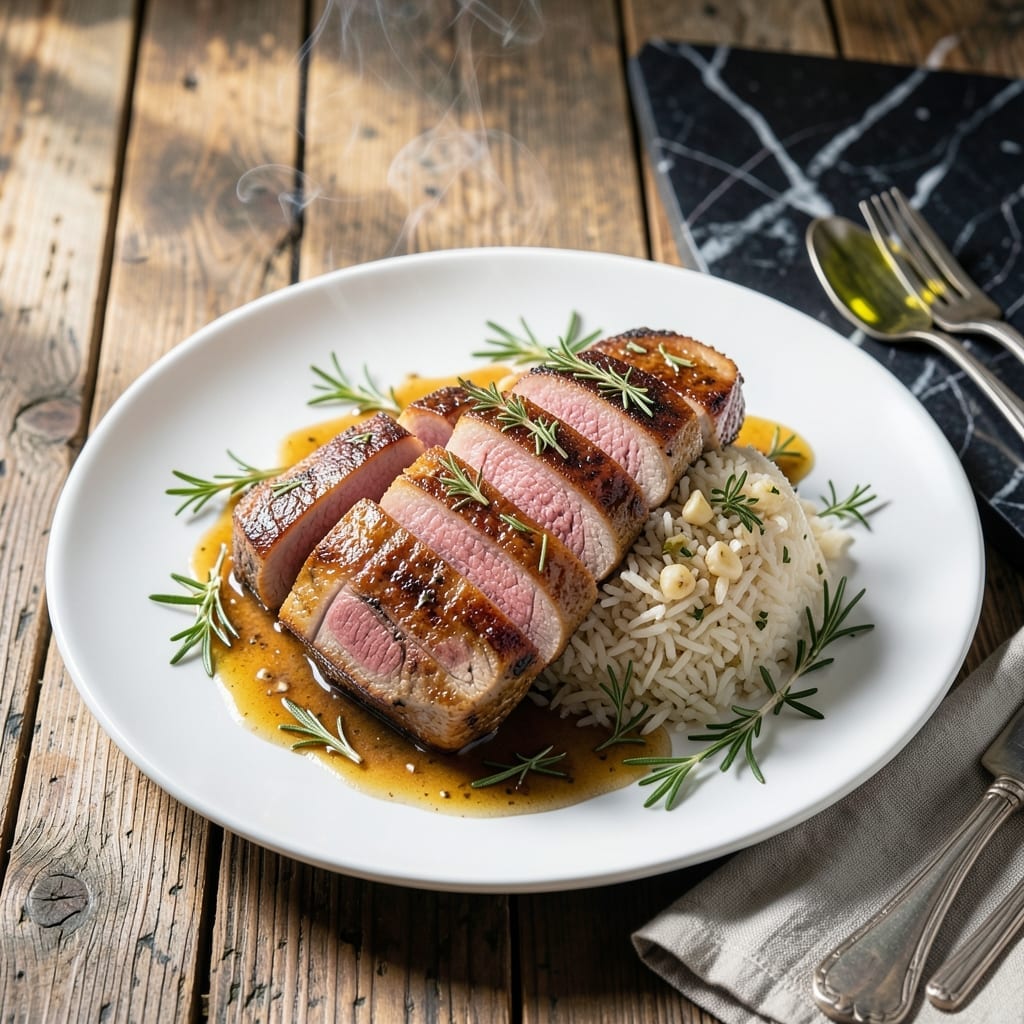
This one-pan dinner combines tender pork tenderloin with perfectly cooked rice, all infused with aromatic garlic and herbs. The beauty lies in its simplicity—minimal prep, maximum flavor.
I’ve refined this method to ensure the pork stays juicy while the rice absorbs every bit of savory goodness. A single pan means easy cleanup, and the garlic-herb blend elevates both the meat and grains effortlessly.
The result is a balanced, hearty meal with tender pork slices nestled alongside fluffy, flavorful rice. It’s a complete dish that feels special but comes together with ease.
Ideal for weeknight dinners or casual gatherings, this recipe delivers consistent, delicious results every time.
Ingredients for Pork Tenderloin and Rice
Simple pantry staples and fresh herbs create this elegant one-pan meal with ease.
| Ingredient | Amount | Notes |
|---|---|---|
| Pork Tenderloin 🥩 | 1 ½ lb | Trimmed of excess fat |
| Long-Grain White Rice 🍚 | 1 ½ cups | Uncooked, rinsed before use |
| Chicken Broth 🥣 | 2 ½ cups | Low-sodium preferred |
| Garlic Cloves 🧄 | 6 cloves | Minced finely for even distribution |
| Fresh Rosemary 🌿 | 2 tbsp | Chopped, stems removed |
| Fresh Thyme 🍃 | 2 tbsp | Leaves stripped from stems |
| Olive Oil 🫒 | 2 tbsp | Divided for searing and finishing |
| Unsalted Butter 🧈 | 2 tbsp | For richness at the end |
| Kosher Salt 🧂 | 1 ½ tsp | Diamond Crystal preferred |
| Black Pepper 🌶️ | 1 tsp | Freshly ground for best flavor |
| Yellow Onion 🧅 | 1 whole | Diced medium for even cooking |
| Dijon Mustard 🟡 | 1 tbsp | For depth in the sauce |
| Dry White Wine 🍷 | ½ cup | Optional for deglazing pan |
The pork tenderloin quality is paramount. Whole Foods or Costco carry excellent options—look for pieces with even coloring and minimal fat. The rice should be long-grain white for proper texture; jasmine works particularly well here. For the herbs, organic fresh rosemary and thyme from the produce section provide the most vibrant flavor (the good stuff, not the pre-packaged kind).
No white wine? Additional chicken broth with a splash of lemon juice works as a substitute. Fresh herbs not available? Dried at one-third the amount, but add them earlier in the cooking process. The Dijon mustard can be swapped for whole-grain mustard (or whatever you’ve got). For a richer finish, brown the butter before adding it at the end.
This keeps beautifully for 3-4 days in the fridge. Reheat gently to maintain the pork’s tenderness. The flavors actually deepen overnight, making it perfect for meal prep. Freezing is possible but not ideal—rice can get mushy upon thawing.
Why You’ll Love This Recipe
- One Pan Wonder: I love tossing everything in a single dish—pork, rice, broth—and letting the oven do the work.
- Garlic-Rosemary Magic: That first bite with the aromatic garlic and fresh rosemary? Ridiculously good.
- Weeknight Hero: It’s my go-to for busy evenings when I need something hearty but unfussy.
- Stretches Far: Leftovers taste even better the next day, and it feeds my family of four with ease.
Step-by-Step Instructions for Pork Tenderloin and Rice
Master the technique for perfectly tender pork and fluffy rice in one pan.
Step 1: Sear and Season the Pork Tenderloin
Pat the 1.5 lb Pork Tenderloin dry with paper towels to ensure a proper sear. Season all sides generously with 1.5 tsp Kosher Salt and 1 tsp Black Pepper. Heat 1 tbsp Olive Oil in a large oven-safe skillet over medium-high heat until shimmering.
Sear the pork on all sides for 6-8 minutes total, turning occasionally, until golden brown and a crust has formed. The pork should release easily from the pan when ready to turn. Transfer the pork to a plate and tent with foil to keep warm.
Step 2: Sauté Aromatics and Toast the Rice
In the same skillet, reduce heat to medium and add the remaining 1 tbsp Olive Oil. Add 1 whole Yellow Onion (diced) and cook for 3-4 minutes until softened and translucent. Stir in 6 cloves Garlic Cloves (minced) and cook for 30 seconds until fragrant.
Add the 1.5 cups Long-Grain White Rice, 2 tbsp Fresh Rosemary (chopped), and 2 tbsp Fresh Thyme (leaves). Stir to coat the rice in the oil and toast for 2 minutes until the grains turn slightly opaque. This step enhances the nutty flavor of the rice.
Step 3: Deglaze and Add Liquids
Pour in 0.5 cup Dry White Wine and scrape the bottom of the skillet to release any browned bits. Let the wine simmer for 2 minutes until mostly evaporated. Stir in 1 tbsp Dijon Mustard to deepen the sauce’s complexity.
Add 2.5 cups Chicken Broth and bring to a gentle boil. Return the pork tenderloin to the skillet, nestling it into the rice mixture. The liquid should just cover the rice. If needed, add a splash more broth.
Step 4: Simmer and Finish
Reduce heat to low, cover the skillet, and simmer for 20-25 minutes. Check at the 20-minute mark—the rice should be tender and the liquid absorbed. If the rice is still firm, add 2-3 tbsp of broth or water and continue cooking.
Once the rice is cooked, transfer the pork to a cutting board and let it rest for 5 minutes. Stir 2 tbsp Unsalted Butter into the rice until melted and fully incorporated. Slice the pork and serve atop the fragrant garlic-herb rice.
Pro Tips For Making Pork Tenderloin And Rice
- Sear High, Finish Low: Start the pork tenderloin in a screaming hot pan for 2-3 minutes per side to lock in juices, then drop the heat to medium-low to cook through without burning the garlic and rosemary.
- Rinse the Rice: Give the long-grain white rice a quick rinse under cold water before cooking—it removes excess starch so you get fluffy grains, not a gummy mess.
- Rest Before Slicing: I learned this the hard way: let the pork rest 5-10 minutes under foil after cooking, or all those delicious juices will end up on the cutting board instead of in the meat.
- Use Broth for Rice: Swap water for chicken broth when cooking the rice—it adds depth to every bite and pairs perfectly with the rosemary and garlic flavors already in the dish.
Essential Equipment for Perfect Results
Oven-Safe Skillet
An oven-safe skillet is non-negotiable for this one-pan method. I swear by my Lodge 12-inch cast iron—it sears beautifully, retains heat evenly, and transitions from stovetop to oven seamlessly. A stainless steel All-Clad works too if you prefer lighter weight. 💪
Chef’s Knife
A sharp 8-inch chef’s knife makes quick work of dicing the onion, mincing garlic, and chopping herbs. I use a Wüsthof Classic—it’s been my go-to for years. Dull knives are dangerous and inefficient, so keep yours honed.
Cutting Board
Choose a large, stable cutting board (at least 12×18 inches) to prep all ingredients. I prefer bamboo or hardwood for their knife-friendly surface and durability. Plastic boards work but can dull knives faster.
Wooden Spoon
A sturdy wooden spoon is perfect for stirring the rice and scraping up browned bits during deglazing. It won’t scratch your skillet like metal utensils can. I keep mine within arm’s reach at all times.
Instant-Read Thermometer
While not mandatory, a ThermoWorks Thermapen ensures your pork reaches a safe 145°F internal temperature. It’s a game-changer for precision and gives me peace of mind. 🌡️
Fine-Mesh Strainer
Rinsing the rice before cooking removes excess starch, preventing gummy texture. A fine-mesh strainer is ideal for this task. I use mine daily for everything from rice to washing berries.
Nutrition Facts
Frequently Asked Questions
How do I prevent the rice from turning mushy?
Rinse the rice well before cooking to remove excess starch. Use the exact 2.5 cups Chicken Broth to 1.5 cups rice ratio and avoid stirring while simmering.
Can I use a different type of rice?
Long-grain white rice works best for fluffy texture. Jasmine or basmati are great substitutes. Avoid instant rice or short-grain varieties as they absorb liquid differently.
What if my pork is still pink inside?
Pork is safe to eat at 145°F internal temperature. A slight pink hue is normal. Use an instant-read thermometer to confirm doneness before resting.
How can I make this dish ahead of time?
Cook the pork and rice separately, then combine when reheating. Store in the fridge for up to 3 days in an airtight container. Reheat gently with a splash of broth.

- Jollof Rice Sauce Recipe: West African Tomato and Spice Infusion - September 25, 2026
- Japanese Rice Soup Recipe: Umami-Rich Comfort in a Bowl - September 25, 2026
- Homemade Cream Of Rice Recipe: Silk-Smooth Breakfast in Minutes - September 25, 2026