
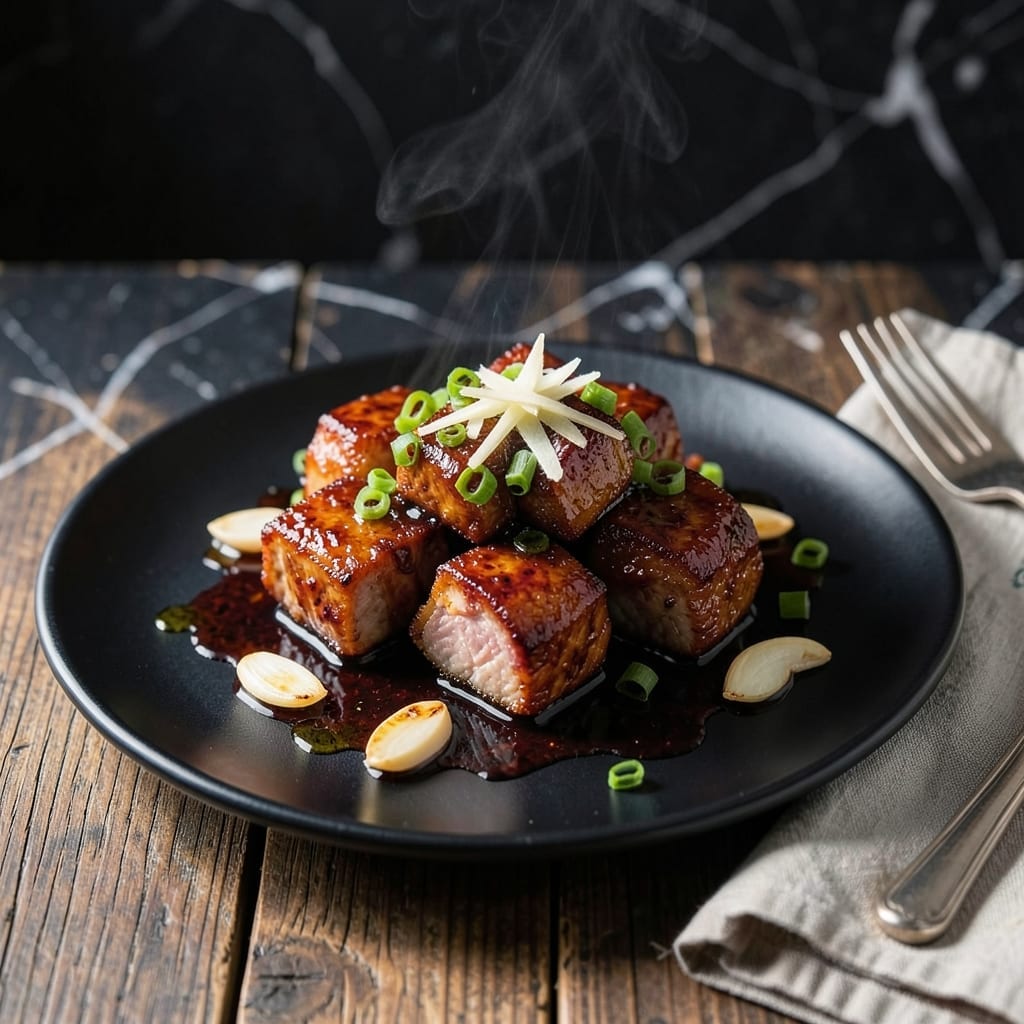
This braised pork dish transforms humble ingredients into a deeply flavorful meal that’s both comforting and sophisticated. The red yeast rice lends its signature earthy hue and umami depth, creating a sauce that clings beautifully to each tender piece of meat.
I’ve refined this technique over years of home cooking, focusing on a slow braise that ensures the pork becomes fall-apart tender. A balance of soy sauce, sugar, and aromatics builds layers of flavor without overwhelming the natural richness of the dish.
What emerges is a vibrant, savory pork that pairs perfectly with steamed rice or noodles. The sauce reduces to a glossy sheen, coating every bite with its complex, slightly sweet-savory profile.
The beauty of this recipe lies in its simplicity—just a few steps yield a dish that tastes like it simmered all day. It’s a testament to how patience and the right ingredients can create something extraordinary.
Ingredients for Red Yeast Rice Pork
Humble ingredients create a deeply flavorful, comforting braised pork with earthy umami depth.
| Ingredient | Amount | Notes |
|---|---|---|
| Pork Shoulder 🥩 | 1 ½ lb | Cut into 1-inch cubes |
| Red Yeast Rice 🍚 | ¼ cup | Rinsed and soaked |
| Soy Sauce 💧 | ½ cup | Low-sodium preferred |
| Dark Brown Sugar 🍚 | 3 tbsp | Packed for sweetness |
| Garlic Cloves 🧄 | 6 cloves | Minced for aromatics |
| Fresh Ginger 🌿 | 1 tbsp | Grated for depth |
| Green Onions 🧅 | 4 whole | Cut into 2-inch pieces |
| Star Anise Pods ⭐ | 2 whole | For aromatic infusion |
| Bay Leaf 🍃 | 1 whole | Dried for flavor |
| Shaoxing Wine 🍶 | 2 tbsp | Dry sherry works too |
| Vegetable Oil 🫒 | 2 tbsp | For searing pork |
| Water 💧 | 2 cups | For braising liquid |
| Cornstarch 🌾 | 1 tbsp | Mixed with water for slurry |
| Sesame Oil 🫒 | 1 tsp | For finishing touch |
The pork is key here. Pork shoulder (also called pork butt) gives the best fall-apart texture—avoid lean cuts like tenderloin. Asian markets often carry pre-cubed pork for braising, saving you prep time. Look for pieces with good marbling. The red yeast rice is critical for that signature color and flavor; find it in the rice aisle or bulk section at H Mart or 99 Ranch.
No Shaoxing wine? Dry sherry works in a pinch, or use a splash of dry white wine plus a pinch of sugar. Star anise can be swapped for five-spice powder at one-fourth the amount. If you skip the sugar, add a bit more soy sauce to balance the flavors. Fresh ginger is ideal, but ground ginger at half the amount works too.
This tastes even better the next day once the flavors meld. Keeps in the fridge for 4-5 days or freezes for 3 months. Reheat gently on the stove with a splash of water to loosen the sauce. Always store with the liquid to prevent drying out.
Why You’ll Love This Recipe
- Set It and Forget: The pork shoulder does all the work—just toss it with the red yeast rice, soy, and sugar, then let it braise.
- Sweet-Savory Magic: The dark brown sugar caramelizes with the soy and garlic, creating this deep, sticky glaze that coats every bite.
- Feeds the Freezer: I make a double batch and freeze half—it reheats like a dream, and the flavors only get better.
- Budget Hero: Pork shoulder is cheap, and a little red yeast rice goes a long way for that rich color and earthy taste.
Step-by-Step Instructions for Red Yeast Rice Pork
Here is the method I use to achieve tender, flavorful pork with a rich, aromatic braising liquid.
Step 1: Sear the Pork Shoulder
Heat the 2 tbsp vegetable oil in a large pot or Dutch oven over medium-high heat. When the oil shimmers, add the 1.5 lb pork shoulder cubes in a single layer, working in batches if necessary.
Sear undisturbed for 3-4 minutes per side until deeply browned on all sides. This step develops the Maillard reaction, creating complex flavors that will infuse the braising liquid. Don’t overcrowd the pot—this steams the pork instead of searing it.
Remove the pork to a plate and set aside. The fond (browned bits) left in the pot will dissolve into the sauce later.
Step 2: Build the Aromatic Base
In the same pot, add the 6 cloves minced garlic cloves, 1 tbsp grated fresh ginger, and white parts of the 4 whole green onions. Sauté over medium heat for 1-2 minutes until fragrant but not browned.
Add the 0.25 cup red yeast rice (drained after soaking), 2 whole star anise pods, and 1 whole bay leaf. Stir for 30 seconds to toast the spices slightly, which intensifies their aroma. This creates a robust flavor foundation for the braise.
Pour in the 2 tbsp shaoxing wine and deglaze the pot, scraping up any browned bits with a wooden spoon.
Step 3: Braise the Pork to Tenderness
Return the seared pork to the pot along with any accumulated juices. Add the 0.5 cup soy sauce, 3 tbsp packed dark brown sugar, and 2 cups water. Stir to combine, ensuring the pork is mostly submerged in the liquid.
Bring the mixture to a boil, then reduce the heat to low. Cover and let it simmer gently for 1.5 to 2 hours, stirring occasionally, until the pork is fork-tender and the liquid has reduced slightly.
The pork should easily pull apart with a fork, and the braising liquid will have darkened into a rich, savory sauce.
Step 4: Thicken the Sauce and Finish
In a small bowl, mix the 1 tbsp cornstarch with 2 tbsp water to create a slurry. Stir the slurry into the pot and simmer for 2-3 minutes until the sauce thickens enough to coat the back of a spoon.
Remove the pot from the heat and discard the star anise pods and bay leaf. Stir in the 1 tsp sesame oil and the green parts of the green onions reserved for garnish. The sesame oil adds a nutty finish that complements the deep umami flavors.
Let the dish rest for 5 minutes to allow the flavors to meld before serving over steamed rice.
Pro Tips For Making Red Yeast Rice Pork
- Marinate Overnight: I learned this the hard way—red yeast rice needs time to work its magic. Give the pork shoulder at least 8 hours in the soy sauce, sugar, and garlic mix, or the color and flavor won’t penetrate deeply.
- Toast the Rice: Sounds weird, but it works: lightly dry-toast the red yeast rice in a pan for 1-2 minutes before grinding. It wakes up the aromas and prevents a raw, gritty texture in the marinade.
- Skip the Lean Cuts: Pork shoulder’s fat and connective tissue break down beautifully during marinating and cooking. Lean cuts like tenderloin stay dry and absorb the red yeast color unevenly.
- Simmer, Don’t Boil: After searing, keep the heat low when braising—just a gentle simmer. A rolling boil toughens the pork and can make the red yeast rice coating separate into an oily layer.
Common Mistakes When Making Great red yeast rice pork
Overcrowding the Pot
When searing the 1.5 lb pork shoulder, resist the urge to add all pieces at once. Overcrowding lowers the pot’s temperature, causing the pork to steam instead of brown. I sear in batches for that perfect Maillard reaction—it makes all the difference. 🔥
Skipping the Deglaze
After sautéing aromatics, always deglaze with 2 tbsp shaoxing wine. This step lifts the fond (browned bits) from the pot, incorporating deep flavor into your braising liquid. Skipping it means losing layers of taste.
Insufficient Braising Time
This dish needs patience. Simmering for less than 1.5 hours results in tough pork. I check for doneness when the meat pulls apart easily with a fork. The collagen breaks down slowly, creating that melt-in-your-mouth texture.
Overcooking the Aromatics
When toasting the red yeast rice, star anise, and bay leaf, keep it brief—just 30 seconds. Burning these spices adds bitterness. I remove the pot from heat if the garlic starts to color too quickly.
Forgetting to Rest
After thickening the sauce, let the dish rest for 5 minutes before serving. This allows the flavors to meld and the sauce to reach its ideal consistency. I find the pork absorbs the sauce better during this short wait.
Neglecting the Slurry
When mixing the 1 tbsp cornstarch with water, ensure it’s completely smooth before adding to the pot. Lumps in your slurry create an uneven texture in the final sauce. I use cold water for the best results.
Nutrition Facts
Frequently Asked Questions
Can I use a different cut of pork for this?
Pork shoulder works best, but pork belly or rib tips are good alternatives. Avoid lean cuts like tenderloin as they dry out during the long 1.5-2 hour braise. The fat content is key for tender results.
What if I can’t find red yeast rice?
No substitutes perfectly replicate the color or flavor. However, you can use regular rice and add a pinch of turmeric for color, though the umami depth will be missing. Asian markets typically carry it.
How do I know when it’s done?
The pork is ready when it pulls apart easily with a fork. If it resists, continue simmering and check every 15-20 minutes. The sauce should coat the back of a spoon.
Can I make this in a slow cooker?
Yes! Sear the pork first, then transfer everything to a slow cooker. Cook on low for 6-8 hours or high for 4-5 hours. Thicken the sauce on the stovetop before serving.

- Rice Pudding Recipe With Eggs and Milk: Old-Fashioned Custard-Style Comfort - September 30, 2026
- Rice Noodle Sauce Recipe: Bold Umami Depth for Authentic Stir-Fry - September 30, 2026
- Rice Pilaf Recipe: Fragrant Basmati With Toasted Vermicelli - September 30, 2026