
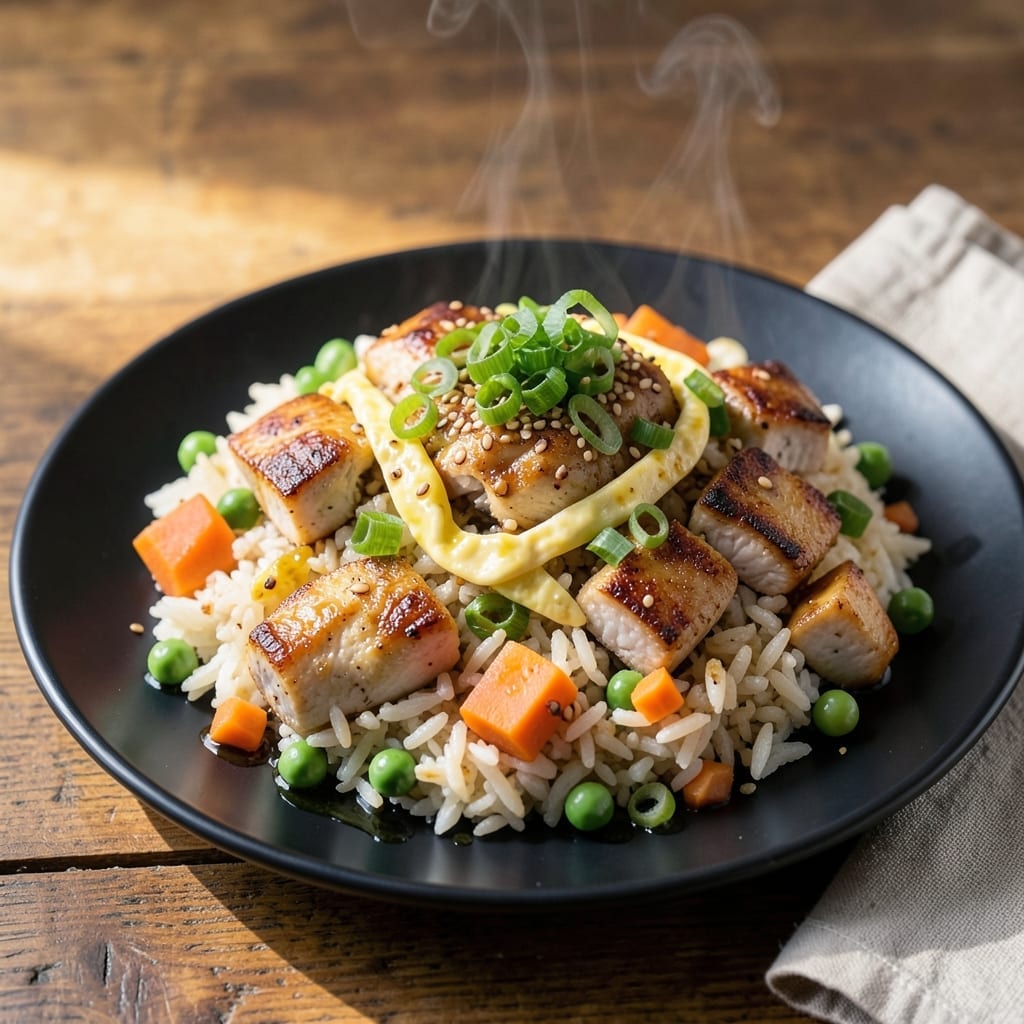
This dish delivers the authentic taste of takeout, straight from your kitchen. I developed this method after years of perfecting wok techniques at high-volume restaurants.
The secret lies in high heat, proper prep, and the right sequence of ingredients. Day-old rice is essential for achieving that signature restaurant-quality texture without turning mushy.
You’ll get perfectly cooked chicken, crisp vegetables, and eggs that blend seamlessly into the rice. The soy sauce base creates that familiar umami depth you expect from your favorite takeout spot.
Ready in just 20 minutes, this recipe proves you don’t need a commercial kitchen to achieve professional results.
Ingredients for Restaurant Chicken Fried Rice
Cold rice and a hot wok transform everyday ingredients into takeout magic.
| Ingredient | Amount | Notes |
|---|---|---|
| Day-Old Cooked White Rice 🍚 | 4 cups | Cold, dry, preferably refrigerated overnight |
| Boneless Skinless Chicken Thighs 🍗 | 1 lb | Cut into small, even dice |
| Large Eggs 🥚 | 3 whole | Lightly beaten for scrambling |
| Carrots 🥕 | 2 whole | Peeled and finely diced |
| Green Onions 🧅 | 4 whole | Thinly sliced, whites and greens separated |
| Frozen Peas 🌱 | ¾ cup | No need to thaw |
| Minced Garlic 🧄 | 3 cloves | Freshly minced for best flavor |
| Soy Sauce 🫒 | 3 tbsp | Use low-sodium for control |
| Oyster Sauce 🫒 | 1 tbsp | Essential for umami depth |
| Sesame Oil 🫒 | 1 tsp | Toasted variety for aroma |
| Neutral Oil 🫒 | 3 tbsp | High smoke point like vegetable or peanut |
| Kosher Salt 🧂 | ½ tsp | Adjust to taste at end |
| Ground White Pepper 🌶️ | ¼ tsp | Classic takeout flavor |
The rice is non-negotiable—day-old, cold, and dry is what gives you those separate grains. Most takeout spots use jasmine rice, but any long-grain works. I grab mine from Trader Joe’s in bulk. For the chicken, thighs over breasts every time—they stay juicy through the high heat. Look for skinless, boneless to save prep time. The carrots and peas? Classic combo, but swap in bell peppers or corn if that’s what you’ve got.
No oyster sauce? Vegan oyster sauce or hoisin gets you 90% there. Low-sodium soy is key—regular can get too salty fast. Out of sesame oil? Skip it, but add a pinch of toasted sesame seeds at the end. The eggs are optional but traditional (that’s the restaurant-style touch). If you’re avoiding them, just add an extra half cup of diced veggies. Frozen peas work great—no thawing needed.
This keeps 3-4 days in the fridge but honestly tastes best fresh. Reheat in a skillet with a splash of water to bring it back to life. Freezes well too—up to 2 months. Pro tip: double the batch and freeze half for lazy nights. Always use a carbon steel wok if you’ve got one (worth the investment for high-heat cooking).
Why You’ll Love This Recipe
- One Pan Wonder: I love that everything cooks together in a single wok—no extra dishes, just quick chopping and stir-frying with the chicken thighs, eggs, and veggies.
- Umami Bomb: That combination of day-old rice soaking up soy sauce and the rich flavor from seared chicken thighs? Ridiculously good.
- Feeds the Gang: I make a huge batch for Sunday prep and it reheats beautifully for lunches all week. Between us, my kids fight over the leftovers.
- Budget Hero: Honestly, it turns cheap ingredients like carrots, green onions, and leftover rice into a meal that tastes like takeout.
Step-by-Step Instructions for Restaurant Chicken Fried Rice
Here’s the method I use to achieve that perfect takeout texture and flavor at home.
Step 1: Prep Chicken and Aromatics
Start by cutting the 1 lb boneless skinless chicken thighs into small, even ¼-inch dice—this ensures quick, uniform cooking. I keep my knife sharp for this; dull blades crush the meat instead of slicing cleanly.
Next, peel and finely dice the 2 whole carrots, thinly slice the 4 whole green onions (keeping whites and greens separate), and mince the 3 cloves garlic. This mise en place approach prevents frantic chopping while cooking. Measure out the 0.75 cup frozen peas—no need to thaw.
Step 2: Velouté the Eggs and Chicken
Heat 1 tbsp neutral oil in a wok or large skillet over high heat until it shimmers. Add the 3 whole large eggs (lightly beaten) and scramble quickly until just set but still slightly runny. Remove and set aside—this creates those beautiful egg ribbons in the final dish.
Add the remaining 2 tbsp neutral oil to the same pan. When hot, add the diced chicken in a single layer. Let it sear undisturbed for 30 seconds before stirring. Cook for 3-4 minutes until lightly browned and no pink remains. The chicken should release easily from the pan when done.
Step 3: Stir-Fry Vegetables and Rice
Push the chicken to one side and add the diced carrots and minced garlic to the empty space. Stir-fry for 1-2 minutes until the garlic becomes fragrant and the carrots begin to soften. Then add the frozen peas and the white parts of the green onions.
Immediately add the 4 cups day-old cooked white rice, breaking up any clumps with your spatula. The cold, dry rice is crucial—it fries up fluffy instead of mushy. Distribute everything evenly in the pan.
Step 4: Season and Finish
Drizzle the 3 tbsp soy sauce, 1 tbsp oyster sauce, and 1 tsp sesame oil over the rice mixture. Add the 0.5 tsp kosher salt and 0.25 tsp ground white pepper. Stir-fry for 2-3 minutes until everything is evenly coated and heated through.
Return the scrambled eggs to the pan along with the green onion tops. Toss everything together for 30 seconds until the eggs are incorporated and the onions just wilt. The rice should have a glossy sheen and each grain should be distinct, not clumped together.
Step 5: Rest and Serve
Remove from heat and let sit for 2 minutes to allow the flavors to meld. Taste and adjust seasoning if needed—the oyster sauce and soy sauce should provide a balanced savory depth.
Serve immediately while hot, with additional green onions on top if desired. The texture should be slightly crisp in spots from the high-heat sear, with tender chicken and vegetables distributed throughout. This is where that classic takeout flavor shines.
Pro Tips For Making Restaurant Chicken Fried Rice
- Use Cold Rice: Always start with day-old, refrigerated rice—fresh rice is too moist and will turn to mush in the wok. I learned this the hard way after making a sad, soggy batch. —
- Velvet the Chicken: Marinate the chicken thighs in 1 tsp cornstarch and 1 tbsp soy sauce for 15 minutes before cooking. Sounds weird, but it keeps the meat stupidly tender. —
- Scramble Eggs Separately: Cook the eggs first in a hot pan with a little oil, then set aside—this prevents them from disappearing into the rice. My first few attempts ended with invisible eggs. —
- Crank the Heat: Get your wok or pan screaming hot before adding anything. After burning three batches, I finally figured out that high heat is the only way to get that smoky, restaurant-style flavor.
Make-Ahead Tips for restaurant chicken fried rice
Prep Ahead Strategy
I always prep all my ingredients the night before—dice the 1 lb chicken thighs, chop the 2 carrots and 4 green onions, and mince the 3 garlic cloves. Store them in separate containers in the fridge. This cuts your cooking time in half the next day. 💡
Rice Prep Tip
The 4 cups day-old rice is non-negotiable for texture. Cook it the day before and spread it on a baking sheet to cool completely in the fridge. This removes moisture, ensuring those perfect separate grains when stir-fried.
Sauce Mix
Combine the 3 tbsp soy sauce, 1 tbsp oyster sauce, and 1 tsp sesame oil in a small bowl. This saves time during the high-heat cooking process. I use low-sodium soy sauce to control the saltiness.
Partial Cook Method
You can partially cook the chicken and scramble the 3 eggs ahead of time. Store them separately in the fridge for up to 24 hours. Finish cooking just before serving to maintain texture and freshness.
Freezer-Friendly
This dish freezes beautifully for up to 2 months. Portion into airtight containers and freeze. Thaw overnight in the fridge before reheating in a skillet with a splash of water to revive the texture. ❄️
Reheating Hack
For best results, reheat in a wok or skillet over medium-high heat with 1-2 tbsp water. Cover for 2-3 minutes, then stir-fry to restore the restaurant-quality texture. Microwaving works, but the skillet method is superior.
Nutrition Facts
Frequently Asked Questions
Why use day-old rice instead of fresh?
Day-old rice is drier, which prevents it from turning mushy when stir-fried. Fresh rice contains too much moisture and will clump together. Spread leftover rice on a tray to cool quickly in the fridge for best results.
Can I substitute chicken breast for thighs?
You can, but thighs stay juicier through high-heat cooking. If using breast, cut into small pieces and cook for 1-2 minutes less to prevent dryness. Marinate in 1 tbsp soy sauce first for extra moisture.
How do I prevent my wok from smoking too much?
Use high-smoke-point oils like peanut or vegetable oil. Heat the wok until just shimmering, not smoking. Work in batches if needed to avoid overcrowding, which lowers the temperature.
What if I don’t have oyster sauce?
Swap in 1 tbsp hoisin or vegan oyster sauce. In a pinch, use 1 tsp fish sauce plus ½ tsp brown sugar. The dish will still taste great, though slightly different.

- Jollof Rice Sauce Recipe: West African Tomato and Spice Infusion - September 25, 2026
- Japanese Rice Soup Recipe: Umami-Rich Comfort in a Bowl - September 25, 2026
- Homemade Cream Of Rice Recipe: Silk-Smooth Breakfast in Minutes - September 25, 2026