
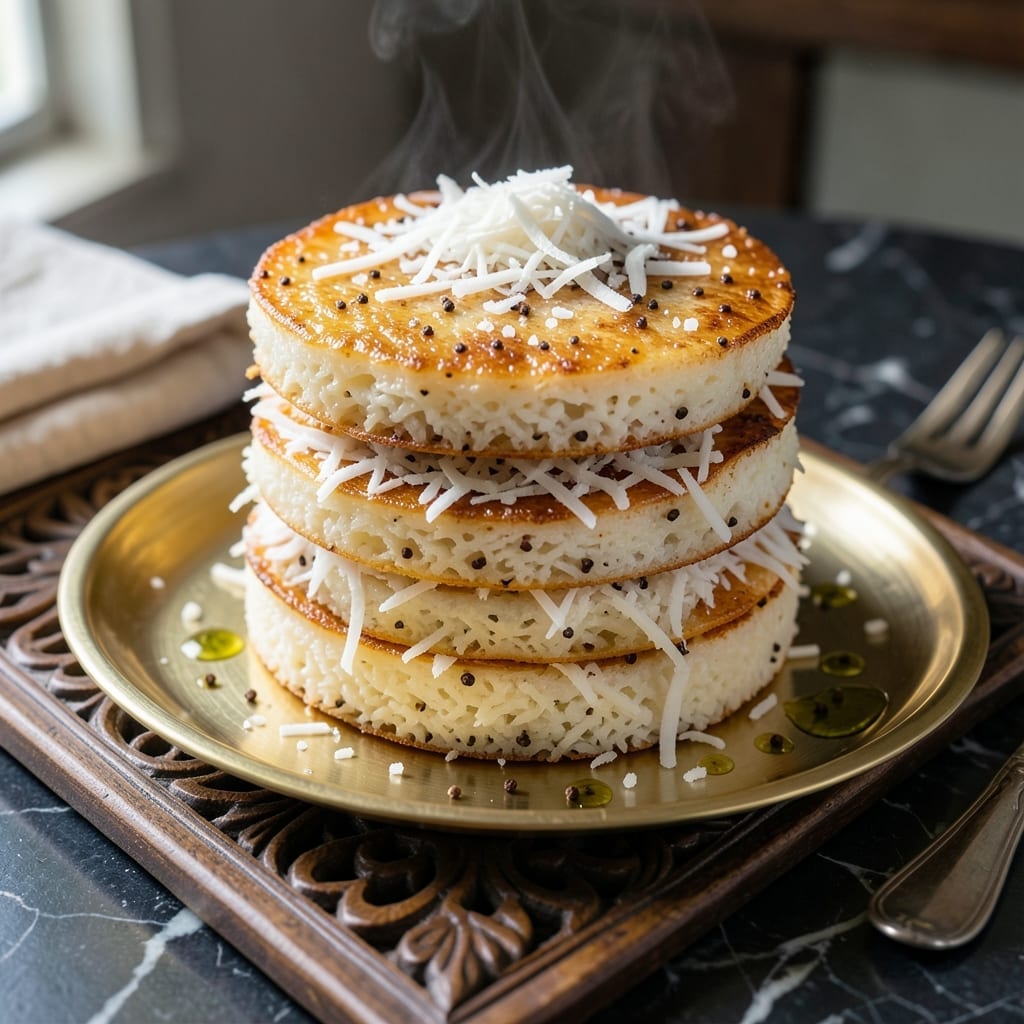
This traditional South Indian recipe transforms simple ingredients into a crispy, fermented delight that’s both nutritious and satisfying. The process begins with soaking and grinding rice into a smooth batter, which is then fermented overnight to develop its signature tangy flavor.
The batter is steamed in layers to create soft, fluffy cakes with a slightly chewy texture. Once cooled, the cakes are sliced and pan-fried until golden and crispy on the outside, while remaining tender inside. This dual cooking method ensures the perfect balance of textures.
Served with a fresh coconut chutney, this dish offers a harmonious blend of flavors—savory, slightly sour, and subtly sweet. The chutney’s creamy richness complements the cakes’ light, airy bite, making every mouthful a true delight.
Ideal for breakfast or a light meal, this recipe brings the authentic taste of Indian street food to your kitchen with simple, wholesome ingredients.
Ingredients for Rice Cake Recipe Indian
Simple, wholesome ingredients create this authentic South Indian fermented delight with crispy texture and bold flavors.
| Ingredient | Amount | Notes |
|---|---|---|
| Parboiled Rice 🌾 | 2 cups | Short-grain preferred for texture |
| Urad Dal 🥜 | ½ cup | Black gram lentils, whole |
| Fenugreek Seeds 🌿 | ½ tsp | For fermentation and flavor |
| Salt 🧂 | 1 tsp | Adjust to taste after fermentation |
| Water 💧 | 2 cups | As needed for batter consistency |
| Coconut 🥥 | 1 cup | Freshly grated for chutney |
| Green Chilies 🌶️ | 2 whole | Adjust quantity to spice preference |
| Fresh Ginger 🌿 | 1 piece | 1-inch, peeled and chopped |
| Cilantro Leaves 🌿 | ½ cup | Chopped, for chutney garnish |
| Mustard Seeds 🌿 | ½ tsp | For tempering chutney |
| Curry Leaves 🍃 | 8 pieces | Fresh for authentic flavor |
| Chana Dal 🥜 | 1 tbsp | For tempering, optional |
| Dried Red Chilies 🌶️ | 2 whole | For tempering, optional |
| Yogurt 🥛 | ¼ cup | For tempering, optional |
The rice quality is paramount here. Indian grocery stores carry the ideal short-grain parboiled rice—look for brands like Double Horse or Gits. Urad dal must be whole, not split, for proper fermentation. Fenugreek seeds, though small in quantity, are non-negotiable—they aid fermentation and add depth. If sourcing from Patel Brothers or Bharat Bazaar, ask for ‘idli rice’ and ‘whole urad dal’ explicitly.
No urad dal? Split black lentils work but texture suffers slightly. Substitute fenugreek with a pinch of asafoetida for fermentation aid. For the coconut chutney, frozen grated coconut (thawed) works in a pinch, but fresh is superior. Green chilies can be swapped with serrano peppers for similar heat. Mustard seeds are essential for tempering—no viable substitute exists for authentic flavor.
Fermented batter keeps in the fridge for 2 days max—best used immediately. Cooked rice cakes stay fresh for 24 hours at room temperature or 3 days refrigerated. Reheat in a pan for crispiness. Chutney lasts 2-3 days refrigerated. Always use airtight containers to preserve freshness and prevent odors.
Why You’ll Love This Recipe
- Soak & Steam: I just soak the rice and dal overnight, then steam—no fancy gadgets, just my trusty colander over boiling water.
- Fenugreek Magic: That tiny pinch of fenugreek seeds blooms into this warm, nutty aroma that makes the whole kitchen smell like my grandma’s house.
- Breakfast or Snack: Honestly, I make a double batch on Sunday and we’re set for quick breakfasts or after-school munchies all week.
- Pennywise Feast: A cup of rice, a handful of dal, and we’ve got a filling meal that costs less than takeout for the whole family.
Step-by-Step Instructions for Crispy Fermented Rice Cake With Coconut Chutney
Master the soaking, fermenting, and steaming process to achieve the perfect texture and crispness.
Step 1: Soak and Ferment the Batter
Rinse the 2 cups Parboiled Rice and 0.5 cup Urad Dal separately until the water runs clear. Soak them together with 0.5 tsp Fenugreek Seeds in enough water to cover by 2 inches for 4-6 hours. The rice and dal should soften but retain their shape.
Drain thoroughly, then grind into a smooth batter using 2 cups Water as needed. The consistency should resemble thick pancake batter. Transfer to a large bowl, add 1 tsp Salt, cover, and let ferment in a warm place for 8-12 hours or until slightly bubbly and doubled in volume. This fermentation is crucial for achieving the characteristic tangy flavor and light, airy texture.
Step 2: Steam the Batter into Cakes
Grease a steamer plate or shallow dish that fits inside your steamer. Pour the fermented batter to a thickness of about ½ inch. Tap the plate gently to spread the batter evenly and remove any air bubbles.
Bring water to a rolling boil in your steamer, then place the plate inside, cover, and steam on medium heat for 15-20 minutes. Check for doneness by inserting a toothpick—it should come out clean. The top should look set and slightly glossy. Remove from heat and let cool completely in the plate. This cooling step helps the cake hold its shape when sliced.
Step 3: Slice and Crisp the Cakes
Once cooled, run a knife around the edges to loosen, then invert onto a cutting board. Slice into squares or diamonds—traditional shapes for this dish. For maximum crispness, I recommend pan-frying the pieces in a dry non-stick skillet over medium heat for 2-3 minutes per side until golden brown and crispy on the outside.
Alternatively, you can shallow-fry in a bit of oil for extra richness, but the dry pan method keeps it lighter while still achieving that coveted crisp texture. The interior should remain soft and slightly chewy, providing a perfect contrast to the crisp exterior.
Step 4: Prepare the Coconut Chutney
In a blender, combine 1 cup Coconut, 2 whole Green Chilies, 1 piece Fresh Ginger, and a pinch of salt. Grind into a coarse paste, adding a little water if needed to help the blending process. Transfer to a serving bowl and fold in 0.5 cup Cilantro Leaves for freshness and color.
For the tempering, heat a small pan with 1 tablespoon oil, then add 0.5 tsp Mustard Seeds, 8 pieces Curry Leaves, 1 tbsp Chana Dal, and 2 whole Dried Red Chilies. Once the mustard seeds begin to pop and the dal turns golden, pour this hot tempering over the chutney. Optionally, stir in 0.25 cup Yogurt for a tangy variation. Serve the crispy rice cakes warm with this cooling, aromatic chutney.
Pro Tips For Making Rice Cake Recipe Indian
- Soak Overnight: I learned this the hard way—parboiled rice and urad dal need at least 6-8 hours in water to soften properly, or your rice cakes will turn out dense and gummy.
- Grind to Smooth: After burning a batch, I realized the batter must be ground to a fine, almost silky consistency—lumpy batter means uneven cooking and a grainy texture.
- Add Fenugreek Last: My grandmother swore by this: add fenugreek seeds only during the last 5 minutes of soaking to prevent bitterness from over-steeping.
- Use Warm Water: Sounds weird, but using warm water for grinding the batter makes it fluffier and easier to spread—cold water just doesn’t cut it.
Perfect Pairings for This rice cake recipe indian
Chutney Variations
For a tangy twist, add 0.25 cup Yogurt to your coconut chutney. This makes it creamier and balances the spice beautifully. I love how it mellows the heat from the green chilies. 💛
Side Dish Ideas
A simple cucumber raita with mint and roasted cumin seeds complements the crispy texture. Or try sambar, a South Indian lentil stew, for a heartier pairing.
Beverage Pairings
Serve with masala chai for a traditional combination—the warmth of the tea enhances the fermented flavors. For something cooler, try mango lassi to balance the spice. 🍹
Dipping Options
Offer tomato onion chutney for a sweet and tangy contrast. Or try peanut chutney, which adds a nutty richness that pairs wonderfully with the rice cakes.
For a quick option, mix 1 tbsp tamarind paste with 1 tsp jaggery and a pinch of salt.
Breakfast Pairings
Serve with coconut milk or palm sugar syrup for a sweet breakfast version. This brings out the natural sweetness of the fermented batter beautifully.
Nutrition Facts
Frequently Asked Questions
What type of rice works best?
Short-grain parboiled rice gives the ideal texture. Look for idli rice at Indian grocery stores for authentic results. Long-grain varieties may result in a grainier cake.
How do I know when the batter is properly fermented?
It should double in volume and develop small bubbles on top. The batter will have a tangy aroma and a slightly spongy texture. This typically takes 8-12 hours in a warm spot.
Can I make these without fermenting?
Fermentation is essential for the authentic taste and texture. Without it, the cakes will lack the characteristic tang and may be denser. For quicker results, use 1 tsp baking soda as a shortcut.
How do I keep them crispy after frying?
Place the fried cakes on a wire rack instead of a plate to prevent steam buildup. This maintains their crispness for up to 1 hour. Re-fry briefly if they soften.

- Rice Pudding Recipe With Eggs and Milk: Old-Fashioned Custard-Style Comfort - September 30, 2026
- Rice Noodle Sauce Recipe: Bold Umami Depth for Authentic Stir-Fry - September 30, 2026
- Rice Pilaf Recipe: Fragrant Basmati With Toasted Vermicelli - September 30, 2026