
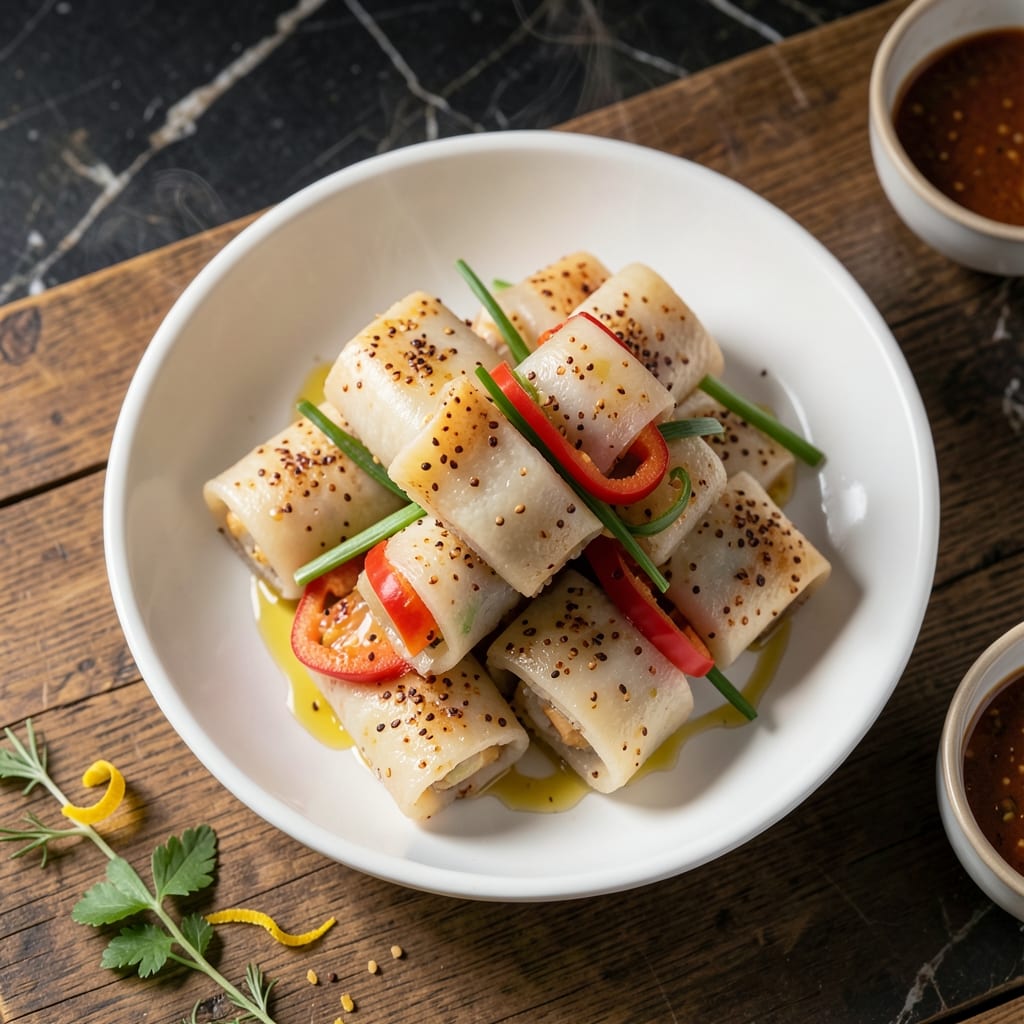
These soft, pillowy rice cake rolls redefine what a wrapped dish can be—delicate yet sturdy enough to hold bold fillings. I developed this recipe after tasting similar versions in Korean markets, determined to recreate that perfect chewy texture at home.
The secret lies in the rice flour batter, which steams into a supple sheet ready for rolling. With 5 basic ingredients and 20 minutes of active prep, you’ll have a canvas for both sweet and savory combinations.
Each bite delivers a satisfying contrast between the tender exterior and whatever filling you choose. The process is simple but precise, ensuring consistent results every time.
Serve as an appetizer, snack, or light meal. The versatility makes it a favorite for any occasion.
Ingredients for Rice Cake Roll
Five core ingredients create that perfect chewy texture for rolling. Simple, precise, delicious.
| Ingredient | Amount | Notes |
|---|---|---|
| Rice Flour 🌾 | 1 ½ cups | Sweet or glutenous variety |
| Water 💧 | 1 ¼ cups | Warm for better mixing |
| Salt 🧂 | ½ tsp | Fine grain preferred |
| Vegetable Oil 🫒 | 1 tbsp | For greasing the pan |
| Sesame Oil 🫒 | ½ tsp | Optional for aroma |
| Cornstarch 🌾 | 2 tbsp | For dusting surface |
| Sugar 🍚 | 1 tsp | Optional for sweet rolls |
| Green Onions 🧅 | 2 whole | Thinly sliced for garnish |
| Sesame Seeds 🌰 | 1 tbsp | Toasted for topping |
| Soy Sauce 🫕 | 1 tbsp | For savory filling option |
The rice flour is key—look for sweet rice flour or glutinous rice flour (not the same as regular rice flour). H-Mart or Asian grocery stores carry it, but Amazon works too if you’re ordering online. I like the Bob’s Red Mill brand for consistency. The water needs to be warm to activate the flour properly, but not boiling—about 110°F is perfect (test it like a baby bottle).
No sweet rice flour? Regular rice flour won’t give the same chew, but it’ll work in a pinch (texture will be different). Swap sesame oil for any neutral oil if that’s all you have. For fillings, the sky’s the limit—sweet red bean paste, spicy pork, or just sugar and cinnamon. Toast the sesame seeds in a dry pan for about 30 seconds to wake up the flavor.
Batter keeps in the fridge for 1 day if you prep ahead. Cooked rolls? Best fresh but reheat in a steamer for 2-3 minutes. Leftovers? Wrap tightly—they dry out fast. Freezing isn’t ideal but works for up to 1 month if sealed well.
Why You’ll Love This Recipe
- Five Ingredients: I love that it only needs rice flour, water, salt, and a splash of sesame and vegetable oil—no fancy pantry items.
- Crispy Chewy Bite: The sesame oil gives it that nutty aroma while the edges get just the right crispness.
- Breakfast or Snack: Honestly, I make a batch on Sunday and grab one for breakfast or pack it for my kid’s lunchbox.
- Pocket Change: A bag of rice flour costs pennies and makes dozens—way cheaper than store-bought.
Step-by-Step Instructions for Rice Cake Rolls
Here’s my tested method for achieving the perfect chewy texture with every batch.
Step 1: Prepare the Batter
In a large mixing bowl, combine the 1.5 cups rice flour, 0.5 tsp salt, and 1 tsp sugar. I use a whisk to break up any lumps in the rice flour, which ensures a smooth batter.
Gradually pour in the 1.25 cups water while stirring continuously with a wooden spoon. The mixture should be thick but pourable—like pancake batter. Stir in the 1 tbsp vegetable oil and 0.5 tsp sesame oil until fully incorporated.
Step 2: Steam the Cake Layer
Lightly grease a square baking dish with a bit of the vegetable oil and dust it evenly with 1 tbsp of the cornstarch. This prevents sticking and makes rolling easier later. Pour the batter into the prepared dish, spreading it evenly with a spatula.
Place the dish in a steamer over boiling water, cover with a lid, and steam for 15-20 minutes until the center is set and the top looks matte with no wet spots. I check by inserting a toothpick—it should come out clean. Remove from the steamer and let cool slightly while you prepare the filling.
Step 3: Prepare the Filling and Garnishes
For a savory option, mix the 1 tbsp soy sauce with a pinch of the sugar and brush it lightly over the steamed cake. For sweet rolls, skip the soy sauce and sprinkle a bit of the remaining sugar directly on the cake.
Thinly slice the 2 whole green onions and toast the 1 tbsp sesame seeds in a dry pan over low heat for 1-2 minutes until fragrant. Set both aside for garnishing. Dust your work surface with the remaining 1 tbsp cornstarch to prevent sticking during rolling.
Step 4: Roll and Slice
Carefully turn the warm cake onto the cornstarch-dusted surface. Starting from one edge, gently roll the cake into a tight log. If it cracks, don’t worry—just press the edges together gently. The warmth makes it pliable enough to roll without breaking.
Use a sharp knife to slice the log into 1-inch thick rolls. Wipe the knife between cuts for clean edges. Arrange the rolls on a serving plate, seam-side down. Sprinkle with the toasted sesame seeds and sliced green onions for a fresh, aromatic finish.
Step 5: Serve Warm or at Room Temperature
These rolls are best enjoyed fresh but can be served warm or at room temperature. The texture will be chewy with a slightly sticky surface, and the filling will be subtly savory or sweet, depending on your choice. I like to drizzle a little extra sesame oil on top for added aroma.
If you’re making a large batch, store any leftovers in an airtight container. Re-steam for 3-4 minutes to restore the soft, chewy texture before serving again.
Pro Tips For Making Rice Cake Roll
- Heat the Pan First: Get your pan screaming hot before adding the batter—I learned this the hard way after my first few rolls stuck like glue. A drop of water should sizzle and vanish instantly.
- Thin the Batter Right: Aim for a consistency like heavy cream, not pancake batter. Too thick and your rolls will be dense; too thin and they’ll tear when rolling.
- Skip Cold Water: Use room-temperature water for mixing the rice flour. Cold water makes the batter seize up, and you’ll end up with lumpy, uneven rolls.
- Oil the Surface: Brush your work surface with sesame oil before rolling—it adds flavor and keeps the dough from sticking. A light coat is all you need, about 1 teaspoon.
Common Mistakes When Making Perfect Results
Overmixing the Batter
Stir just until the rice flour and water combine into a smooth mixture. Overmixing develops gluten in the flour, which makes the cake tough instead of chewy. I use a whisk initially, then switch to a wooden spoon for the final 30 seconds of mixing. 💡
Incorrect Water Temperature
Use 110°F water—hot enough to activate the rice flour but not boiling. Too hot and you’ll cook the batter prematurely; too cold and the flour won’t hydrate properly. I test it on my wrist like a baby bottle.
Skipping the Cornstarch Dusting
Always dust your pan and work surface with cornstarch. Without it, the cake sticks and tears when rolling. I keep a small sieve handy to sprinkle it evenly, using about 1 tbsp per surface.
Under-steaming the Cake
Steam for the full 15-20 minutes until the center sets. Undercooked batter stays gummy and won’t hold its shape. I check with a toothpick—when it comes out clean, it’s ready to roll.
Rolling While Too Hot
Let the cake cool for 2-3 minutes after steaming. Rolling while piping hot causes cracking. The warm, slightly cooled cake is pliable enough to roll without breaking.
Using Wrong Rice Flour
Only sweet rice flour or glutinous rice flour works here. Regular rice flour lacks the sticky texture needed. I get mine from H-Mart or order Bob’s Red Mill online. ✨
Nutrition Facts
Frequently Asked Questions
What can I use instead of sweet rice flour?
Regular rice flour will work but texture will differ. For best results, use glutinous rice flour as a direct substitute. Avoid all-purpose flour as it lacks the chewy quality.
How do I prevent the rolls from sticking?
Dust your pan and work surface generously with cornstarch before adding batter. This creates a non-stick barrier and makes rolling easier.
Can I make these ahead of time?
Batter keeps in the fridge for 1 day. Cooked rolls are best fresh but can be stored in an airtight container for up to 2 days. Re-steam for 3-4 minutes to restore texture.
Why did my cake crack when rolling?
It was likely too hot or under-steamed. Let it cool for 2-3 minutes after steaming and ensure it’s fully cooked through first.

- Gambia Jollof Rice Recipe: West African One-Pot Spice Fusion - October 5, 2026
- Cream of Wild Rice Soup Recipe Minnesota: Northwoods Creaminess With Foraged Grains - October 5, 2026
- Frozen Cauliflower Fried Rice Recipe: Quick Low-Carb Wok Magic - October 5, 2026