
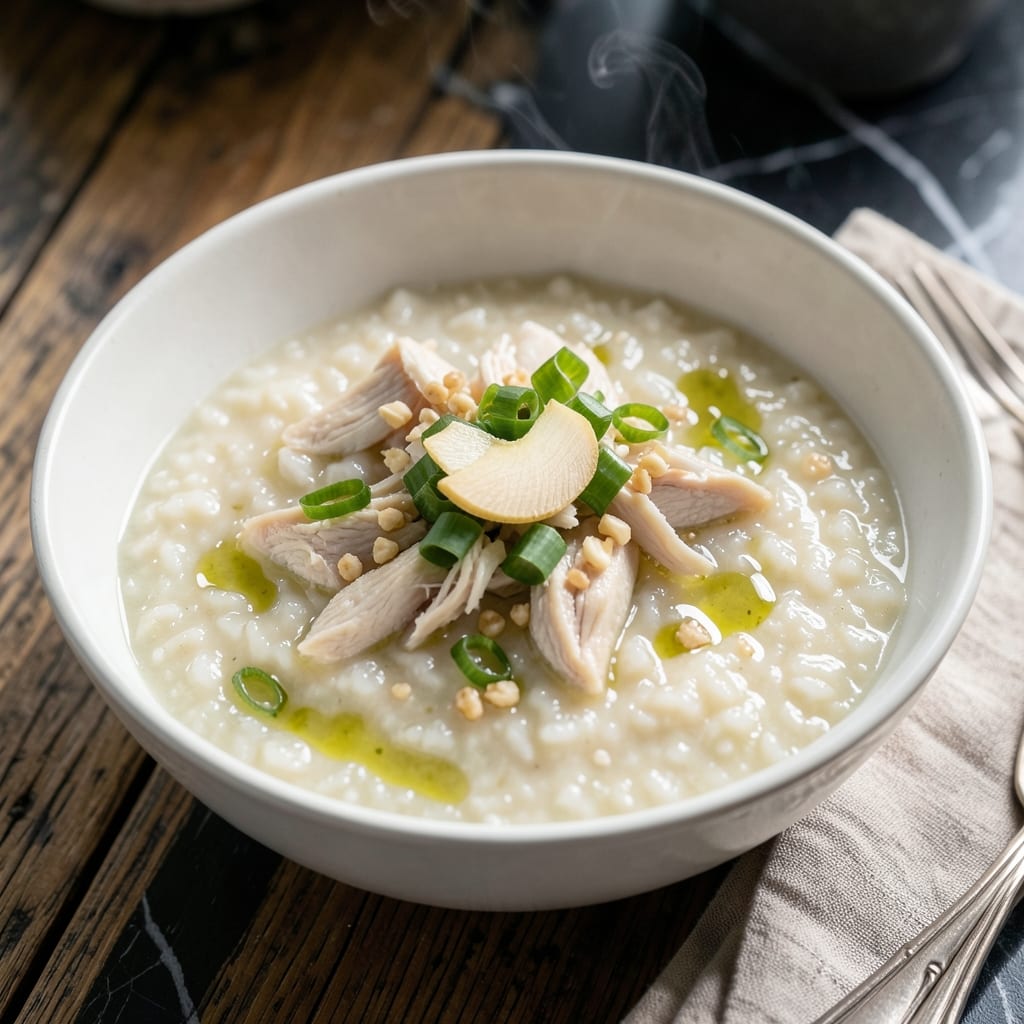
There’s something deeply comforting about a bowl of silky rice congee on a cool morning. This humble dish transforms simple ingredients into a smooth, savory porridge that warms both body and soul.
I’ve perfected this recipe over years of experimentation, focusing on the ideal rice-to-water ratio and cooking time. The key is patience—letting the rice break down completely while stirring occasionally to achieve that signature creamy texture.
The beauty of congee lies in its versatility. You can keep it plain or customize with your favorite proteins and vegetables. Each variation adds new dimensions to this already nourishing dish.
Serve hot with your preferred toppings for a meal that’s as satisfying as it is simple. This creation proves that the most comforting foods often come from the most basic ingredients.
Ingredients for Rice Congee
Simple pantry staples transform into this creamy, comforting classic with minimal effort.
| Ingredient | Amount | Notes |
|---|---|---|
| Jasmine Rice 🍚 | 1 cup | Rinsed until water runs clear |
| Chicken Broth 🍲 | 8 cups | Low-sodium preferred for control |
| Fresh Ginger 🌿 | 1 piece | 2-inch knob, peeled and sliced |
| Garlic Cloves 🧄 | 4 cloves | Smashed and peeled |
| Green Onions 🧅 | 4 whole | Thinly sliced, whites and greens separated |
| Neutral Oil 🫒 | 1 tbsp | Avocado or vegetable oil |
| Sea Salt 🧂 | 1 tsp | Adjust to taste at end |
| White Pepper 🌶️ | ½ tsp | Ground, for authentic flavor |
| Soy Sauce 💧 | 2 tbsp | Light or all-purpose variety |
| Sesame Oil 🫒 | 1 tsp | Toasted, for finishing |
| Shiitake Mushrooms 🍄 | 4 whole | Fresh, sliced thinly |
| Carrot 🥕 | 1 whole | Julienned for garnish |
The rice makes all the difference here. Jasmine breaks down beautifully into that signature silky texture—avoid long-grain white, which stays too firm. I grab mine from Trader Joe’s or any Asian market (the Thai jasmine in the bright purple bags is perfect). The broth should be low-sodium so you control the salt. For extra depth, swap half the broth for water—sounds odd, but it lets the rice flavor shine.
No jasmine rice? Short-grain white rice works in a pinch, but cook it 10 minutes longer. Skip the ginger? Ground ginger at half the amount saves the day. Out of shiitakes? Cremini mushrooms or even baby spinach add great texture. The soy sauce isn’t negotiable though—it’s what gives congee that deep, savory backbone. Tamari for gluten-free, coconut aminos for a lighter touch.
Congee tastes even better the next day (the rice keeps breaking down). Keeps 4-5 days in the fridge, freezes for 3 months. Reheat gently with a splash of water—it’ll thicken as it cools. I make a big batch on Sunday, then customize bowls all week (soft-boiled egg and chili oil on top, always).
Why You’ll Love This Recipe
- Set It & Forget: I toss everything into one pot and let it simmer while I do other things—no stirring, no fuss.
- Ginger-Garlic Magic: The fresh ginger and garlic infuse the chicken broth with a warmth that makes every spoonful irresistible.
- Meal Prep Hero: Honestly, it reheats beautifully so I make a big batch for lunches all week.
- Pennywise Comfort: Jasmine rice and broth stretch a modest budget into a filling, cozy meal my whole family loves.
Step-by-Step Instructions for Rice Congee
This method delivers the creamiest congee with minimal effort. Trust the process.
Step 1: Bloom Aromatics in Hot Oil
Heat the 1 tbsp neutral oil in a large pot over medium heat until it shimmers. Add the 1 piece fresh ginger and 4 cloves garlic cloves, stirring constantly for 30-45 seconds until fragrant but not browned.
The ginger should sizzle gently and release its aroma, while the garlic turns just slightly golden at the edges. This quick bloom awakens the flavors that will infuse the entire pot. Burnt garlic turns bitter, so keep it moving.
Add the whites of the 4 whole green onions and cook for another 30 seconds until softened. The base is now ready for the rice.
Step 2: Toast Rice and Begin Simmering
Stir in the 1 cup jasmine rice and cook for 1-2 minutes, stirring often, until the grains turn slightly translucent at the edges. This toasting step prevents the rice from becoming mushy too quickly.
Pour in the 8 cups chicken broth and add the 4 whole shiitake mushrooms. Stir well to combine, then increase heat to high until the liquid reaches a rolling boil.
You’ll notice the broth take on a milky appearance as the rice starches release—this is the beginning of that signature silky texture.
Step 3: Maintain Gentle Simmer for Silky Texture
Once boiling, reduce heat to low to maintain a gentle simmer. Partially cover the pot and cook for 1 hour to 1 hour 15 minutes, stirring every 10-15 minutes to prevent sticking.
The congee is ready when the rice grains have broken down completely and the mixture has thickened to a porridge-like consistency. It should coat the back of a spoon but still flow slowly when stirred.
Season with 1 tsp sea salt and 0.5 tsp white pepper, then stir in the 2 tbsp soy sauce. Taste and adjust seasoning if needed.
Step 4: Finish and Garnish for Serving
Remove from heat and stir in the 1 tsp sesame oil. The aroma will be intoxicating at this stage—rich, savory, and deeply comforting.
Ladle into bowls and garnish with the green parts of the green onions and the 1 whole carrot, julienned. The contrast of the fresh, crunchy garnishes against the creamy congee is essential.
Serve immediately while hot. The texture will continue to thicken as it cools, so keep it warm if serving a crowd.
Pro Tips For Making Rice Congee
- Rinse the Rice: I learned this the hard way—unrinsed jasmine rice makes congee gummy. Swirl it in cold water until the water runs clear to remove excess starch.
- Simmer Low and Slow: After boiling, drop to the lowest heat and partially cover the pot. This keeps the congee creamy without scorching the bottom.
- Grate the Ginger: Sounds weird, but it works: finely grated ginger infuses the broth better than slices, and you won’t get fibrous bits in your congee.
- Add Broth Gradually: Start with just enough chicken broth to cover the rice by an inch, then add more as it absorbs—this prevents a watery mess and gives you control over the thickness.
Storing and Reheating This Recipe
Refrigerator Storage
Let your congee cool for no more than 2 hours before transferring to airtight containers. I use glass containers with locking lids for best results. Store at 40°F or below for up to 4-5 days. The flavors deepen as it rests, making next-day bowls even more delicious. ❄️
Freezer Storage
Congee freezes beautifully for up to 3 months without texture issues. I prefer using quart-size freezer bags laid flat to save space. Leave 1 inch of headspace for expansion and squeeze out excess air to prevent freezer burn.
Stovetop Reheating
This is my go-to method for best texture. Pour congee into a saucepan, add ¼ cup water or broth to loosen, and heat over medium-low heat for 5-7 minutes. Stir frequently to prevent sticking at the bottom. 🔥
Microwave Reheating
For quick meals, microwave individual portions covered with a damp paper towel. Heat on 70% power for 2-3 minutes, stir, then continue in 30-second intervals until reaching 165°F. Add a splash of water if needed.
Thickness Adjustment
Congee thickens significantly as it cools. When reheating, add liquid gradually—start with 2 tbsp and increase as needed. The perfect consistency should flow slowly when stirred but coat the back of a spoon.
Garnish Fresh
Always add fresh garnishes like green onions and julienned carrot after reheating. This maintains their crisp texture and vibrant color. I keep prepped garnishes in small containers for easy assembly.
Nutrition Facts
Frequently Asked Questions
Can I use a rice cooker for this?
Yes, but use the porridge setting and check at 45 minutes. Most rice cookers need extra liquid—add 1-2 cups more broth. Stir occasionally for even texture.
Why is my congee too thick?
It thickens as it cools. Thin with warm broth or water, ¼ cup at a time, until it flows slowly from a spoon. Stir well after each addition.
What protein works best?
Shredded chicken, soft tofu, or shrimp are classic. Add cooked protein at the end to avoid overcooking. For vegetarians, try tempeh or mushrooms.

- Rice Pudding Recipe With Eggs and Milk: Old-Fashioned Custard-Style Comfort - September 30, 2026
- Rice Noodle Sauce Recipe: Bold Umami Depth for Authentic Stir-Fry - September 30, 2026
- Rice Pilaf Recipe: Fragrant Basmati With Toasted Vermicelli - September 30, 2026