
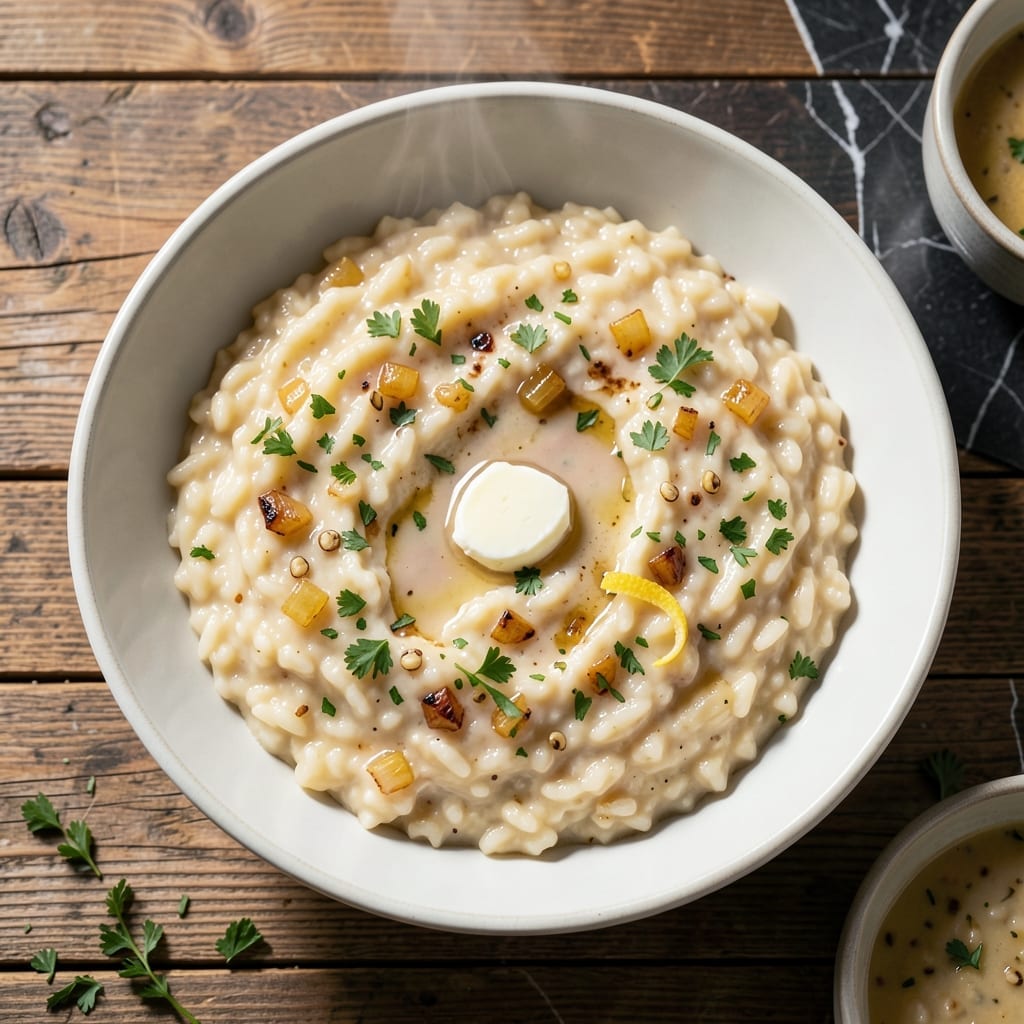
I never thought my rice cooker could produce perfect risotto until I tested this method. The appliance handles the constant stirring automatically, eliminating the traditional stovetop labor.
This approach delivers creamy results with minimal effort. Arborio rice absorbs the broth gradually, creating that signature velvety texture without the usual hands-on attention.
What emerges is restaurant-quality risotto with rich, developed flavors. The rice cooker’s consistent heat ensures even cooking and prevents the common pitfalls of scorching or uneven doneness.
Finishing with butter and parmesan elevates the dish to its final, luxurious state. The technique proves that exceptional risotto doesn’t require constant vigilance.
Ingredients for Risotto Recipe for Rice Cooker
Arborio rice, broth, and a few pantry staples create this hands-off creamy dish.
| Ingredient | Amount | Notes |
|---|---|---|
| Arborio Rice 🍚 | 1 ½ cups | Short-grain, unrinsed for starch |
| Vegetable Broth 🥣 | 4 cups | Low-sodium preferred for control |
| Unsalted Butter 🧈 | 3 tbsp | Divided for cooking and finishing |
| Yellow Onion 🧅 | 1 whole | Finely diced for even distribution |
| Garlic Cloves 🧄 | 3 cloves | Minced to release full flavor |
| Dry White Wine 🍷 | ½ cup | Sauvignon Blanc or Pinot Grigio |
| Parmesan Cheese 🧀 | ¾ cup | Freshly grated from wedge |
| Extra-Virgin Olive Oil 🫒 | 1 tbsp | For sautéing aromatics |
| Sea Salt 🧂 | 1 tsp | Adjust to taste at end |
| Freshly Ground Black Pepper 🌶️ | ½ tsp | Cracked just before using |
| Fresh Parsley 🌿 | ¼ cup | Chopped for garnish |
The Arborio rice is non-negotiable—its high starch content is what gives risotto that signature creaminess. Look for Italian brands like Acquerello or Carnaroli at Whole Foods or specialty stores. If your grocery only has one type, any short-grain rice will work in a pinch. The vegetable broth should be low-sodium so you can control the seasoning. I always keep a few cartons of Imagine or Pacific Foods on hand.
No white wine? Substitute with extra broth plus a splash of lemon juice. Swapping Parmesan for Pecorino Romano? Use one-third less—it’s saltier. The butter can be replaced with olive oil, but the dish won’t be as rich. If you’re out of fresh parsley, dried at half the amount works (just sprinkle it on at the end). The garlic and onion are the flavor base—don’t skip them.
Leftover risotto thickens as it cools. Stir in a splash of warm broth or water to loosen it up. Stores in the fridge for 3-4 days or freezes for 1 month. Reheat gently on the stove—microwaving can make it gummy. Best eaten fresh, but still pretty good the next day.
Why You’ll Love This Recipe
- Hand-Free Cooking: I just dump everything in the rice cooker and walk away—no stirring, no babysitting.
- Buttery Garlic Depth: The onion and garlic melt into the Arborio with that butter, making every bite rich and savory.
- Weeknight Hero: It’s my go-to for busy Tuesdays when I need something cozy but can’t stand over the stove.
- Leftovers? Even Better: Between us, the risotto thickens up overnight and tastes even more decadent the next day.
Step-by-Step Instructions for Risotto in Rice Cooker
Here’s the method. Straightforward, tested, works every time.
Step 1: Sauté Aromatics Until Fragrant
Heat the 1 tbsp Extra-Virgin Olive Oil and 1 tbsp Unsalted Butter in the rice cooker using the sauté function (or a skillet if your cooker lacks this). Add the finely diced Yellow Onion and cook for 3-4 minutes until translucent and fragrant.
Stir in the minced Garlic Cloves and cook for 30 seconds until the aroma fills your kitchen. Don’t let it brown—this prevents bitterness. The onion should be soft but not caramelized, and the garlic should be just golden at the edges.
Step 2: Toast the Arborio Rice
Add the 1.5 cups Arborio Rice to the cooker and stir for 2 minutes until the grains become slightly translucent at the edges. This toasting step builds a nutty depth of flavor and ensures each grain absorbs the liquid evenly.
Pour in the 0.5 cup Dry White Wine and stir constantly until it’s fully absorbed. The rice will look slightly glossy, and the wine’s alcohol will cook off, leaving behind its bright acidity to balance the richness of the dish.
Step 3: Add Broth and Cook Hands-Free
Pour in the 4 cups Vegetable Broth, the remaining 2 tbsp Unsalted Butter, 1 tsp Sea Salt, and 0.5 tsp Freshly Ground Black Pepper. Stir once to distribute everything evenly, then close the lid and set the rice cooker to the standard white rice setting.
Let it cook undisturbed for 18-20 minutes. Resist the urge to open the lid—steam is your ally here. The risotto is ready when the rice is tender but still has a slight bite, and the liquid has been mostly absorbed, leaving a creamy, porridge-like consistency.
Step 4: Finish with Parmesan and Rest
Once the cooker switches to keep-warm, stir in the 0.75 cup Parmesan Cheese until it melts completely into the risotto. The cheese should create a glossy, velvety texture. If it seems too thick, add a splash of warm broth or water to loosen it.
Let it rest for 5 minutes with the lid closed. This allows the grains to plump up fully and the flavors to meld. The risotto should be creamy but not soupy, with each grain distinct yet enveloped in the rich sauce.
Step 5: Garnish and Serve Immediately
Sprinkle with the 0.25 cup Fresh Parsley and give it one final stir. The parsley adds a pop of color and a fresh contrast to the rich, creamy risotto.
Serve immediately while it’s hot and at its creamiest. The texture should be luxurious and fluid, with the rice offering just a hint of resistance. This dish doesn’t wait, so gather everyone around and dig in while it’s perfect.
Pro Tips For Making Risotto Recipe For Rice Cooker
- Toast the Rice First: Sauté the Arborio rice with the onions and garlic in the rice cooker pot before adding liquid—about 2-3 minutes until the grains turn translucent. I learned this the hard way after my first few batches tasted underdeveloped.
- Use Hot Broth: Pour in vegetable broth that’s already warm or at room temperature. Cold broth slows down the cooking and can make the risotto gluey instead of creamy.
- Stir Once, Then Wait: Give the rice a single stir after adding all the liquid, then resist the urge to touch it. Over-stirring in a rice cooker releases too much starch and turns it mushy.
- Finish with Cold Butter: After cooking, stir in 1-2 tablespoons of cold unsalted butter at the end. Sounds weird, but it works—it emulsifies the starches for that classic risotto silkiness.
Make-Ahead Tips for This Dish
Prep Ahead Strategy
You can dice the Yellow Onion and mince the Garlic Cloves up to 24 hours in advance. Store them in separate airtight containers in the fridge. This small prep step saves 5 minutes on cooking day. 💡
Toast Rice First
Toasting the Arborio Rice with aromatics can be done 1 hour ahead. Let it cool completely, then store in the rice cooker pot covered. The flavors will deepen as it sits.
Broth Temperature
Warm the Vegetable Broth before adding it to the cooker. I use my electric kettle to heat it to 160°F while prepping other ingredients. Hot broth jumpstarts the cooking process.
Cheese Prep
Grate the Parmesan Cheese the night before and store it in a ziplock bag in the fridge. This prevents the last-minute scramble when the risotto finishes cooking.
Final Assembly
When ready to cook, just add all prepped ingredients to the rice cooker and start. The hands-off method does the rest. I love walking away while it works its magic. ✨
Rest Before Serving
After cooking, let it rest for 5 minutes with the lid closed. This step is non-negotiable for perfect texture, even when made ahead.
Nutrition Facts
Frequently Asked Questions
What rice works best for this method?
Arborio is ideal due to its high starch content. Carnaroli or Vialone Nano also work well. Avoid long-grain varieties like basmati or jasmine as they won’t achieve the same creaminess.
Can I use chicken broth instead of vegetable?
Yes, chicken broth adds a richer depth. Use low-sodium to control seasoning. For a vegetarian version, stick with vegetable broth or use mushroom broth for extra umami.
Why does my risotto turn out mushy?
Overcooking is the usual culprit. Start checking at 15 minutes and stop when rice is al dente. Also, avoid stirring after the initial mix—it breaks the grains.
Is sautéing the aromatics necessary?
Yes, it builds the flavor foundation. If your cooker lacks a sauté function, use a skillet to cook onions and garlic first, then transfer to the cooker with rice.

- Rice Pudding Recipe With Eggs and Milk: Old-Fashioned Custard-Style Comfort - September 30, 2026
- Rice Noodle Sauce Recipe: Bold Umami Depth for Authentic Stir-Fry - September 30, 2026
- Rice Pilaf Recipe: Fragrant Basmati With Toasted Vermicelli - September 30, 2026