
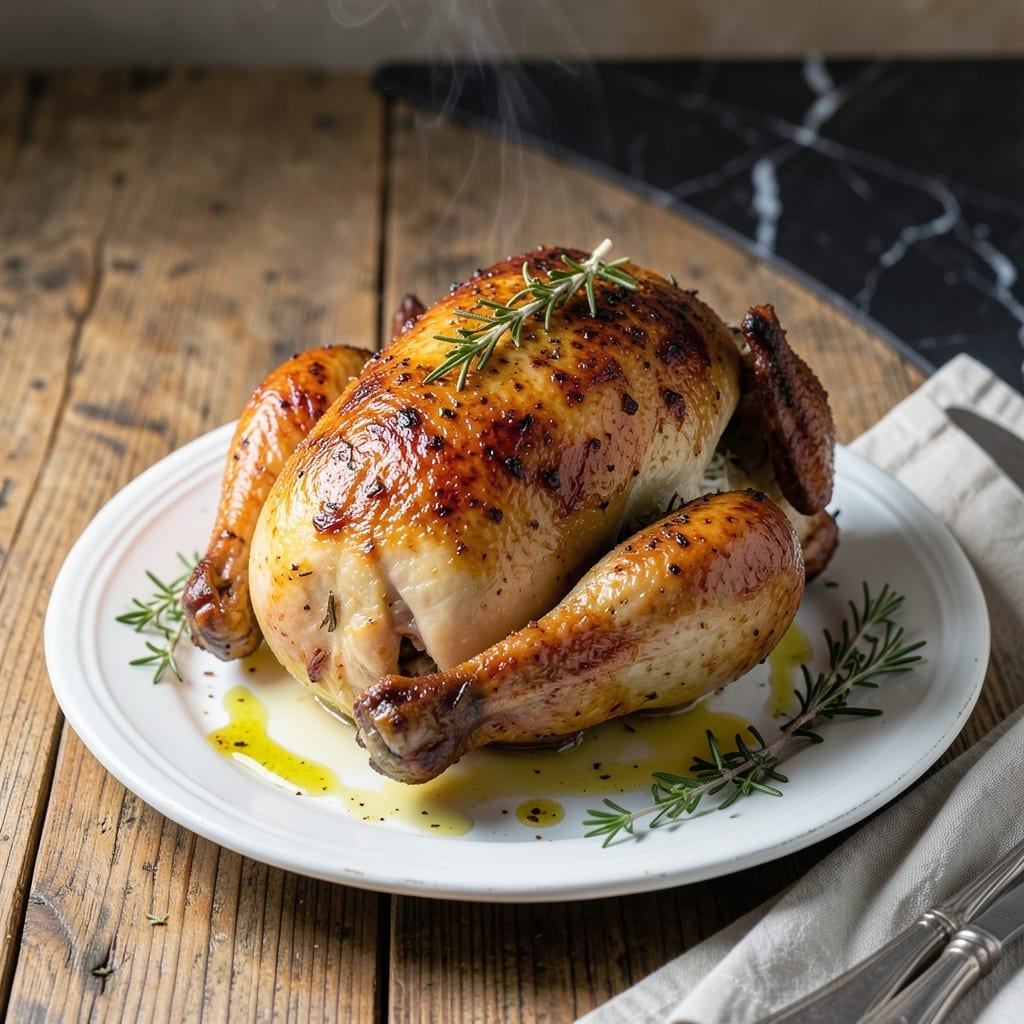
There’s a simple elegance to roasting a young chicken—one that transforms an ordinary dinner into something memorable. This method delivers golden skin and succulent meat with minimal effort, relying on precise timing and even heat distribution.
The key lies in starting with a dry-brined bird and letting it rest at room temperature before roasting. This ensures the seasoning penetrates deeply while the skin crisps to perfection in a hot oven. A few aromatic herbs and butter complete the preparation.
What emerges is a bird with crisp, mahogany skin and meat so tender it nearly falls off the bone. The natural juices create a light pan sauce that enhances every bite, making it ideal for a weeknight meal or Sunday supper.
Serve it with roasted vegetables or a fresh salad. Here’s how to achieve these results every time.
Ingredients for Roast Young Chicken
A handful of quality ingredients transform a simple bird into an elegant centerpiece with crisp skin and tender meat.
| Ingredient | Amount | Notes |
|---|---|---|
| Whole Young Chicken 🍗 | 3 ½ lb | Giblets removed, patted dry |
| Kosher Salt 🧂 | 1 ½ tbsp | Diamond Crystal preferred for dry brine |
| Black Pepper 🌶️ | 1 tsp | Freshly cracked for best flavor |
| Unsalted Butter 🧈 | 4 tbsp | Softened to room temperature |
| Fresh Thyme Sprigs 🌿 | 4 slices | Stems intact for aroma |
| Fresh Rosemary Sprigs 🌿 | 2 slices | Woody stems removed |
| Garlic Cloves 🧄 | 6 cloves | Unpeeled, lightly crushed |
| Lemon 🍋 | 1 whole | Cut in half for cavity |
| Yellow Onion 🧅 | 1 whole | Quartered for roasting pan |
| Carrots 🥕 | 3 whole | Peeled, cut into chunks |
| Celery Stalks 🥬 | 2 whole | Cut into large pieces |
| Olive Oil 🫒 | 1 tbsp | For vegetable tossing |
The chicken itself must be high quality—look for air-chilled, free-range birds (about 3-4 lbs) from Whole Foods or a trusted butcher. The skin should be pale, unblemished, and taut. Diamond Crystal kosher salt is ideal for dry-brining due to its coarse texture and clean flavor. For herbs, fresh thyme and rosemary are non-negotiable; their oils infuse the meat as it roasts.
No fresh herbs? Dried at one-third the amount, but rehydrate them in warm water first. Short on time? Skip the dry brine and season generously just before roasting—it won’t penetrate as deeply but still delivers flavor. The butter can be swapped for duck fat or olive oil for a different richness. If using a larger bird (5+ lbs), increase the salt proportionally.
Rest the brined chicken uncovered in the fridge for 12-24 hours for optimal results. The roasted bird keeps well for 3-4 days in the fridge, though it’s best served fresh. Leftovers make excellent sandwiches or tacos—shred the meat and crisp the skin separately under the broiler.
Why You’ll Love This Recipe
- I’ll be real: it’s my go-to for weeknight dinners, birthdays, or when I need to impress with minimal effort.
- One Pan Wonder: Honestly, I just rub the chicken with butter, salt, and thyme, pop it in the oven, and let the oven do the work.
- Buttery Herb Crust: That crispy skin with the rich butter and fresh thyme? It’s the reason I make this every Sunday.
- Feeds the Family: I’ll be real: it’s my go-to for weeknight dinners, birthdays, or when I need to impress with minimal effort.
Step-by-Step Instructions for Roast Young Chicken
This professional method guarantees crisp, golden skin and perfectly juicy meat every time.
Step 1: Dry Brine and Season the Chicken
Begin by thoroughly patting the 3.5 lb Whole Young Chicken dry inside and out with paper towels. This removes excess moisture that would otherwise steam the skin instead of crisping it. Season the cavity generously with 1.5 tbsp Kosher Salt and 1 tsp Black Pepper, then rub the remaining salt and pepper over the entire exterior.
Place the chicken on a wire rack set over a plate and refrigerate uncovered for 12-24 hours. This dry brining process seasons the meat deeply while drying the skin surface for maximum crispness. The salt will penetrate the meat, ensuring flavor throughout without making it taste salty.
Step 2: Prepare Aromatics and Vegetables
Remove the chicken from the refrigerator 1 hour before roasting to bring it to room temperature. Stuff the cavity with 4 slices Fresh Thyme Sprigs, 2 slices Fresh Rosemary Sprigs, 6 cloves Garlic Cloves (lightly crushed but unpeeled), and 1 whole Lemon cut in half.
In a bowl, toss 1 whole Yellow Onion (quartered), 3 whole Carrots (peeled and cut into chunks), and 2 whole Celery Stalks (cut into large pieces) with 1 tbsp Olive Oil. These vegetables will flavor the pan drippings and create a natural roasting rack for the chicken.
Step 3: Truss and Butter the Chicken
Tuck the wings under the body and tie the legs together with kitchen twine to create a compact shape. This promotes even cooking and helps maintain moisture. Rub the entire surface of the chicken with 4 tbsp Unsalted Butter that has been softened to room temperature.
The butter will melt during roasting, basting the chicken continuously and contributing to the rich, golden-brown finish. Be sure to get butter under the skin where possible—this adds extra flavor and helps crisp the skin from within.
Step 4: Roast to Perfection
Preheat your oven to 425°F. Arrange the seasoned vegetables in a single layer in a roasting pan. Place the chicken breast-side up on top of the vegetables. Roast for 15 minutes at 425°F, then reduce the temperature to 375°F and continue roasting.
Roast for an additional 50-60 minutes, or until the skin is deep golden brown and an instant-read thermometer inserted into the thickest part of the thigh (not touching bone) registers 165°F. The juices should run clear when the thigh is pierced with a knife.
Step 5: Rest and Serve
Transfer the chicken to a cutting board and let it rest for 15 minutes before carving. This allows the juices to redistribute throughout the meat, ensuring every bite is moist and flavorful. Tent loosely with foil to keep it warm.
Carve the chicken and arrange on a platter with the roasted vegetables. Spoon any accumulated pan juices over the top for added flavor. The skin should be crisp and mahogany-colored, while the meat remains tender and succulent throughout.
Pro Tips For Making Roast Young Chicken
- Dry the Skin: Pat the chicken completely dry with paper towels before seasoning—this guarantees crispy skin, not steamed. I learned this the hard way after serving rubbery skin to dinner guests.
- Season Under Skin: Gently loosen the skin and rub kosher salt and butter directly on the meat before roasting. It’s messy but actually changes the outcome, keeping the breast juicy.
- Start Hot: Crank the oven to 425°F for the first 20 minutes, then drop to 375°F to finish. This combo locks in moisture and gets that golden crust without drying it out.
- Rest Before Carving: Let the chicken rest under foil for at least 10 minutes after roasting—yes, even if you’re starving. It redistributes the juices so they don’t all end up on the cutting board.
Perfect Pairings for These Flavors
Wine Pairings
A medium-bodied Pinot Noir from Oregon or Burgundy complements the rich, buttery flavors of the chicken beautifully. Its bright acidity cuts through the fat while enhancing the herbal notes from the thyme and rosemary. I always keep a bottle of Domaine Drouhin on hand for this exact reason. 🍷
Beer Options
For beer lovers, a crisp Belgian Saison with its peppery, citrusy profile pairs wonderfully. If you prefer something lighter, a dry Champagne or sparkling wine offers refreshing contrast to the savory roasted flavors. I find the bubbles cleanse the palate between bites.
A well-chilled Pilsner also works surprisingly well, especially with the garlic and lemon in the cavity.
Side Dish Ideas
Roasted fingerling potatoes tossed with rosemary and olive oil make a hearty companion. Toss 1.5 lbs halved potatoes with 2 tbsp olive oil and 1 tsp salt, then roast at 400°F for 30-35 minutes alongside the chicken. 🥔
Fresh Salad
A simple mixed greens salad with a lemon vinaigrette adds brightness to balance the richness. I like adding thinly sliced radishes and toasted almonds for crunch. The acidity in the dressing mirrors the lemon in the chicken cavity.
Bread Options
Serve with warm crusty bread to soak up the flavorful pan juices. A baguette or sourdough loaf works perfectly. I often brush slices with olive oil and toast them briefly under the broiler for extra crispness.
Nutrition Facts
Frequently Asked Questions
What’s the best oven temperature?
Start at 425°F for 15 minutes to crisp the skin, then reduce to 375°F for even cooking. This two-step method ensures golden skin without drying the meat.
How do I know when it’s done?
Use a meat thermometer—it’s done at 165°F in the thickest part of the thigh. The juices should run clear, and the skin should be deep golden brown.
Can I skip the dry brine?
Yes, but season generously just before roasting. The flavor won’t penetrate as deeply, but the skin will still crisp. For best results, dry brine for 12-24 hours.
What if the skin isn’t crispy?
Pat the chicken dry before seasoning and roasting. If needed, broil for 2-3 minutes at the end to crisp it further. Avoid covering while resting.

- Vegan Lemon Rice Soup Recipe: Bright Citrus and Creamy Comfort - September 25, 2026
- Quaker Rice Cake Copycat Recipe: Crunchy Homemade Delight - September 25, 2026
- Rice Cooker Recipe: Hands-Off Fluffy Grains Every Time - September 25, 2026