
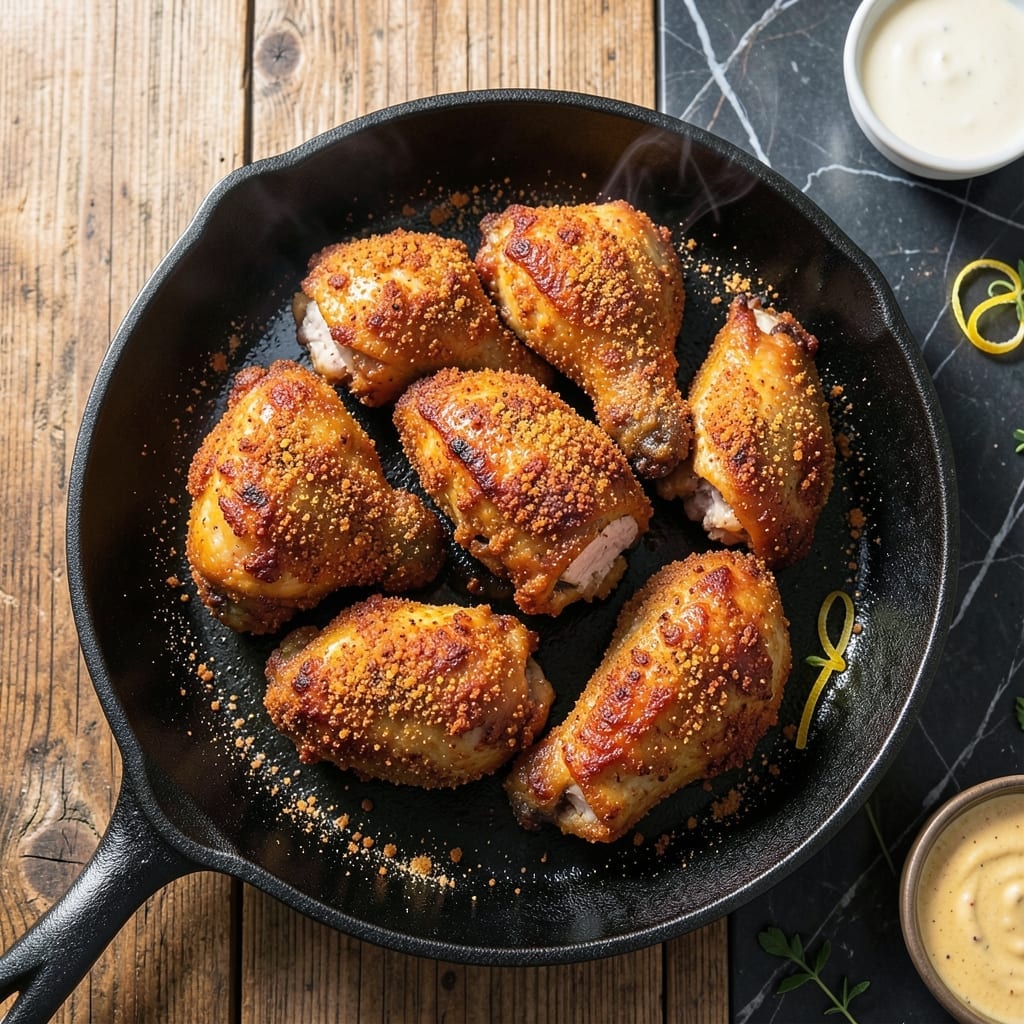
This pressure-cooker method delivers crispy fried chicken that rivals any restaurant version. The secret lies in the broasting technique, which combines pressure cooking with frying for unmatched texture and flavor.
I’ve perfected this approach to ensure the exterior stays shatteringly crispy while the inside remains juicy and tender. The process involves marinating, breading, and then cooking under pressure for that signature result.
What you get is golden, flavorful chicken with a satisfying crunch in every bite. The pressure fryer locks in moisture while achieving that deep-fried texture without the excessive oil.
This method is efficient and delivers perfect results every time. Follow these steps for chicken that’s sure to impress.
Ingredients for Broasted Fried Chicken
Classic ingredients for pressure-cooked crispy chicken with restaurant-quality results at home.
| Ingredient | Amount | Notes |
|---|---|---|
| Chicken Thighs 🍗 | 3 lb | Bone-in, skin-on for crispiness |
| Buttermilk 🥛 | 2 cups | Full-fat for best texture |
| All-Purpose Flour 🌾 | 2 cups | For initial breading layer |
| Cornstarch 🌽 | ½ cup | For extra crunch |
| Paprika 🌶️ | 2 tbsp | Sweet or smoked variety |
| Garlic Powder 🧄 | 1 tbsp | Freshly ground preferred |
| Onion Powder 🧅 | 1 tbsp | Balances seasoning blend |
| Salt 🧂 | 2 tsp | Diamond Crystal kosher salt |
| Black Pepper 🌶️ | 1 tsp | Freshly ground for best flavor |
| Cayenne Pepper 🔥 | ½ tsp | Adjust for spice preference |
| Peanut Oil 🫒 | 4 cups | High smoke point for frying |
| Large Eggs 🥚 | 2 whole | For binding breading |
| Hot Sauce 🌶️ | 2 tbsp | For marinade tang |
The chicken is the foundation—bone-in, skin-on thighs deliver the juiciest results with maximum crunch. Source from local butchers or specialty grocers like Whole Foods for superior quality. For the buttermilk, full-fat versions create a richer marinade that adheres better to the coating. The cornstarch is non-negotiable for that signature shatter—Bob’s Red Mill is a reliable brand.
No buttermilk? Whole milk with 1 tbsp vinegar per cup works in a pinch. Swap peanut oil for vegetable or canola oil if needed, but maintain the high smoke point. For heat-sensitive palates, reduce cayenne by half. The paprika can be sweet or smoked depending on preference—Penzeys offers excellent options. Never skip the cornstarch; it’s essential for the crispy texture.
Marinate the chicken in buttermilk for 12-24 hours for optimal flavor penetration. Store leftover oil in a cool, dark place for up to 3 months. Cooked chicken keeps in the fridge for 3-4 days but is best served immediately for peak crispiness.
Why You’ll Love This Recipe
- Set It and Forget: That buttermilk bath does all the work while I prep the rest.
- Crispy Outside, Juicy Inside: The cornstarch and paprika give it that perfect crunch with tender thighs underneath.
- Feeds a Crowd: I make a double batch for Sunday dinner and still have leftovers for Monday.
- Budget Friendly: Chicken thighs stay cheap, and the flour stretch means I’m not breaking the bank.
Step-by-Step Instructions for Broasted Fried Chicken
Master this method for pressure-cooked chicken with an irresistibly crispy exterior every time.
Step 1: Marinate Chicken in Buttermilk and Hot Sauce
Combine the 2 cups Buttermilk and 2 tbsp Hot Sauce in a large bowl. Submerge all 3 lb Chicken Thighs in the mixture, ensuring they’re fully coated. Cover and refrigerate for at least 4 hours, but overnight is ideal for maximum tenderness.
The buttermilk’s acidity breaks down proteins in the chicken, while the hot sauce adds a subtle tang that complements the breading. Don’t skip this step—it’s the secret to juicy meat that stays moist under the crust.
Step 2: Prepare the Seasoned Breading Mixture
In a large shallow dish, whisk together the 2 cups All-Purpose Flour, 0.5 cup Cornstarch, 2 tbsp Paprika, 1 tbsp Garlic Powder, 1 tbsp Onion Powder, 2 tsp Salt, 1 tsp Black Pepper, and 0.5 tsp Cayenne Pepper. The cornstarch is key here—it creates that extra-crispy texture that sets broasted chicken apart.
Mix thoroughly until all ingredients are evenly distributed and the mixture takes on a uniform, slightly orange hue from the paprika. This blend of spices delivers that classic, well-balanced fried chicken flavor with just the right amount of heat.
Step 3: Dredge and Double-Coat the Chicken
Remove the chicken from the buttermilk marinade and let excess drip off. Dredge each piece in the flour mixture, pressing firmly to adhere. Shake off any excess, then dip back into the buttermilk, and finally dredge in the flour mixture a second time for an extra-thick crust.
Place the breaded chicken on a wire rack set over a baking sheet. This allows air to circulate, preventing the coating from getting soggy before frying. Let the chicken rest for 10-15 minutes to help the breading set—this prevents it from falling off during cooking.
Step 4: Pressure-Fry to Crispy Perfection
Heat the 4 cups Peanut Oil in a pressure fryer to 350°F. Working in batches if necessary to avoid overcrowding, carefully lower the breaded chicken into the hot oil. Secure the lid and cook at 12-15 psi for 8-10 minutes.
The pressure cooking seals in juices while the high heat creates a shatteringly crisp crust. You’ll know it’s done when the internal temperature reaches 165°F and the coating is a deep, golden brown. Remove the chicken and drain on a wire rack to maintain crispiness.
Step 5: Rest and Serve Immediately
Let the chicken rest for 5 minutes before serving. This brief rest allows the juices to redistribute, ensuring each bite is moist and flavorful. The crust will remain crispy if you’ve drained it properly on a rack rather than paper towels.
Serve while hot for the ultimate experience—the contrast between the crunchy exterior and tender interior is what makes this dish exceptional. The breading should crackle slightly when bitten into, giving way to perfectly cooked, juicy chicken thighs with a subtle spicy kick.
Pro Tips For Making Broasted Fried Chicken
- Double Fry for Crisp: I learned this the hard way—fry once at 325°F until cooked through, then again at 375°F for 2-3 minutes to get that shatteringly crisp crust. Sounds like extra work, but it’s the only way to lock in juiciness and crunch.
- Buttermilk Overnight: Give the chicken thighs at least 8 hours in the buttermilk, or even better, overnight. I was skeptical until I tried it— the longer soak makes the meat tender and the coating stick like glue.
- Skip the Crowding: Resist the urge to load up the pan. Cook in batches with space between pieces, or the temperature drops and you’ll end up with soggy, steamed chicken instead of broasted perfection.
- Cornstarch Boost: Replace about 20% of the all-purpose flour with cornstarch in your dredge. My grandmother swore by this, and she was right: it creates a lighter, crispier crust that stays crunchy longer.
Troubleshooting broasted fried chicken
Breading Falls Off
If your coating separates during cooking, the breading likely didn’t set properly. Let it rest on a rack for the full 10-15 minutes after dredging. Also, press firmly when coating to ensure adhesion, and avoid touching the pieces once breaded. 💡
Not Crispy Enough
For that signature crunch, ensure your oil reaches 350°F before adding chicken. The cornstarch in your 0.5 cup portion is crucial—don’t skip it. If cooking in batches, maintain oil temperature between each batch by allowing 2-3 minutes to reheat.
Soggy Bottoms
Drain on a wire rack, not paper towels, to prevent steam from softening the crust. Paper towels trap moisture against the chicken. The rack allows air circulation, keeping all sides crisp. I learned this the hard way after my first few soggy batches.
Undercooked Interior
If your chicken looks done but isn’t 165°F internally, your pressure fryer may need calibration. Cook for the full 10 minutes at 12-15 psi. For safety, always check with a meat thermometer, especially near the bone.
Oil Temperature Drops
Overcrowding the fryer causes oil temperature to plummet. Work in batches with 3-4 pieces at a time for a standard home pressure fryer. This maintains consistent heat for even cooking and proper crisping.
Greasy Coating
Excess oil in your breading often means the oil wasn’t hot enough when you started. Also, pat the chicken dry after the buttermilk marinade but before dredging. This helps the flour stick better and reduces greasiness.
Nutrition Facts
Frequently Asked Questions
Do I need a special fryer for this?
Yes, a pressure fryer is essential for authentic broasting. It cooks at 12-15 psi while frying, creating the signature crispy texture. Regular deep fryers won’t achieve the same results.
Can I use boneless chicken?
Bone-in, skin-on thighs work best for flavor and juiciness. Boneless pieces may dry out during pressure cooking. If you must substitute, reduce cooking time by 2 minutes.
How do I store leftovers?
Keep in an airtight container in the fridge for up to 3 days. Reheat in a 375°F oven for 10-15 minutes to restore crispiness. Never microwave.

- Jollof Rice Sauce Recipe: West African Tomato and Spice Infusion - September 25, 2026
- Japanese Rice Soup Recipe: Umami-Rich Comfort in a Bowl - September 25, 2026
- Homemade Cream Of Rice Recipe: Silk-Smooth Breakfast in Minutes - September 25, 2026