
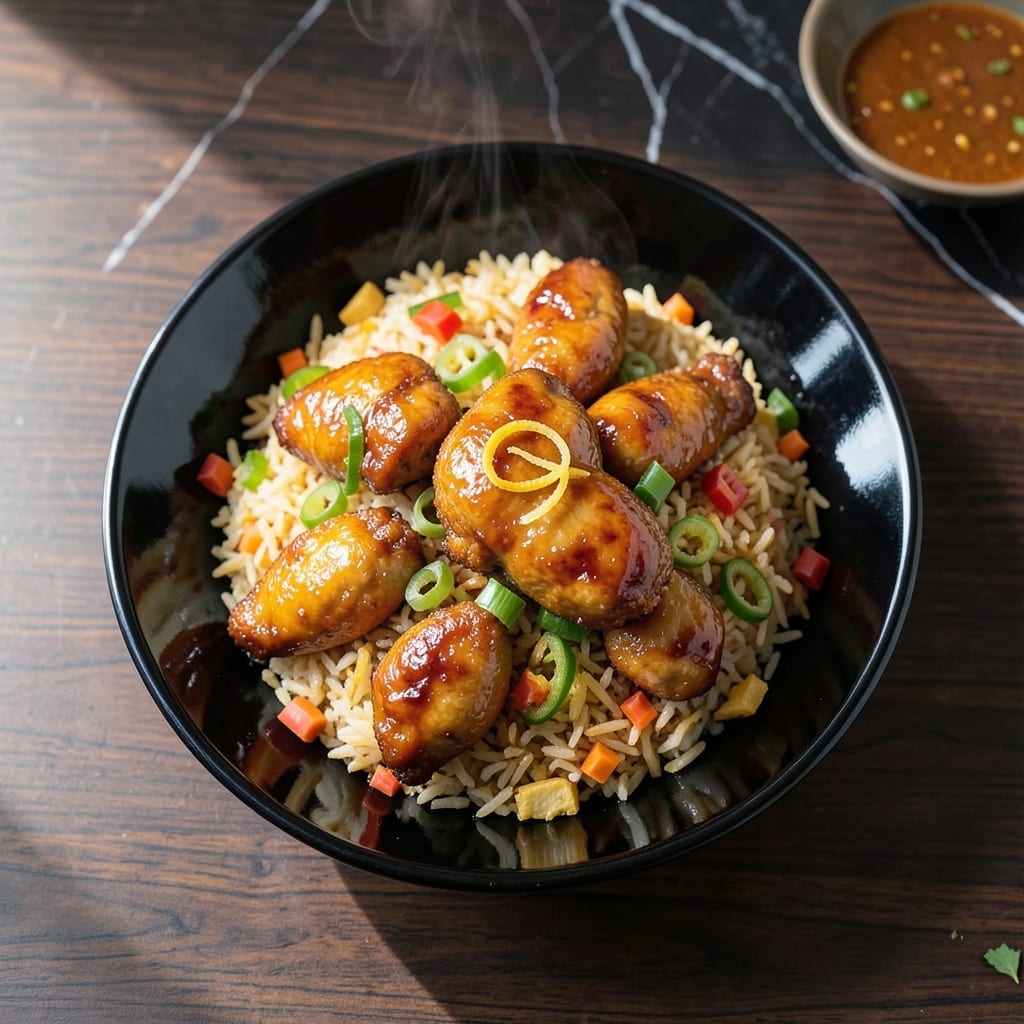
This Indo-Chinese classic brings bold flavors to your home kitchen with a perfect balance of sweet, spicy, and tangy notes. The dish combines tender chicken in a rich sauce with fragrant fried rice, creating a complete meal that satisfies every craving.
I developed this recipe after years of perfecting the wok-tossed technique, ensuring each component maintains its distinct character while harmonizing beautifully together. The chicken stays juicy, the sauce clings perfectly, and the rice absorbs just enough flavor without turning mushy.
The secret lies in cooking the chicken and rice separately before combining them at the end. This preserves textures and prevents the rice from becoming soggy while allowing the chicken to develop its signature glossy coating.
Serve this feast for dinner and watch it disappear. The combination of textures and flavors makes it a standout dish for any occasion.
Ingredients for Chicken Manchurian and Fried Rice
Bold Indo-Chinese flavors start with these fresh and fragrant ingredients for a wok-tossed masterpiece.
| Ingredient | Amount | Notes |
|---|---|---|
| Boneless Chicken Thighs 🍗 | 1 ½ lb | Cut into bite-sized pieces |
| Soy Sauce 🫒 | 3 tbsp | Low-sodium preferred |
| Cornstarch 🌾 | 2 tbsp | For coating chicken |
| Garlic Cloves 🧄 | 6 cloves | Minced finely |
| Fresh Ginger 🌿 | 1 tbsp | Grated or minced |
| Green Bell Pepper 🌶️ | 1 whole | Diced into small cubes |
| Red Onion 🧅 | 1 whole | Thinly sliced |
| Tomato Ketchup 🍅 | ½ cup | For sauce base |
| Chili Sauce 🌶️ | ¼ cup | Adjust for heat preference |
| Rice Vinegar 💧 | 2 tbsp | For tangy balance |
| Brown Sugar 🍚 | 1 tbsp | Light or dark |
| Long-Grain White Rice 🍚 | 2 cups | Cooked and cooled |
| Green Onions 🌿 | 3 whole | Thinly sliced for garnish |
| Vegetable Oil 🫒 | ½ cup | High smoke point for frying |
| Sesame Oil 🫒 | 1 tsp | For finishing aroma |
The chicken thighs are non-negotiable for that tender, juicy bite—breasts dry out too fast. Costco or Whole Foods have great pre-cut options, but butcher your own for uniform pieces. Fresh ginger and garlic are key; avoid the pre-minced jars (they lack punch). For the rice, day-old cooked rice works best—Jasmine or Basmati hold up to high heat without turning to mush.
No chili sauce? Sriracha mixed with a bit of ketchup gets you close. Swap tomato ketchup for tomato paste thinned with water if that’s what you’ve got. Cornstarch can be arrowroot powder at 1:1 ratio. For a gluten-free version, use tamari instead of soy sauce. The brown sugar can be coconut sugar or honey (though honey will add a distinct flavor).
Cooked rice keeps in the fridge for 3-4 days, but it’s best used within 24 hours for this dish. Store leftover Manchurian in an airtight container for up to 3 days—reheat gently to avoid breaking the sauce. Always keep ginger and garlic in a cool, dark place.
Why You’ll Love This Recipe
- One Pan Wonder: I love that the chicken and rice cook together, so I’m not juggling multiple pots.
- Flavor Bomb: The garlic and ginger in the sauce make every bite ridiculously good.
- Weeknight Hero: Honestly, it’s my go-to when I need dinner ready in under 30.
- Stretches Further: Leftovers taste even better the next day, and it feeds my family for two meals.
Step-by-Step Instructions for Chicken Manchurian and Fried Rice
Master the wok with this precise method for crispy chicken and fragrant rice in every bite.
Step 1: Coat and Fry the Chicken
Cut the 1.5 lb boneless chicken thighs into bite-sized pieces and pat them completely dry with paper towels. In a bowl, toss the chicken with the 3 tbsp soy sauce and 2 tbsp cornstarch until evenly coated. The cornstarch creates a light crust that will crisp beautifully.
Heat ½ cup vegetable oil in a wok over medium-high heat until shimmering. Working in batches to avoid crowding, fry the chicken pieces for 4-5 minutes until they’re golden brown and cooked through. Transfer to a paper towel-lined plate to drain excess oil. The chicken should be crispy on the outside and juicy inside.
Step 2: Prepare the Manchurian Sauce
In the same wok, leave about 2 tbsp vegetable oil and discard the rest. Add the 6 cloves garlic cloves and 1 tbsp fresh ginger, stirring for 30 seconds until fragrant. Then add the 1 whole red onion and 1 whole green bell pepper, stir-frying for 3-4 minutes until the vegetables soften slightly but retain their crunch.
Pour in the ½ cup tomato ketchup, ¼ cup chili sauce, 2 tbsp rice vinegar, and 1 tbsp brown sugar. Stir well to combine and let the sauce simmer for 2 minutes until it thickens slightly. The sauce should be glossy, with a balance of sweet, tangy, and spicy flavors.
Step 3: Combine Chicken with Sauce
Return the fried chicken to the wok with the sauce. Toss everything together gently for 1-2 minutes until the chicken is fully coated and the sauce clings to each piece. Avoid over-stirring, as this can break the crispy coating on the chicken.
The sauce will deepen in color and become slightly thicker as it absorbs into the chicken. Taste and adjust seasoning if needed, though the soy sauce and chili sauce should provide enough salt and heat.
Step 4: Stir-Fry the Rice
In a clean wok or large skillet, heat 1 tbsp vegetable oil over high heat. Add the 2 cups long-grain white rice (cooked and cooled) and stir-fry for 2-3 minutes, breaking up any clumps with the back of your spatula. The rice should be hot and slightly crisp in spots.
Drizzle the 1 tsp sesame oil over the rice and add 1 tbsp soy sauce from the original 3 tbsp. Toss well to distribute the oil and soy sauce evenly. The rice should be fragrant, with a subtle sheen from the sesame oil.
Step 5: Garnish and Serve
Transfer the fried rice to a serving platter and top with the chicken Manchurian. Garnish with the 3 whole green onions, thinly sliced. The green onions add a fresh, oniony bite that cuts through the richness of the dish.
Serve immediately while hot. The chicken should retain its crispness, and the rice should be light and separate, with each grain distinct. The combination of textures and flavors—crispy, saucy, fragrant—makes this dish irresistible.
Pro Tips For Making Chicken Manchurian And Fried Rice
- Velvet the Chicken: Toss the boneless chicken thighs with cornstarch and a splash of soy sauce before frying—I learned this the hard way after my first batch came out rubbery and bland.
- High Heat Only: Crank the wok to smoking hot before adding the chicken, or it’ll steam instead of sear. About 2 tablespoons of oil, and don’t crowd the pan.
- Fresh Ginger Matters: Skip the powdered stuff; freshly grated ginger makes a real difference in the manchurian sauce. A 1-inch knob is perfect for this dish.
- Use Day-Old Rice: Sounds weird, but it works: cold, leftover rice fries up fluffier and absorbs the sauce better than fresh—this isn’t the prettiest method, but it’s the tastiest.
Health Benefits of This Dish
Protein Powerhouse
The 1.5 lb boneless chicken thighs pack a serious protein punch, delivering about 40 grams per serving to support muscle growth and repair. Chicken thighs are richer in iron and zinc than breasts, which helps boost your immune system and energy levels. 💪
Vitamin Rich Sauce
The combination of tomato ketchup and chili sauce provides a healthy dose of vitamin C and lycopene, a powerful antioxidant. These compounds support skin health and may reduce the risk of chronic diseases.
Ginger and Garlic Boost
The 1 tbsp fresh ginger and 6 cloves garlic aren’t just for flavor—they’re packed with anti-inflammatory properties. Ginger aids digestion, while garlic supports heart health and immune function.
Balanced Energy from Rice
The 2 cups long-grain white rice provides complex carbohydrates for sustained energy. Paired with the protein from chicken, this dish creates a balanced meal that keeps you full and energized for hours.
Vegetable Nutrients
With 1 whole green bell pepper and 1 whole red onion, you get a healthy dose of vitamin A and fiber. These veggies add crunch, color, and essential nutrients without overpowering the dish.
Healthy Fats
The ½ cup vegetable oil used for frying, while high in calories, provides essential fatty acids. The 1 tsp sesame oil adds heart-healthy polyunsaturated fats, which can help lower bad cholesterol levels. 🌟
Nutrition Facts
Frequently Asked Questions
Can I use chicken breast instead of thighs?
Yes, but thighs stay juicier. If using breasts, cut into small pieces and reduce frying time to 3-4 minutes to prevent dryness. Brining the chicken first can help maintain moisture.
How do I make the sauce less sweet?
Reduce the brown sugar to 1 tsp or omit it. Balance with an extra splash of rice vinegar or a pinch of salt. The tang will offset any sweetness.
Can I prepare this dish ahead of time?
Cook the chicken and sauce separately, then refrigerate for up to 2 days. Reheat gently in a pan with a splash of water. Fry the rice fresh just before serving to maintain texture.
Why is my sauce too thin?
Simmer it longer to reduce. Alternatively, mix 1 tsp cornstarch with water, then stir into the sauce until thickened. Avoid adding too much at once.

- Jollof Rice Sauce Recipe: West African Tomato and Spice Infusion - September 25, 2026
- Japanese Rice Soup Recipe: Umami-Rich Comfort in a Bowl - September 25, 2026
- Homemade Cream Of Rice Recipe: Silk-Smooth Breakfast in Minutes - September 25, 2026