
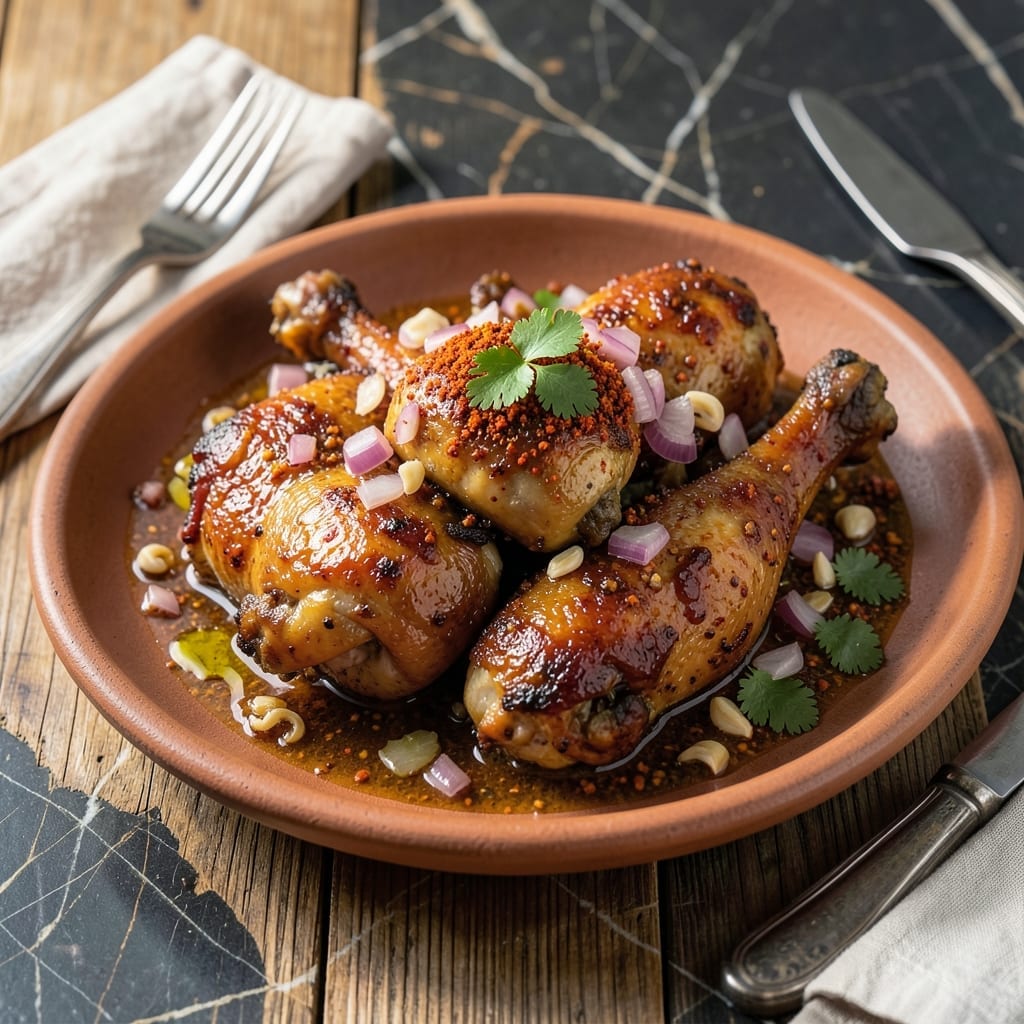
This Ethiopian chicken stew brings the vibrant flavors of berbere spice to your kitchen with a traditional touch. The slow-cooked dish develops deep, complex layers that define authentic Ethiopian cuisine.
Hard-boiled eggs absorb the rich, spiced sauce while adding protein and visual appeal. The berbere blend—earthy, slightly sweet, and fiery—transforms simple ingredients into something extraordinary.
What emerges is tender chicken in a thick, aromatic sauce, perfect for scooping with injera bread. The eggs soak up the flavors, creating bites that are both hearty and satisfying.
Serve this stew with flatbread or rice for a meal that’s as comforting as it is flavorful. The process rewards patience with restaurant-quality results.
Ingredients for Ethiopian Chicken
Traditional Ethiopian flavors start with chicken, eggs, and the bold warmth of berbere spice blend.
| Ingredient | Amount | Notes |
|---|---|---|
| Chicken Thighs 🍗 | 2 lb | Boneless, skin-on, cut into pieces |
| Large Eggs 🥚 | 6 whole | Hard-boiled and peeled |
| Berbere Spice 🌶️ | 3 tbsp | Ethiopian blend, essential for authenticity |
| Red Onion 🧅 | 2 whole | Finely chopped for base |
| Garlic Cloves 🧄 | 6 cloves | Minced for depth of flavor |
| Fresh Ginger 🌿 | 1 tbsp | Peeled and grated |
| Tomato Paste 🍅 | 2 tbsp | For rich, concentrated tomato flavor |
| Chicken Stock 💧 | 2 cups | Low-sodium preferred for control |
| Extra-Virgin Olive Oil 🫒 | ¼ cup | For sautéing aromatics |
| Salt 🧂 | 1 ½ tsp | Kosher or sea salt, to taste |
| Ground Black Pepper 🌶️ | ½ tsp | Freshly ground for best flavor |
| Injera Bread 🍞 | 4 pieces | Ethiopian flatbread, for serving |
The berbere spice is non-negotiable here—look for authentic Ethiopian blends at specialty markets or African grocers. Penzeys carries a solid version if you’re ordering online. Chicken thighs stay juicy during the long cook, but drumsticks work too. For the injera, check the freezer section at international markets or make your own with teff flour.
No berbere? Mix cayenne, paprika, fenugreek, cardamom, and ginger for a DIY version (it won’t be identical, but close). Swap chicken stock for vegetable stock if needed. The eggs are traditional, but omit if preferred—just add extra chicken. Tomato paste can be swapped for crushed tomatoes reduced by half.
Leftovers deepen in flavor overnight and keep for 4 days refrigerated. Freeze without eggs for up to 3 months. Reheat gently to preserve the sauce’s rich texture.
Why You’ll Love This Recipe
- One Pan Wonder: I toss everything in—chicken, berbere, onions—and let the oven do the work.
- Flavor Explosion: That first bite with the smoky berbere and caramelized onions? Ridiculously good.
- Weeknight Hero: Honestly, it’s my go-to for busy Tuesdays when I need dinner fast.
- Budget Stretcher: Chicken thighs and pantry spices feed my family for two meals, easy.
Step-by-Step Instructions for Ethiopian Chicken Stew
This method ensures deep, complex flavors with authentic Ethiopian character every time.
Step 1: Sauté the Aromatic Base
Heat the 0.25 cup Extra-Virgin Olive Oil in a large, heavy pot over medium heat. Add the 2 whole Red Onion, finely chopped, and cook for 8-10 minutes until they soften and turn translucent, stirring frequently to prevent burning.
Add the 6 cloves Garlic Cloves, minced, and the 1 tbsp Fresh Ginger, grated. Sauté for 1-2 minutes until fragrant—you’ll notice the aroma become more intense and complex. This base is crucial for building the stew’s signature depth.
Step 2: Toast the Spices and Build the Sauce
Stir in the 3 tbsp Berbere Spice and cook for 30 seconds to toast the spices lightly. This step wakes up the flavors and ensures they bloom in the oil. Immediately add the 2 tbsp Tomato Paste and cook for another 2 minutes, stirring constantly to prevent sticking.
The tomato paste should darken slightly and start to caramelize at the edges. This creates a rich, concentrated base for the stew. At this point, pour in the 2 cups Chicken Stock and stir to deglaze the pot, scraping up any browned bits from the bottom.
Step 3: Simmer the Chicken to Tenderness
Add the 2 lb Chicken Thighs, cut into pieces, to the pot. The liquid should just cover the chicken—if it doesn’t, add a splash of water. Bring to a gentle simmer, then reduce the heat to low. Cover and let it cook for 35-40 minutes.
The chicken is done when it’s fork-tender and the sauce has thickened slightly. Season with the 1.5 tsp Salt and 0.5 tsp Ground Black Pepper, adjusting to taste. The berbere spice already contains salt, so taste carefully before adding more.
Step 4: Finish with Hard-Boiled Eggs
Gently stir in the 6 whole Large Eggs, hard-boiled and peeled, ensuring they’re fully coated in the sauce. Simmer uncovered for 5 minutes to allow the flavors to meld and the eggs to absorb some of the stew’s richness.
The eggs should remain whole but will take on a beautiful reddish hue from the berbere. The sauce will thicken further as it cools slightly. Remove from heat and let it rest for 5 minutes before serving.
Step 5: Serve with Injera Bread
Ladle the stew into shallow bowls, ensuring each serving includes chicken, eggs, and plenty of sauce. Serve with the 4 pieces Injera Bread on the side for scooping up every last bit of the flavorful dish.
The injera’s slightly tangy flavor pairs perfectly with the rich, spiced stew. This dish is traditionally eaten with the hands, using the injera to gather the meat and sauce.
Pro Tips For Making Ethiopian Chicken
- Brown the Onions First: Cook the red onions low and slow until deeply caramelized—about 20-25 minutes. This builds the sweet, rich base that balances the berbere’s heat.
- Toast the Berbere: Bloom the berbere spice in oil for 30 seconds before adding liquids. I learned this the hard way—raw spice tastes harsh, but toasting mellows it into something complex.
- Skip the Egg Overmix: Whisk the eggs just until combined, not frothy. Overmixing makes the sauce tough instead of silky—my grandmother swore by this, and she was right.
- Use Thighs with Skin: Bone-in, skin-on thighs stay juicy during the long simmer. Sounds obvious, but I used to use boneless and wondered why the dish dried out.
Essential Equipment for This Recipe
Heavy Pot
I always use my 5.5-quart Le Creuset Dutch oven for this stew. The heavy enameled cast iron distributes heat evenly and maintains steady temperatures during the long simmer. A stainless steel stockpot works too if that’s what you have. 🔥
Wooden Spoon
A wooden spoon is essential for stirring the berbere-spiced sauce. Unlike metal, it won’t scratch your pot or react with the acidic tomatoes. I keep a dedicated spoon just for my stews and braises.
Sharp Chef’s Knife
You’ll be chopping a lot of onions, so a 8-inch chef’s knife makes quick work of the prep. I use my Wüsthof Classic—it’s been my go-to for years. A good knife makes cooking more enjoyable and safer.
Instant-Read Thermometer
While not strictly necessary, I love using my ThermoWorks Thermapen to check the chicken’s internal temperature. 165°F is your target for perfectly cooked thighs. It takes the guesswork out of doneness.
Injera Serving Platter
Traditionally, this stew is served on a large mesob (woven straw platter) lined with injera. A large, shallow bowl or platter works well at home. The key is having enough space for everyone to share from the same dish.
Hard-Boiled Egg Holder
An egg slicer isn’t for slicing here, but I repurpose mine as a holder while peeling the 6 hard-boiled eggs. It keeps them steady as I work, preventing those frustrating slips that can damage the whites.
Nutrition Facts
Frequently Asked Questions
What can I use if I don’t have berbere spice?
Mix 1 tsp cayenne, 1 tbsp paprika, 1/2 tsp each fenugreek, cardamom, and ginger. It won’t be identical but captures the warmth.
Can I make this in a slow cooker?
Yes! Sauté aromatics first, then transfer everything to the slow cooker. Cook on low for 6-7 hours or high for 3-4 hours.
Why did my sauce turn out too thin?
Simmer uncovered for 5-10 minutes to reduce, or mix 1 tbsp cornstarch with water and stir in. The sauce thickens as it cools too.
How spicy is this dish?
Berbere is warm but not overwhelming. For less heat, use 2 tbsp spice instead of 3 tbsp. Serve yogurt on the side to cool it down.

- Jollof Rice Sauce Recipe: West African Tomato and Spice Infusion - September 25, 2026
- Japanese Rice Soup Recipe: Umami-Rich Comfort in a Bowl - September 25, 2026
- Homemade Cream Of Rice Recipe: Silk-Smooth Breakfast in Minutes - September 25, 2026