
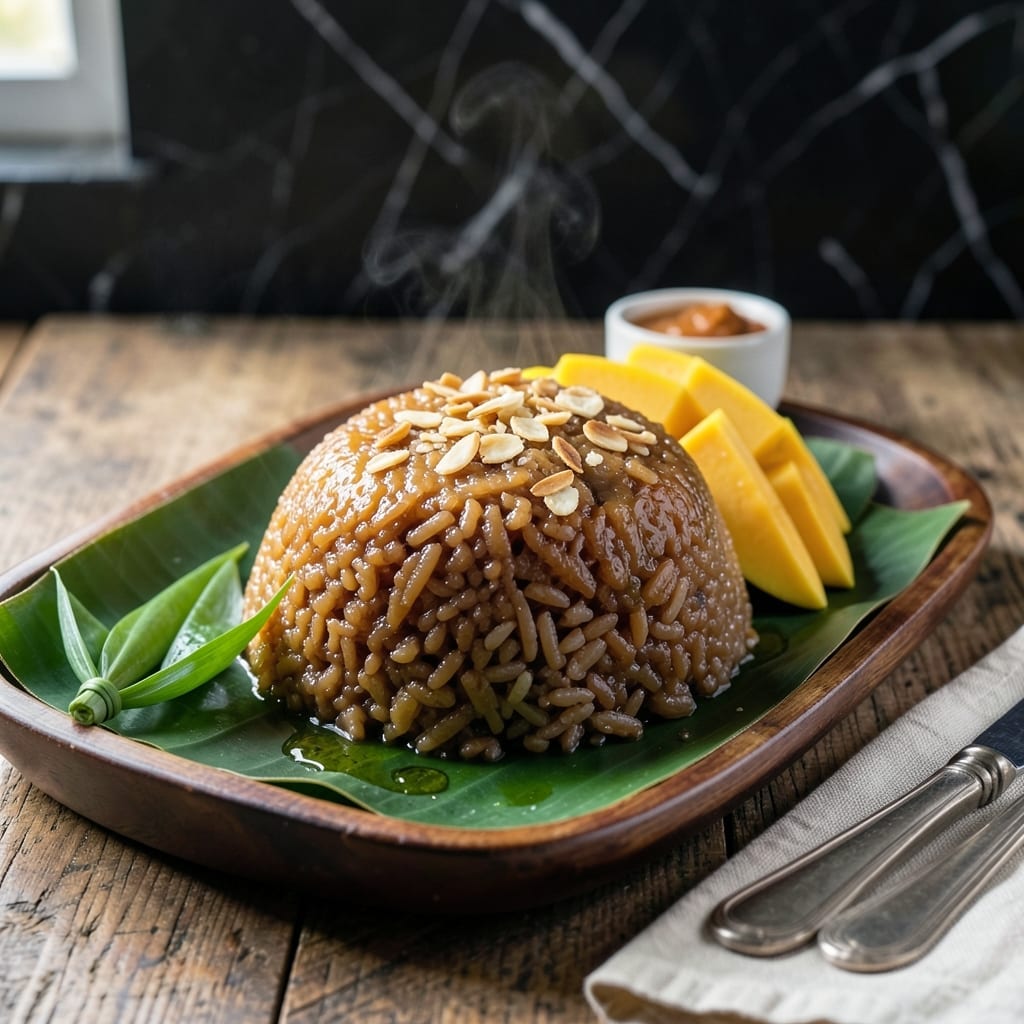
This traditional Filipino dessert transforms simple ingredients into a rich, coconut-infused treat. Glutinous rice cooks in coconut milk until tender, then sweetens with brown sugar for a sticky, satisfying texture.
Perfect for fiestas or family gatherings, this dish captures the warmth of Filipino kitchens. The combination of coconut and sticky rice creates a comforting, slightly chewy dessert that’s both humble and celebratory.
Ingredients for Filipino Biko Sweet Sticky Rice
Coconut milk, glutinous rice, and brown sugar create this festive Filipino dessert with rich texture.
| Ingredient | Amount | Notes |
|---|---|---|
| Glutinous Rice 🌾 | 2 cups | Soaked overnight preferred |
| Coconut Milk 🥥 | 2 cups | Full-fat for creaminess |
| Brown Sugar 🟤 | 1 ½ cups | Light or dark variety |
| Water 💧 | 1 cup | For initial rice cooking |
| Pandan Leaves 🌿 | 3 pieces | Optional for authentic flavor |
| Salt 🧂 | ¼ tsp | Fine grain preferred |
| Coconut Oil 🫒 | 2 tbsp | For greasing pan |
| Vanilla Extract 🌿 | 1 tsp | Pure extract recommended |
| Raisins 🍇 | ½ cup | Optional for texture contrast |
| Shredded Coconut 🥥 | ½ cup | Toasted for garnish (optional) |
The glutinous rice is essential here—look for it at Asian markets or well-stocked international aisles. Brands like Koda Farms or Bob’s Red Mill offer reliable quality. For coconut milk, full-fat cans from Thai Kitchen or Native Forest provide the creamiest results. Don’t confuse glutinous rice with regular white rice; the sticky texture is non-negotiable for authentic biko.
No pandan leaves? Vanilla extract or a splash of coconut extract works as a substitute. Brown sugar can be swapped for muscovado sugar for deeper caramel notes. Raisins are traditional but diced mango or jackfruit add a fun twist. If using canned coconut milk, shake the can vigorously before measuring to incorporate the cream.
Store leftovers in an airtight container at room temperature for 2 days or refrigerate for up to 5 days. Reheat gently in the microwave with a splash of water to restore creaminess. For best texture, serve warm with extra toasted coconut on top.
Why You’ll Love This Recipe
- One Pot Wonder: I just dump glutinous rice, coconut milk, and brown sugar in a pot—no fancy steps, just stir and let it work its magic.
- Caramelized Heaven: The brown sugar melts into this deep, toffee-like sweetness that soaks into every sticky grain. Honestly, it’s the kind of taste that lingers long after the last bite.
- Fiesta Ready: Between us, I’ve served this at potlucks, birthdays, even just a regular Tuesday—it’s always the first thing to disappear.
- Keeps Like a Dream: Leftovers? Even better the next day. I’ll be real: I’ve eaten cold biko straight from the fridge at midnight. No regrets.
Step-by-Step Instructions for Filipino Biko Sweet Sticky Rice
This method ensures perfectly sticky, fragrant biko with the ideal balance of sweetness and coconut richness.
Step 1: Prepare and Soak the Glutinous Rice
Begin by rinsing the 2 cups glutinous rice under cold water until the water runs clear. This removes excess starch and prevents a gummy texture in the final dish. Drain thoroughly in a fine-mesh sieve.
Transfer the rice to a large bowl and cover with enough cold water to submerge it by 2 inches. Soak for at least 4 hours, or preferably overnight. This step is crucial for achieving the characteristic soft, sticky consistency that defines biko.
Step 2: Cook the Rice with Coconut Milk and Aromatics
In a heavy-bottomed pot, combine the soaked and drained glutinous rice with 2 cups coconut milk, 1 cup water, and 3 pieces pandan leaves. Stir in 0.25 tsp salt to enhance the flavors. Bring to a gentle boil over medium-high heat.
Once boiling, reduce heat to low, cover the pot, and simmer for 20-25 minutes, stirring occasionally to prevent sticking. The rice should absorb most of the liquid and become tender but still slightly firm. The pandan leaves will infuse their unique floral aroma into the mixture.
Step 3: Sweeten and Thicken the Mixture
Add 1.5 cups brown sugar and 1 tsp vanilla extract to the pot, stirring until the sugar dissolves completely. This step transforms the mixture into the sweet, caramelized base of biko. Continue cooking over low heat for an additional 10-15 minutes, stirring frequently.
The mixture will thicken as the sugars caramelize and the liquid reduces. You’ll notice the grains of rice becoming translucent and the entire mixture developing a glossy, sticky consistency. Remove the pandan leaves at this point, as their flavor has fully infused.
Step 4: Incorporate Raisins and Finish Cooking
Stir in 0.5 cup raisins and continue cooking for another 5 minutes. The raisins will plump up slightly and distribute evenly throughout the sticky rice. This addition provides a subtle chewiness and bursts of sweetness in every bite.
Remove the pot from heat. The biko should now have a uniform, thick, and sticky texture. If it appears too dry, you can stir in a splash of warm water, but be cautious—over-thinning will compromise the desired consistency.
Step 5: Press, Garnish, and Serve
Grease a shallow serving dish or baking pan with 2 tbsp coconut oil. Transfer the biko mixture to the dish, spreading it evenly with a spatula. Use the back of a spoon or a flat spatula to press the top smoothly. This step helps the biko hold its shape when sliced.
Let it cool slightly, then sprinkle 0.5 cup shredded coconut evenly over the top for added texture and visual appeal. Serve warm or at room temperature, sliced into squares or diamonds. The biko should be wonderfully sticky, with a rich coconut flavor and a perfect balance of sweetness.
Pro Tips For Making Filipino Biko Sweet Sticky Rice
- Soak the Rice: Let the glutinous rice soak in water for at least 30 minutes—I learned this the hard way after ending up with unevenly cooked grains more than once.
- Simmer Low and Slow: Keep the heat on medium-low once the coconut milk and sugar go in, or the mixture will scorch at the bottom before the rice fully absorbs the liquid.
- Use Fresh Coconut Milk: Skip the canned stuff if it’s been sitting in your pantry for months; fresh or recently purchased coconut milk makes a real difference in creaminess and flavor.
- Press While Warm: Transfer the biko to a greased pan and press it down firmly with a spatula while it’s still warm—this makes it easier to slice later and gives it that classic dense texture.
Creative Variations of This Dish
Chocolate Biko Twist
Add ½ cup cocoa powder with the brown sugar for a rich chocolate version. I also stir in ¼ cup chocolate chips at the end for gooey pockets. This variation tastes like a Filipino take on chocolate pudding. 💛
Pandan-Infused Biko
Use 1 tsp pandan extract if you can’t find fresh leaves. I also add green food coloring for that vibrant pandan hue. The floral aroma elevates the coconut flavor beautifully.
Mango-Coconut Fusion
Fold in 1 cup diced ripe mango after cooking for a fruity twist. I prefer Ataulfo mangoes for their sweetness and creamy texture. The mango adds a refreshing contrast to the sticky rice.
Salted Caramel Biko
Swap half the brown sugar for ¾ cup muscovado sugar and finish with a sprinkle of flaky sea salt. This creates a deep, caramelized flavor with a salty-sweet finish that’s irresistible.
Biko with Latik Topping
Simmer leftover coconut milk until it separates into coconut oil and latik (coconut curds). I spread this golden topping over the biko before serving for extra richness and texture.
This traditional garnish adds a nutty, toasty depth to every bite. 🔥
Nutrition Facts
Frequently Asked Questions
Can I use regular rice instead of glutinous rice?
No, glutinous rice is essential for the sticky texture. Regular rice won’t achieve the same chewy consistency, even with extra coconut milk.
How long does biko keep at room temperature?
Store in an airtight container for up to 2 days. For longer storage, refrigerate for up to 5 days and reheat gently.
What can I use if I don’t have pandan leaves?
Substitute with 1 tsp vanilla extract or coconut extract. For color, add a drop of green food coloring.
Why did my biko turn out too dry?
Overcooking or insufficient liquid causes dryness. Stir in 2-3 tbsp warm water or coconut milk to restore creaminess.

- El Pollo Loco Spanish Rice Recipe: Smoky Tomato-Infused Side Dish - October 11, 2026
- Fresh Black Beans and Rice Recipe: Latin-Inspired One-Bowl Heartiness - October 11, 2026
- Empire Ghee Rice Recipe: Fragrant Basmati With Golden Clarity - October 11, 2026