
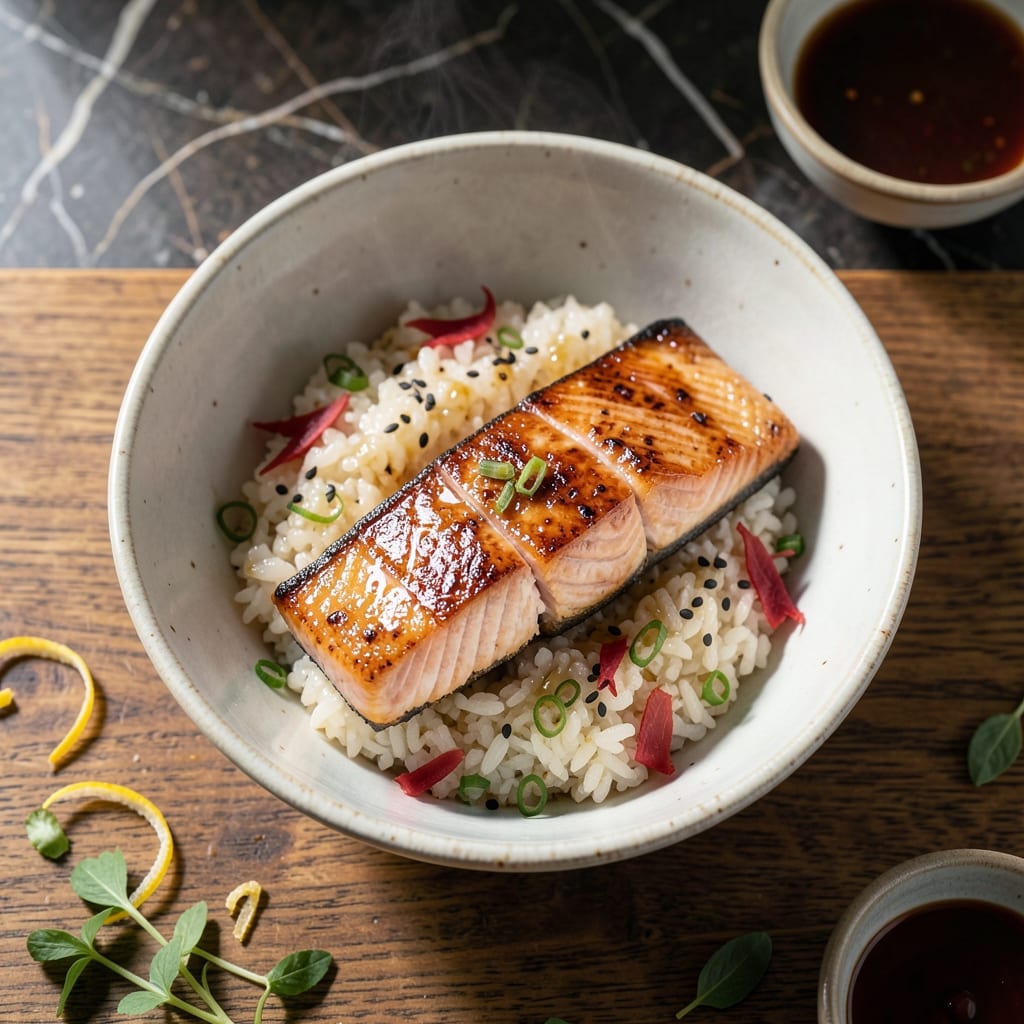
There’s a reason this salmon and rice bowl has become my go-to dinner for impressive yet effortless meals. The flaky salmon, perfectly cooked over nutty grains, delivers restaurant-quality results with minimal effort.
The key is treating each component with care—seasoning the salmon just right, cooking the rice to a tender bite, and balancing the dish with fresh, complementary toppings. No complicated techniques, just precise timing.
What you’ll get is a harmonious bowl where every element shines: tender fish, fragrant rice, and vibrant accompaniments. The textures and flavors work together seamlessly for a satisfying meal.
It’s a dish that feels special but is simple enough for any weeknight. Here’s how to make it.
Ingredients for Fish Rice Bowl
Flaky salmon, nutty rice, and vibrant toppings come together effortlessly for this dish.
| Ingredient | Amount | Notes |
|---|---|---|
| Salmon Fillets 🐟 | 1 ½ lb | Skin-on, boneless, wild-caught preferred |
| Sushi Rice 🍚 | 2 cups | Short-grain, rinsed thoroughly |
| Water 💧 | 2 ½ cups | For cooking rice |
| Rice Vinegar 🍯 | 2 tbsp | Seasoned or unseasoned |
| Soy Sauce 🫒 | 3 tbsp | Low-sodium preferred |
| Sesame Oil 🫒 | 1 tbsp | Toasted for depth |
| Honey 🍯 | 1 tbsp | Or sub maple syrup |
| Garlic Cloves 🧄 | 3 cloves | Minced finely |
| Fresh Ginger 🌿 | 1 tbsp | Grated or minced |
| Avocado 🥑 | 1 whole | Ripe, sliced for topping |
| Cucumber 🥒 | ½ whole | English, thinly sliced |
| Green Onions 🧅 | 3 whole | Thinly sliced for garnish |
| Sesame Seeds 🌾 | 1 tbsp | Toasted for garnish |
| Nori Sheets 🍱 | 1 sheet | Cut into thin strips |
| Olive Oil 🫒 | 1 tbsp | For cooking salmon |
The salmon is the star here. Wild-caught sockeye or king salmon gives the best flaky texture and rich flavor. I grab mine from Whole Foods—their seafood counter is reliable, and they’ll skin it for you if you ask (saves time). For the rice, Koshihikari or Calrose varieties are ideal, available at most Asian markets or the international aisle at Kroger. Rinse it until the water runs clear—skipping this step makes it gummy.
No rice vinegar? Apple cider vinegar with a pinch of sugar works in a pinch. Swap honey for maple syrup or agave if you prefer. The soy sauce can be tamari for gluten-free, or coconut aminos for a lighter touch. Fresh ginger is non-negotiable though—powdered just doesn’t cut it. If you’re missing avocado, try sliced radishes for crunch. The sesame oil? Toasted is key—untasted tastes flat.
Cooked salmon keeps 2-3 days in the fridge, but the rice is best fresh. Store leftovers in airtight containers. The toppings (avocado, cucumber) are best added just before serving. You can prep the rice and sauce a day ahead—just reheat gently with a splash of water.
Why You’ll Love This Recipe
- One Pan Meal: I love that I can cook the salmon and rice in the same pot—minimal cleanup, maximum flavor.
- Umami Bomb: The soy sauce and rice vinegar create that perfect sweet-savory balance with every bite.
- Weeknight Hero: Honestly, it’s my go-to for busy evenings when I need something fast but still satisfying.
- Budget Stretcher: A little salmon goes a long way, and sushi rice is cheap—this feeds us for two meals.
Step-by-Step Instructions for Salmon Rice Bowl
Here’s the method. Straightforward, tested, works every time.
Step 1: Cook the Sushi Rice to Nutty Perfection
Rinse the 2 cups Sushi Rice under cold water until the water runs clear—this removes excess starch and prevents gummy rice. I use a fine-mesh strainer for this. Drain well.
Combine the rinsed rice with the 2.5 cups Water in a saucepan. Bring to a boil over high heat, then reduce to low, cover, and simmer for 15 minutes. Remove from heat and let it steam, covered, for another 10 minutes.
Stir in the 2 tbsp Rice Vinegar while the rice is still hot. This adds a subtle tang and helps the grains stay separate. The rice should be tender with a slight bite and a glossy sheen.
Step 2: Pan-Sear the Salmon Until Flaky
Pat the 1.5 lb Salmon Fillets dry with paper towels—this ensures a good sear. Season lightly with salt and pepper. Heat the 1 tbsp Olive Oil in a large skillet over medium-high heat until it shimmers.
Add the salmon skin-side up and cook undisturbed for 4-5 minutes until the bottom is golden brown and crisp. I press down gently with a spatula during the first minute to prevent curling.
Flip the fillets and cook for another 3-4 minutes until the salmon is opaque throughout and flakes easily with a fork. Transfer to a plate and tent with foil to keep warm.
Step 3: Prepare the Umami Glaze
In a small bowl, whisk together the 3 tbsp Soy Sauce, 1 tbsp Sesame Oil, 1 tbsp Honey, minced 3 cloves Garlic Cloves, and grated 1 tbsp Fresh Ginger. This glaze should be smooth and glossy, with a balance of salty, sweet, and aromatic flavors.
Pour the glaze into the same skillet you used for the salmon (no need to clean it—those browned bits add depth). Simmer over medium heat for 2-3 minutes until slightly thickened. The glaze should coat the back of a spoon but still be pourable.
Step 4: Assemble the Bowl with Fresh Toppings
Divide the cooked sushi rice among four bowls. Top each with a portion of the flaky salmon, breaking it into large chunks. Drizzle generously with the warm umami glaze.
Arrange slices of 1 whole Avocado, thin strips of 0.5 whole Cucumber, and thinly sliced 3 whole Green Onions on top. Sprinkle with 1 tbsp Sesame Seeds and thin strips of 1 sheet Nori Sheets for a final touch.
The salmon should be tender and moist, the rice sticky yet distinct, and every bite layered with fresh, vibrant flavors.
Pro Tips For Making Fish Rice Bowl
- Pat the Salmon Dry: I learned this the hard way—leaving the skin damp makes it steam instead of sear. Press between paper towels for 30 seconds before cooking.
- Rinse the Rice Well: Swirl sushi rice in a bowl of cold water 3-4 times until the water runs clear, or your bowl will taste like glue. Sounds tedious, but it works.
- Don’t Overcrowd the Pan: Cook salmon in a single layer with space between fillets, or it’ll boil in its own juices instead of crisping. Two fillets max in a standard skillet.
- Warm the Vinegar: Mix rice vinegar with a pinch of sugar and salt, then microwave for 10 seconds before folding into rice—it distributes better and tastes less harsh.
Regional Styles of This Dish
Japanese Poke Style
This version swaps salmon for sushi-grade ahi tuna, cubed and marinated in soy sauce, sesame oil, and green onions. Serve over rice with pickled ginger and wasabi for an authentic Hawaiian-Japanese experience. 🗺️
Korean Bibimbap Twist
Use the same rice base but top with spicy gochujang-marinated salmon. Add sautéed spinach, carrots, and a fried egg. The glaze here gets a kick from 1 tsp gochujang mixed into the soy-honey blend.
Thai-Inspired Bowl
Replace the glaze with a coconut-lime dressing using ½ cup coconut milk, 1 tbsp lime juice, and 1 tsp fish sauce. Top with mango slices, cilantro, and crushed peanuts for a tropical twist.
Mediterranean Variation
Swap salmon for grilled sea bass and use lemon-herb rice. Top with kalamata olives, cherry tomatoes, and a drizzle of tzatziki. The umami comes from a oregano and garlic marinade.
California Roll Bowl
Deconstruct the classic sushi roll: use imitation crab or cooked shrimp instead of salmon. Add avocado, cucumber, and sriracha mayo for that West Coast flair. The rice stays the same, but the toppings are all about freshness.
Nutrition Facts
Frequently Asked Questions
Can I use a different type of fish?
Try cod, halibut, or tuna instead of salmon. Just adjust cooking time based on thickness—thinner fillets may need only 3 minutes per side.
What if my rice turns out mushy?
Rinse the rice thoroughly before cooking to remove excess starch. Use a 1:1.25 rice-to-water ratio and avoid lifting the lid while simmering.
How do I store leftovers?
Keep components separate in airtight containers in the fridge for up to 2 days. Reheat rice with a splash of water and salmon gently to avoid drying.

- Glutinous Rice Flour Bread Recipe: Soft Pillows with Nutty Depth - October 12, 2026
- Green Rice Casserole Recipe: Cheesy Baked Comfort with Vibrant Herbs - October 12, 2026
- Glutinous Rice Coconut Milk Recipe: Chewy Sweetness With Tropical Depth - October 12, 2026