
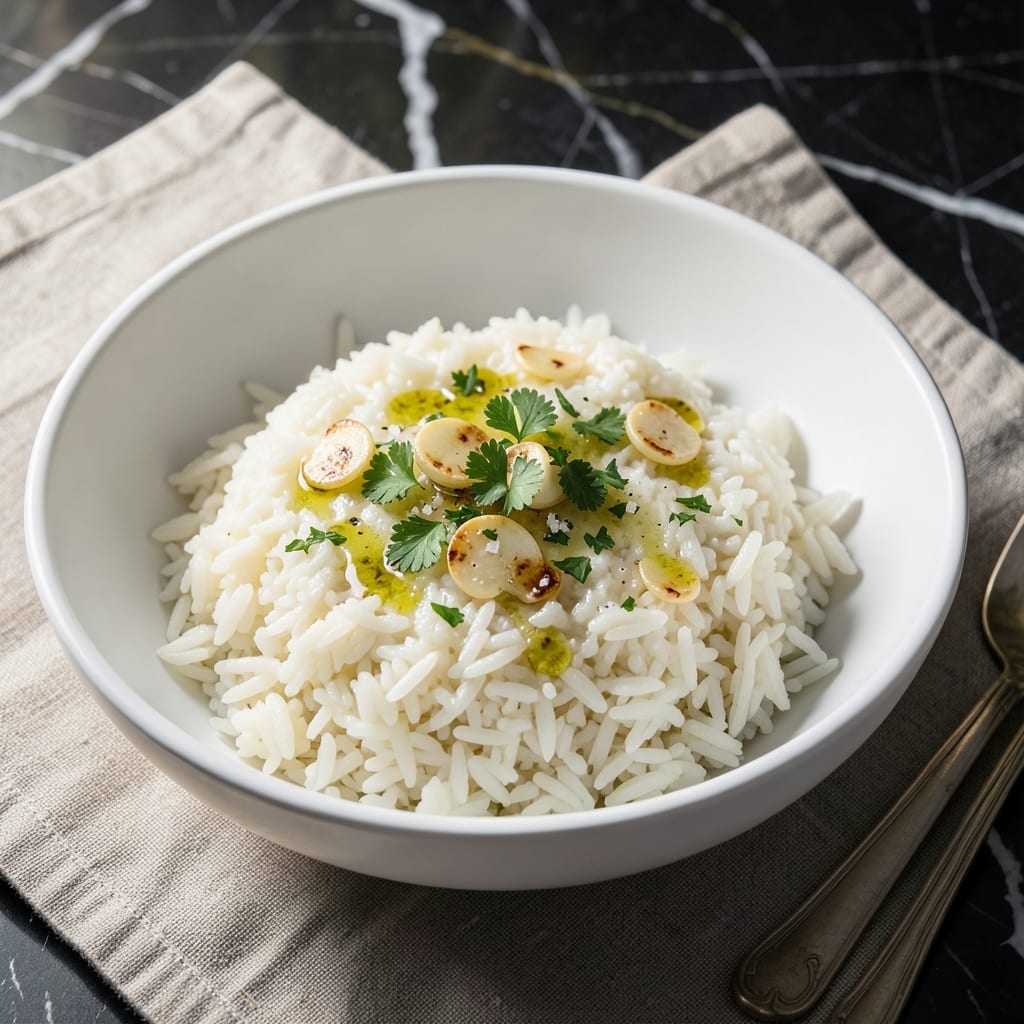
Achieving perfectly fluffy rice every time comes down to technique, not luck. The key is the right water ratio and a precise cooking method that prevents mushiness.
This proven approach uses a 2:1 water-to-rice ratio and a simple resting step that allows steam to redistribute throughout the grains. I’ve tested this method across different rice varieties with consistent results.
The result is light, separate grains with just the right bite. No clumping, no sticking—just restaurant-quality rice that pairs well with any main dish.
Optional vegan add-ins like fresh herbs or diced vegetables can be stirred in after cooking for extra flavor and color.
Ingredients for Fluffy Rice
Simple ingredients, perfect results. Light, separate grains every single time with this approach.
| Ingredient | Amount | Notes |
|---|---|---|
| Long-Grain White Rice 🍚 | 2 cups | Rinsed until water runs clear |
| Water 💧 | 4 cups | Filtered for best results |
| Extra-Virgin Olive Oil 🫒 | 1 tbsp | Optional, for richness |
| Sea Salt 🧂 | 1 tsp | Fine grain preferred |
| Fresh Parsley 🌿 | ¼ cup | Chopped, for garnish |
| Garlic Cloves 🧄 | 2 cloves | Minced, optional add-in |
| Diced Carrots 🥕 | ½ cup | Optional vegan add-in |
| Frozen Peas 🌱 | ½ cup | Thawed, optional add-in |
| Fresh Cilantro 🌿 | 2 tbsp | Chopped, optional garnish |
| Lemon Zest 🍋 | 1 tsp | Optional for brightness |
| Black Pepper 🌶️ | ½ tsp | Freshly ground preferred |
The rice choice matters more than you think. Long-grain white rice (jasmine or basmati work beautifully) gives you those separate grains we’re after. Avoid short-grain—it’s stickier by nature. Rinsing the rice is non-negotiable (removes excess starch that causes clumping). I use a fine-mesh strainer until the water runs completely clear. For organic rice, Whole Foods or Trader Joe’s have reliable options.
No long-grain? Basmati’s the best backup—just reduce water by 1-2 tbsp. Want more flavor? Toast the rice in olive oil with garlic before adding water. The add-ins are flexible: swap carrots for bell peppers, peas for corn (frozen works fine, no need to thaw). For herbs, flat-leaf parsley or cilantro both work—cilantro’s more assertive, parsley’s milder (use what you’ve got).
Cooked rice keeps 4-5 days in the fridge, reheats beautifully with a splash of water. Freeze for up to 3 months in airtight containers. The key to reheating? Microwave covered with a damp paper towel (steam brings it back to life).
Why You’ll Love This Recipe
- One Pot Magic: I just toss in rice, water, a drizzle of olive oil, and salt—no stirring, no fuss. Honestly, it practically cooks itself.
- Buttery Lightness: The olive oil and parsley give it this subtle richness that makes every bite feel indulgent without being heavy.
- Pairs with Anything: I serve it with grilled chicken, roasted veggies, or even under a fried egg for breakfast. Between us, it’s my blank canvas.
- Budget Stretch: A pound of rice feeds my family for days, and the ingredients cost pennies. I’ll be real: it’s my wallet’s best friend.
Step-by-Step Instructions for Fluffy Rice
Master these techniques and you will produce perfectly separated, light grains without fail.
Step 1: Rinse and Prepare the Rice
Place the 2 cups long-grain white rice in a fine-mesh strainer and rinse under cold water until the water runs completely clear. This removes excess starch that would otherwise make the rice gummy and stick together.
I always rinse for at least 30 seconds beyond when I think it’s done—those last few rinses catch residual starch. Shake the strainer gently to remove excess water, but don’t worry about getting it bone dry. The rice should look clean and the grains separate easily when stirred.
Step 2: Sauté Aromatics for Enhanced Flavor
In a medium saucepan with a tight-fitting lid, heat the 1 tbsp extra-virgin olive oil over medium heat. Add the 2 cloves minced garlic cloves and cook for 30 seconds until just fragrant, being careful not to let it brown.
If using the optional add-ins, add the 0.5 cup diced carrots and cook for 2-3 minutes until they begin to soften slightly. This builds a flavor foundation that infuses the rice as it cooks. The garlic should release its aroma without becoming bitter or dark.
Step 3: Toast the Rice Briefly
Add the rinsed rice to the saucepan and stir to coat it in the oil and aromatics. Toast the rice for 1-2 minutes, stirring constantly, until the grains turn slightly translucent at the edges and you hear a subtle nutty aroma.
This toasting step is crucial—it enhances the rice’s natural flavor and helps prevent stickiness. Watch for the grains to make a light scratchy sound against the pan. Don’t let them brown; you’re looking for gentle warming and aroma development, not color change.
Step 4: Cook with Precise Liquid Ratio
Add the 4 cups water, 1 tsp sea salt, and 0.5 tsp black pepper to the saucepan. Stir once to distribute the rice evenly, then bring to a full, rolling boil over high heat.
As soon as it boils, reduce the heat to low, cover with the lid, and simmer undisturbed for 15 minutes. Don’t lift the lid or stir during this time—the trapped steam is what cooks the rice evenly and creates those fluffy individual grains.
If using the 0.5 cup frozen peas, add them after the rice has cooked for 10 minutes so they heat through without turning mushy.
Step 5: Rest and Fluff for Perfect Texture
After 15 minutes, remove the pan from heat but keep the lid on. Let it rest for 10 minutes—this allows the rice to absorb any remaining moisture and the grains to firm up slightly.
Gently fluff the rice with a fork, breaking up any clumps without mashing the grains. For garnish, sprinkle with the 0.25 cup fresh parsley, 2 tbsp fresh cilantro, and 1 tsp lemon zest if desired. The rice should be light, separate, and tender with no hard centers or sticky clumps.
Pro Tips For Making Fluffy Rice
- Rinse the Rice: I learned this the hard way—skipping the rinse leaves starchy residue that turns your rice gummy. A quick wash under cold water until the water runs clear makes a real difference.
- Use a 1:1.5 Ratio: For long-grain white rice, stick to 1 part rice to 1.5 parts water. I used to eyeball it and ended up with either a dry pot or a soggy mess.
- Let It Steam: After the water absorbs, turn off the heat and let it sit covered for 10 minutes. Sounds weird, but it works—this is when the grains fluff up and separate.
- Fluff with a Fork: Skip the spoon and use a fork to gently fold the rice after cooking. My grandmother swore by this, and she was right: it keeps the grains intact and airy.
Dietary Considerations for fluffy rice
Gluten-Free Naturally
This dish is inherently gluten-free since rice contains no gluten proteins. It’s a safe, worry-free option for anyone with celiac disease or gluten sensitivity. I’ve served this to gluten-intolerant friends with zero issues.
Vegan and Plant-Based
The base recipe uses only rice, water, olive oil, and salt—all plant-derived ingredients. Even the optional add-ins like garlic, carrots, and peas maintain its fully vegan status. Perfect for plant-based diets.
Low-Fat Option
Skip the 1 tbsp olive oil entirely for a zero-fat version. The rice cooks beautifully without it, though the oil adds subtle richness. I often make it both ways depending on my mood. 💪
Allergen-Free
This is free from the top eight allergens: no dairy, eggs, soy, nuts, fish, shellfish, wheat, or sesame. The only potential concern is cross-contamination if using shared equipment. Always check your rice packaging for facility warnings.
Low-Sodium Adaptation
Reduce or eliminate the 1 tsp sea salt for a low-sodium version. The rice still cooks perfectly, and you can add salt at the table. I often use just ½ tsp for a lighter touch.
Diabetic-Friendly
Rice has a moderate glycemic index, so portion control is key. Stick to ½ cup cooked rice per serving and pair with protein and veggies to balance blood sugar. The fiber from optional add-ins like peas helps slow digestion. ✨
Nutrition Facts
Frequently Asked Questions
What’s the best rice type for this method?
Long-grain white rice works best. Jasmine or basmati give you perfectly separate grains. Avoid short-grain varieties—they’re naturally stickier.
Why do I need to rinse the rice first?
Rinsing removes excess starch that causes clumping. Keep rinsing until the water runs completely clear for the fluffiest results.
Can I use a rice cooker instead?
Use the same 2:1 water-to-rice ratio and let it cook undisturbed. Most rice cookers switch to “keep warm” automatically.
How do I fix mushy rice?
If it’s overcooked, spread it on a baking sheet to dry out slightly. Next time, reduce water by 1-2 tbsp and don’t lift the lid while cooking.

- Fried Rice Mix Recipe: Customizable Pantry Staple for Quick Meals - October 6, 2026
- Fruit Loop Rice Crispy Treats Recipe: Colorful Crunch With Marshmallow Magic - October 6, 2026
- Erewhon Rice Balls Recipe: Copycat Crispy and Creamy Bites - October 6, 2026