
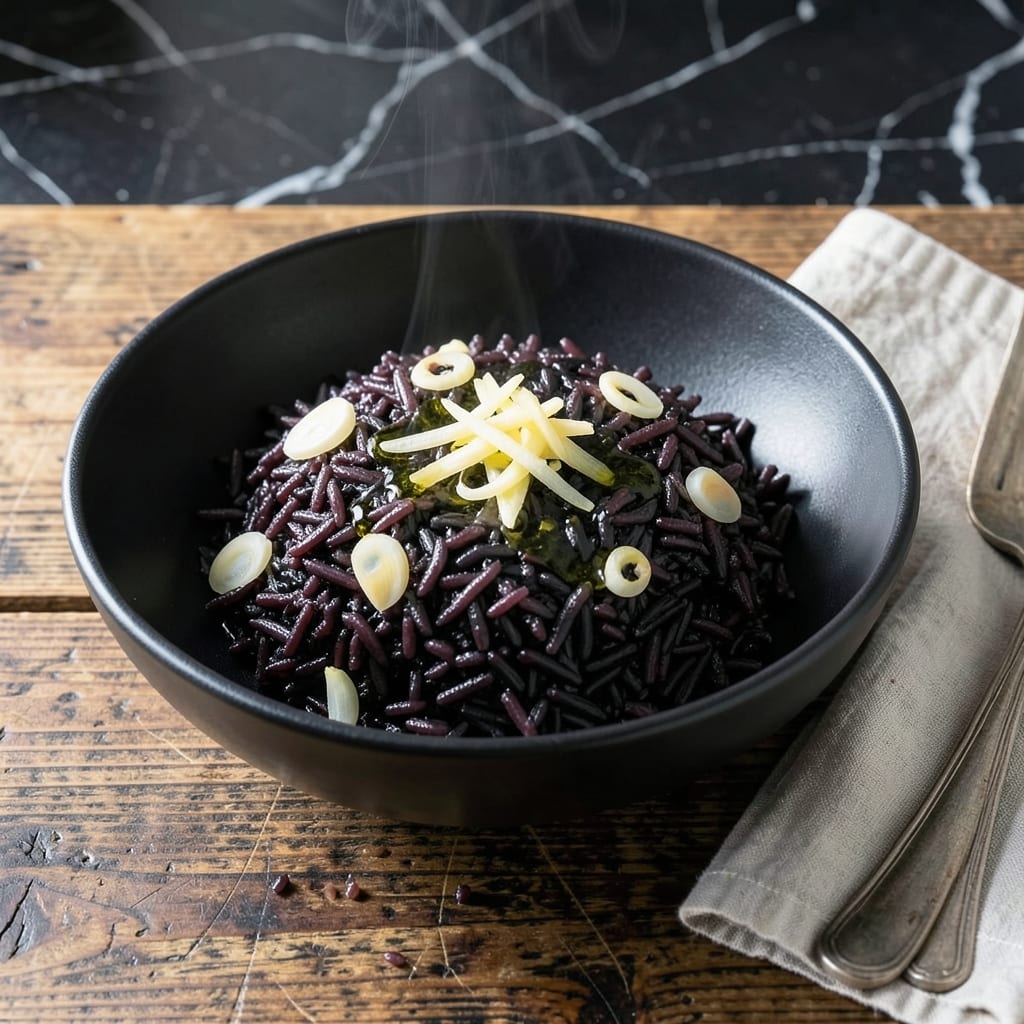
This ancient grain delivers a striking visual contrast and a rich, earthy flavor that elevates any meal. The deep purple-black hue comes from anthocyanins, the same antioxidants found in blueberries.
Cooking it requires a precise water-to-rice ratio and a longer simmer time than white rice. The result is tender grains with a slightly chewy texture and a nutty aroma that fills your kitchen.
It pairs beautifully with roasted vegetables, grilled proteins, or as a base for hearty grain bowls. The flavor deepens as it cooks, making it a versatile addition to your cooking repertoire.
With just a few simple steps, you can unlock the full potential of this unique ingredient. The process is straightforward and rewards patience with exceptional taste.
Ingredients for Forbidden Black Rice
A handful of pantry staples transforms this ancient grain into something extraordinary on your plate.
| Ingredient | Amount | Notes |
|---|---|---|
| Forbidden Black Rice 🍚 | 2 cups | Rinsed until water runs clear |
| Water 💧 | 4 ½ cups | Or substitute vegetable broth |
| Extra-Virgin Olive Oil 🫒 | 1 ½ tbsp | Divided for toasting and finishing |
| Shallot 🧅 | 1 whole | Finely minced for aroma |
| Garlic Cloves 🧄 | 3 cloves | Minced for depth of flavor |
| Fresh Ginger Root 🌿 | 1 tbsp | Grated for zing |
| Low-Sodium Soy Sauce 🫙 | 2 tbsp | Or tamari for gluten-free |
| Rice Vinegar 🍶 | 1 tbsp | For brightness and balance |
| Toasted Sesame Oil 🫒 | 1 tsp | For nutty aroma |
| Sea Salt 🧂 | ½ tsp | Adjust to taste |
| Fresh Cilantro 🌿 | ¼ cup | Chopped for garnish |
| Toasted Almonds 🥜 | ½ cup | Sliced for crunch |
| Scallions 🧅 | 3 whole | Thinly sliced for freshness |
The black rice is the star, so seek out a trusted Asian market or well-stocked grocery store—look for brands like Lotus Foods or Annie Chun’s. Avoid anything labeled ‘black rice blend’ if you want that deep purple-black hue. The soy sauce should be low-sodium (I use Kikkoman), but coconut aminos work if you’re avoiding soy. Fresh ginger is non-negotiable here—bottled just doesn’t cut it.
No shallots? Red onion at half the amount gets you close. Out of fresh ginger? Ground ginger at one-quarter the amount works in a pinch (but add it with the liquids). The cilantro can be swapped for Thai basil or mint if that’s your preference. For extra richness, toasted cashews or pecans stand in beautifully for the almonds.
Store uncooked rice in a cool, dark place for up to 6 months. Cooked rice keeps 4-5 days in the fridge or 3 months frozen. Toast the almonds just before serving—they lose their crunch fast (worth the extra minute).
Why You’ll Love This Recipe
- Set and Forget: I just combine the rice, water, and a drizzle of olive oil, then let it simmer while I prep the rest of dinner.
- Rich, Nutty Depth: The shallot and garlic bloom in the oil, infusing the black rice with this deep, almost earthy flavor that’s way more interesting than plain white rice.
- Meal Prep MVP: It keeps beautifully for days, so I make a big batch to toss into bowls, salads, or even as a bed for proteins all week.
- Budget Stretch: Honestly, a little goes a long way—this rice is filling, so one bag lasts me through multiple meals without breaking the bank.
Step-by-Step Instructions for Forbidden Black Rice
This method brings out the deep, nutty flavor and striking color that makes this dish so special.
Step 1: Rinse and Toast the Forbidden Black Rice
Place the 2 cups Forbidden Black Rice in a fine-mesh strainer and rinse under cold water until the water runs completely clear. This removes excess starch and ensures each grain stays separate and fluffy. I find this takes about 3-4 minutes of thorough rinsing.
Heat 1 tablespoon of the 1.5 tbsp Extra-Virgin Olive Oil in a medium pot over medium heat. Add the drained rice and toast for 2-3 minutes, stirring constantly, until you notice a subtle nutty aroma and the grains make a light popping sound. This step enhances the natural depth of the rice’s flavor.
Step 2: Sauté the Aromatics for Maximum Flavor
Add the finely minced 1 whole Shallot to the pot with the toasted rice. Cook for 2-3 minutes until the shallot becomes translucent and soft. The shallot’s sweetness will balance the earthiness of the black rice beautifully.
Stir in the minced 3 cloves Garlic Cloves and the grated 1 tbsp Fresh Ginger Root. Cook for an additional 1 minute until fragrant—you’ll smell the garlic and ginger releasing their essential oils. Be careful not to let the garlic brown, as it can turn bitter.
Step 3: Cook the Rice to Perfect Tenderness
Pour in the 4.5 cups Water and add the 0.5 tsp Sea Salt, 2 tbsp Low-Sodium Soy Sauce, and 1 tbsp Rice Vinegar. Stir well to combine. Bring the mixture to a boil over high heat.
Once boiling, reduce the heat to low, cover the pot with a tight-fitting lid, and simmer for 30-35 minutes. Check at the 30-minute mark—the rice is done when all the liquid is absorbed and the grains are tender with a slight bite. If it needs more time, add 2-3 tablespoons of water and continue cooking.
Step 4: Finish and Garnish for a Stunning Presentation
Remove the pot from heat and let it sit, covered, for 10 minutes. This resting period allows the rice to steam and become perfectly tender. Fluff the rice gently with a fork to separate the grains.
Drizzle the remaining 0.5 tbsp Extra-Virgin Olive Oil and the 1 tsp Toasted Sesame Oil over the rice. Stir gently to distribute the oils. Transfer to a serving dish and top with the chopped 0.25 cup Fresh Cilantro, sliced 0.5 cup Toasted Almonds, and thinly sliced 3 whole Scallions. The fresh garnishes add vibrant color and texture contrast to the dish.
Pro Tips For Making Forbidden Black Rice
- Rinse the Rice: Always rinse the black rice until the water runs clear—this removes excess starch and prevents a gummy texture. I learned this the hard way after ending up with a sticky, clumpy mess.
- Toast the Grains: Before adding water, sauté the rice in olive oil for 2-3 minutes on medium heat. This brings out a nutty depth that plain boiling can’t match.
- Use More Water: Black rice needs a 1:2.5 rice-to-water ratio—it’s denser than white rice and absorbs more. After undercooking it twice, I finally accepted it’s not a quick grain.
- Rest Before Serving: Let the cooked rice sit covered for 10 minutes off the heat. This lets the steam redistribute, so the texture goes from firm to perfectly tender.
Health Benefits of This Dish
Antioxidant Powerhouse
This grain gets its deep hue from anthocyanins, the same antioxidants found in blueberries. A ½ cup serving provides more anthocyanins than a handful of berries, helping combat oxidative stress and inflammation in your body. 💪
Heart Health Support
The high fiber content—about 3 grams per serving—helps lower bad cholesterol levels and supports cardiovascular health. The bran layer, which gives black rice its color, contains compounds that improve blood vessel function and reduce heart disease risk.
Rich in Protein
Compared to white rice, this variety offers nearly twice the protein per serving, providing about 6 grams per cooked cup. This makes it an excellent plant-based protein source, especially for vegetarians and vegans.
Blood Sugar Control
The low glycemic index means it causes a slower, more gradual rise in blood sugar levels. This is particularly beneficial for those managing diabetes or looking to maintain stable energy levels throughout the day.
Vitamin and Mineral Boost
It’s packed with essential nutrients like iron, zinc, and B vitamins. A single serving provides about 10% of your daily iron needs, supporting energy production and immune function. The zinc content aids in wound healing and metabolic function. ✨
Digestive Health
The fiber in this rice promotes healthy digestion and regularity. The insoluble fiber adds bulk to stool, while the soluble fiber feeds beneficial gut bacteria, supporting overall gut health and microbiome balance.
Nutrition Facts
Frequently Asked Questions
Why does it take longer to cook than white rice?
The outer bran layer makes the grains denser. Expect 30-35 minutes of simmering plus 10 minutes resting for perfect texture.
Can I use a rice cooker?
Yes! Use the same 2:1 rice-to-water ratio and select the brown rice setting. Toast the rice and aromatics first for deeper flavor.
How do I prevent mushy grains?
Rinse thoroughly until water runs clear and avoid stirring while cooking. Let it rest 10 minutes covered after cooking.
What can I substitute for soy sauce?
Try coconut aminos for soy-free or tamari for gluten-free. Both add the same umami depth without overpowering.

- Fried Rice Mix Recipe: Customizable Pantry Staple for Quick Meals - October 6, 2026
- Fruit Loop Rice Crispy Treats Recipe: Colorful Crunch With Marshmallow Magic - October 6, 2026
- Erewhon Rice Balls Recipe: Copycat Crispy and Creamy Bites - October 6, 2026