
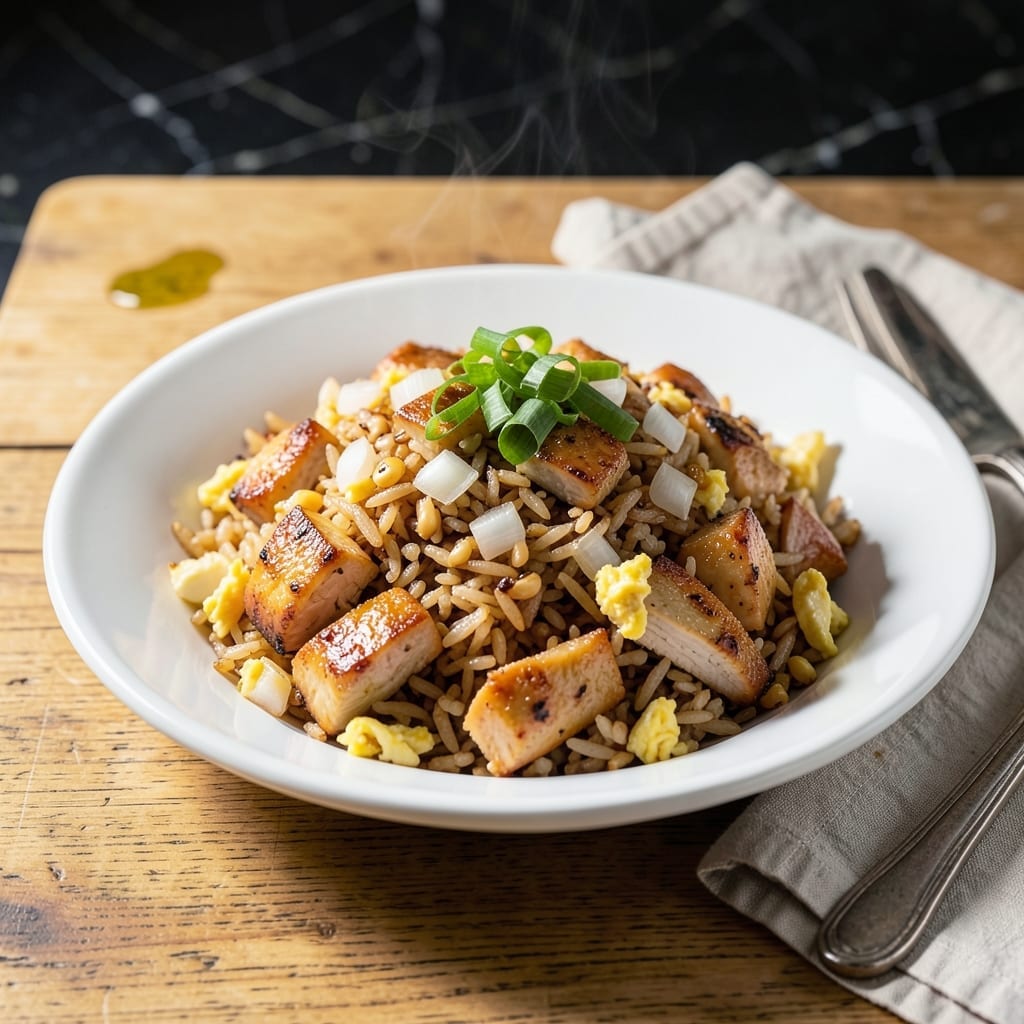
There’s a reason fried rice has stood the test of time—this original version delivers perfectly seared grains with every bite. I’ve refined this method to capture the wok’s high-heat magic at home.
Using day-old rice and a simple technique, you’ll achieve that signature texture: separate, slightly crispy, and packed with flavor. The key is patience and the right sequence of ingredients.
Ingredients for Fried Rice Original
Classic ingredients combine to recreate that timeless wok-seared texture and flavor at home.
| Ingredient | Amount | Notes |
|---|---|---|
| Day-Old Cooked White Rice 🍚 | 4 cups | Cold, preferably refrigerated overnight |
| Peanut Oil 🥜 | 3 tbsp | High smoke point essential |
| Large Eggs 🥚 | 2 whole | Lightly beaten for scrambling |
| Boneless Chicken Thighs 🍗 | ½ lb | Cut into small uniform pieces |
| Small White Onion 🧅 | 1 whole | Finely diced for even cooking |
| Garlic Cloves 🧄 | 3 cloves | Minced for maximum flavor |
| Frozen Green Peas 🌱 | ¾ cup | Thawed or straight from freezer |
| Carrots 🥕 | 2 whole | Small dice for quick cooking |
| Green Onions 🧅 | 3 whole | Thinly sliced, white and green parts |
| Soy Sauce 💧 | 2 tbsp | Low-sodium preferred for control |
| Oyster Sauce 💧 | 1 tbsp | Optional but recommended for depth |
| Sesame Oil 🫒 | 1 tsp | Toasted variety for finishing |
| Kosher Salt 🧂 | ½ tsp | Adjust to taste at end |
| White Pepper 🌶️ | ¼ tsp | Ground for subtle heat |
The rice foundation is non-negotiable. Day-old jasmine or long-grain white rice with distinct, dry grains prevents mushiness. Peanut oil offers the necessary high smoke point for authentic sear—avoid olive oil for this application. Source your rice from Asian markets for optimal texture. The chicken thighs should have visible marbling for flavor; avoid breast meat as it dries out.
Vegetable substitutions abound: bell peppers or corn replace peas and carrots easily. For a vegetarian version, extra-firm tofu substitutes chicken perfectly (press and cube first). Missing oyster sauce? Hoisin or fish sauce at half the quantity works. Always use fresh garlic—jarred lacks the necessary punch for this dish.
Fried rice stores exceptionally well. Refrigerate leftovers in an airtight container for up to 4 days. Reheat in a skillet with a splash of water to restore texture. For longer storage, freeze in portions for up to 3 months—thaw in fridge before reheating.
Why You’ll Love This Recipe
- I’ll be real: it tastes even better the next day, and my wallet loves how cheap it is to make.
- One Pan Wonder: I toss everything into the wok—peanut oil, day-old rice, chicken thighs—and it’s done in a flash.
- Umami Bomb: The combo of crispy chicken, fluffy eggs, and that nutty peanut oil taste is ridiculously good.
- Feeds the Crowd: Honestly, it’s my go-to for potlucks, lazy Sundays, and even packed lunches.
Step-by-Step Instructions for Fried Rice
Master the wok technique that delivers perfectly textured, flavorful rice with every grain distinct.
Step 1: Prepare and Velouté the Aromatics
Heat 1 tbsp Peanut Oil in a wok over high heat until it shimmers. Add the finely diced Small White Onion and stir-fry for 2-3 minutes until translucent and just beginning to caramelize at the edges.
Add the minced Garlic Cloves and cook for 30 seconds until fragrant but not browned. This base layer builds the foundation of flavor. Remove from wok and set aside—this prevents overcooking during later steps.
Step 2: Cook the Protein and Vegetables
Increase heat to maximum and add 1 tbsp Peanut Oil. When smoking hot, add the 0.5 lb Boneless Chicken Thighs in a single layer. Let sear undisturbed for 1 minute, then stir-fry for 2-3 minutes until lightly browned and just cooked through.
Push chicken to one side, add the remaining 1 tbsp Peanut Oil, then add small diced Carrots and 0.75 cup Frozen Green Peas. Stir-fry for 2 minutes until carrots soften slightly but retain a crisp bite. Return reserved aromatics to the wok.
Step 3: Scramble the Eggs and Integrate
Create a well in the center of the wok. Add the 2 whole Large Eggs and scramble vigorously with a spatula for 30-45 seconds until just set but still slightly runny. Immediately break up the curds and distribute evenly throughout the wok contents.
This technique ensures the eggs coat every piece of rice and vegetable, creating that signature fried rice texture. The residual heat will finish cooking the eggs perfectly without over-drying them.
Step 4: Incorporate Rice and Season
Add the 4 cups Day-Old Cooked White Rice, breaking up any clumps with your spatula. Stir-fry for 2-3 minutes until every grain is separated and heated through. The rice should be slightly crisp at the edges where it contacts the wok.
Drizzle 2 tbsp Soy Sauce, 1 tbsp Oyster Sauce, 0.5 tsp Kosher Salt, and 0.25 tsp White Pepper evenly over the rice. Toss continuously for 1 minute to ensure even distribution of seasonings and that characteristic light brown color.
Step 5: Finish and Plate
Remove from heat and stir in the thinly sliced Green Onions, reserving some green tops for garnish. Drizzle with 1 tsp Sesame Oil and toss once more. The sesame oil adds a final aromatic note that defines authentic wok hei.
Taste and adjust seasoning if needed, though the measured amounts should provide perfect balance. Serve immediately in bowls, garnished with remaining green onion tops. The texture should be slightly crisp at the edges with each grain distinct, never mushy or clumped.
Pro Tips For Making Fried Rice Original
- Use Cold Rice: Day-old rice from the fridge works best—it’s drier and fries up fluffier instead of turning mushy. I learned this the hard way after ruining two batches with fresh rice.
- Crank the Heat: Get your wok or pan screaming hot before adding the peanut oil and chicken. Sounds obvious, but I burned my first few attempts by starting at medium.
- Pre-Cook the Chicken: Cut the boneless thighs into small, even pieces and cook them fully before setting aside. Tossing them back in at the end keeps the chicken juicy instead of dry.
- Scramble Eggs First: Push the rice and veggies to one side, add a little more oil, then scramble the eggs in the empty space—it saves time and adds that classic fried rice texture.
Wine and Beer Pairings for These Flavors
Crisp Whites
A chilled German Riesling with its bright acidity cuts through the richness while complementing the soy and oyster sauce notes. I love how the citrus flavors cleanse your palate between bites. Serve at 45-50°F for optimal refreshment. 🍷
Light Lagers
Asian lagers like Sapporo or Asahi are classic pairings that enhance the dish’s authenticity. Their crisp, clean profile doesn’t compete with the savory, umami flavors. Keep it ice-cold for the best experience.
Wheat Beers
A Belgian witbier with its subtle coriander and orange notes adds an interesting dimension. The slight spice from the wheat complements the white pepper in the recipe. I prefer Hoegaarden for its balanced sweetness.
Rosé Options
Dry rosé wines from Provence offer a refreshing contrast with their berry and floral notes. The acidity mirrors that of the Riesling but with a different fruit profile. Serve at 50-55°F to appreciate the full range of flavors. 💫
Non-Alcoholic
For a zero-proof option, try jasmine iced tea with a squeeze of lime. The floral notes echo the dish’s Asian roots while the citrus brightens each mouthful. Brew 2 tea bags in 4 cups hot water for best results.
Nutrition Facts
Frequently Asked Questions
Why use day-old rice?
Day-old rice is drier and firmer, preventing mushiness when stir-fried. Fresh rice contains too much moisture and will clump together in the wok.
Can I use a different oil?
Peanut oil is ideal for its high smoke point, but vegetable or canola oil work too. Avoid olive oil—it burns at wok temperatures.
How do I prevent soggy rice?
Cook over maximum heat and keep ingredients moving constantly. Add rice only after veggies and protein are nearly done to maintain texture.
What can I substitute for oyster sauce?
Try hoisin sauce or fish sauce at half the amount. Both add umami depth, though flavors will vary slightly.

- Jollof Rice Sauce Recipe: West African Tomato and Spice Infusion - September 25, 2026
- Japanese Rice Soup Recipe: Umami-Rich Comfort in a Bowl - September 25, 2026
- Homemade Cream Of Rice Recipe: Silk-Smooth Breakfast in Minutes - September 25, 2026