
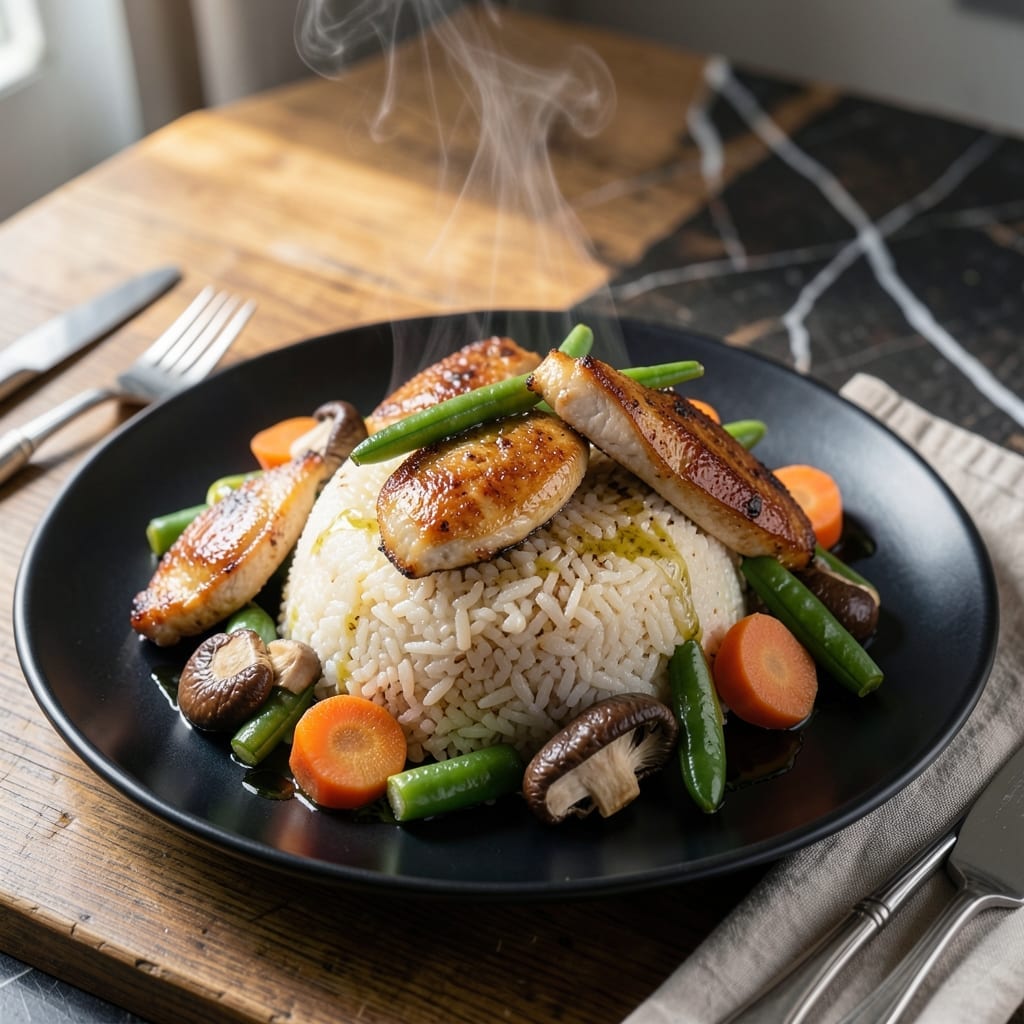
This Japanese-inspired dish transforms simple ingredients into a visually stunning centerpiece. The technique creates a perfect dome of seasoned rice that holds its shape beautifully when unmolded.
Fujiyama rice combines savory chicken, vegetables, and fluffy rice cooked together in a single pot. The key is layering the ingredients precisely and using the right rice-to-liquid ratio for perfectly tender results.
What emerges is a fragrant, golden mound that delights both the eyes and palate. The rice absorbs all the flavors while maintaining its distinct texture, making every bite satisfying.
Serve this impressive dish at gatherings or family meals. It’s easier to make than it looks and always garners compliments.
Ingredients for Fujiyama Rice
Simple yet elegant ingredients craft this visually stunning Japanese-inspired mountain of flavor in one pot.
| Ingredient | Amount | Notes |
|---|---|---|
| Japanese Short-Grain Rice 🍚 | 2 cups | Rinsed until water runs clear |
| Boneless Chicken Thighs 🍗 | 1 lb | Cut into bite-sized pieces |
| Carrots 🥕 | 2 whole | Peeled and thinly sliced |
| Shiitake Mushrooms 🍄 | 4 pieces | Fresh, stems removed, sliced |
| Green Beans 🌱 | 1 cup | Trimmed and cut into 1-inch pieces |
| Dashi Stock 🍲 | 2 ½ cups | Or substitute chicken stock |
| Soy Sauce 🫒 | 3 tbsp | Low-sodium preferred |
| Sake 🍶 | 2 tbsp | Dry cooking sake recommended |
| Mirin 🍾 | 2 tbsp | Sweet cooking wine |
| Sugar 🍚 | 1 tsp | Granulated white sugar |
| Garlic Cloves 🧄 | 2 cloves | Minced finely |
| Fresh Ginger 🌿 | 1 tbsp | Grated finely |
| Vegetable Oil 🛢️ | 1 tbsp | Neutral-flavored oil |
| Salt 🧂 | ½ tsp | Adjust to taste |
| White Pepper 🌶️ | ¼ tsp | Ground for subtle flavor |
The rice is the foundation here. Japanese short-grain rice (like Koshihikari from Asian markets or Nishiki brand) provides the sticky texture needed to hold the dome shape. Rinsing removes excess starch for perfectly tender grains. For the chicken, thighs stay juicier than breasts during the extended cooking time. Fresh shiitakes at a Japanese grocery store have superior aroma compared to pre-packaged.
No dashi? Chicken stock with a splash of soy sauce works in a pinch. Sake and mirin are essential for authentic flavor, but dry sherry can substitute for sake, and 1 tbsp sugar plus 1 tbsp water replaces mirin. The vegetables are flexible—swap in snap peas or bell peppers if needed. Don’t skip rinsing the rice (worth the extra minute), as unrinsed rice becomes gummy and won’t hold the mold.
Best made fresh, but leftovers keep for 2-3 days in the fridge. Reheat gently with a splash of water to restore moisture. The dome shape won’t survive storage, but the flavors deepen overnight. For meal prep, cook the rice and chicken separately, then assemble and steam just before serving.
Why You’ll Love This Recipe
- One Pot Wonder: I love that everything cooks together—rice, chicken, and veggies—so I’m not stuck washing a mountain of dishes afterward.
- Umami Bomb: The shiitake mushrooms and chicken thighs create this deep, savory richness that makes the rice taste like it simmered all day.
- Weeknight Hero: Honestly, it’s my Tuesday lifesaver—filling enough for the family, but fancy enough for guests.
- Budget Stretcher: Leftovers taste even better the next day, and the ingredients are affordable staples I always have on hand.
Step-by-Step Instructions for Fujiyama Rice
Master the technique with precision and timing for a dish that balances texture and flavor perfectly.
Step 1: Prepare and Rinse the Rice
Measure the 2 cups Japanese Short-Grain Rice into a fine-mesh strainer and rinse under cold running water, swirling with your hand. Continue until the water runs completely clear—this removes excess starch that would make the rice gummy rather than fluffy.
Drain thoroughly, then let the rice soak in 2.5 cups Dashi Stock for 30 minutes. This step is crucial; the grains absorb liquid evenly, ensuring uniform cooking and preventing a dry or uneven texture. The rice should look slightly plumped when ready.
Step 2: Sauté Aromatics and Chicken
Heat the 1 tbsp Vegetable Oil in a large, heavy pot or rice cooker over medium-high heat. Add the 1 lb Boneless Chicken Thighs, cut into bite-sized pieces, and sear until the edges are just beginning to brown—about 3-4 minutes.
Push the chicken to one side and add the 2 cloves Garlic Cloves, minced, and 1 tbsp Fresh Ginger, grated. Sauté for 30 seconds until fragrant, then stir in the 2 whole Carrots, peeled and thinly sliced, 4 pieces Shiitake Mushrooms, sliced, and 1 cup Green Beans, trimmed. Cook for 2 minutes to soften slightly.
Step 3: Combine Ingredients and Season
Drain the rice from the dashi stock, reserving the liquid, and add the rice to the pot with the chicken and vegetables. Stir to coat the grains in the oil and aromatics. Pour in the reserved 2.5 cups Dashi Stock, then add the 3 tbsp Soy Sauce, 2 tbsp Sake, 2 tbsp Mirin, 1 tsp Sugar, 0.5 tsp Salt, and 0.25 tsp White Pepper.
Gently stir once to distribute the seasonings evenly. Avoid over-stirring, which can break the rice grains and release excess starch. The liquid should cover the rice by about half an inch, with visible movement when the pot is tilted.
Step 4: Cook Until Tender and Fluffy
Increase the heat to bring the mixture to a boil. Once boiling, immediately reduce the heat to low, cover the pot with a tight-fitting lid, and simmer for 15 minutes. Do not lift the lid during this time—steam is essential for even cooking.
After 15 minutes, turn off the heat and let the pot sit, still covered, for an additional 10 minutes. This resting period allows the rice to finish absorbing the liquid and steam to distribute evenly. The grains should be tender, with no chalky center, and the chicken fully cooked through.
Fluff the rice gently with a fork before serving to separate the grains and release excess moisture. The dish should have a glossy sheen from the cooking liquid, with each bite delivering tender chicken and vegetables enveloped in fragrant, seasoned rice.
Pro Tips For Making Fujiyama Rice
- Rinse the Rice: Wash the Japanese short-grain rice 3-4 times until the water runs clear—I learned this the hard way after ending up with gummy rice in my first few attempts.
- Sear Chicken First: Brown the boneless chicken thighs in batches to avoid steaming; about 3-4 minutes per side on medium-high heat guarantees that golden crust.
- Slice Veggies Thin: Cut the carrots and shiitake mushrooms into thin, even slices so they cook through in the same time as the rice—no one wants crunchy carrots in their fujiyama rice.
- Use Dashi Stock: Swap plain water for dashi stock when cooking the rice—it adds depth that plain water just can’t match, and it’s an upgrade worth the extra minute.
Health Benefits of fujiyama rice
Balanced Nutrition
This dish offers a complete meal in one bowl, with Japanese short-grain rice providing complex carbohydrates for sustained energy. The 1 lb chicken thighs deliver lean protein, while the vegetables add fiber and essential vitamins. Each serving packs a nutritional punch without excessive calories. 💪
Protein Power
The boneless chicken thighs in this recipe provide about 25 grams of protein per serving, supporting muscle maintenance and repair. Unlike breast meat, thighs stay juicy during cooking, making them perfect for this long-simmered dish.
Vitamin-Rich Vegetables
Carrots contribute vitamin A for eye health, while shiitake mushrooms offer B vitamins and immune-supporting selenium. Green beans add vitamin C and fiber, making this a well-rounded vegetable medley.
Low-Fat Cooking
Using just 1 tbsp vegetable oil keeps fat content modest while allowing flavors to develop. The steaming method preserves nutrients better than frying, and dashi stock adds umami without extra fat.
Complex Carbohydrates
The rice provides slow-digesting carbs that help maintain steady blood sugar levels. The combination with protein and fiber from the other ingredients creates a balanced, satisfying meal that keeps you full for hours.
Sodium Awareness
While 3 tbsp soy sauce adds flavor, you can reduce it to 2 tbsp for a lower-sodium version. The dashi and mirin contribute additional seasoning, so the dish remains flavorful even with less salt. 🥗
Nutrition Facts
Frequently Asked Questions
What type of rice works best?
Use Japanese short-grain rice like Koshihikari or Nishiki for the sticky texture needed. Rinsing until water runs clear removes excess starch for fluffy results.
Can I use chicken breast instead of thighs?
Thighs are recommended for juiciness, but breasts work if cooked carefully. Reduce simmer time by 2-3 minutes to prevent dryness.
How do I achieve the dome shape?
Pack the cooked rice firmly into a bowl, then invert onto a plate. The sticky short-grain rice will hold its mountain-like form when unmolded.
What if my rice turns out mushy?
This usually means over-stirring or not rinsing enough. Always rinse thoroughly and stir just once after adding seasonings.

- Gobi Fried Rice Recipe: Spiced Cauliflower Wok Delight - October 8, 2026
- Glutinous Rice Roll Recipe: Chewy Pillows With Savory Fillings - October 8, 2026
- Garlic Jasmine Rice Recipe: Fragrant Grains with Aromatic Depth - October 8, 2026