
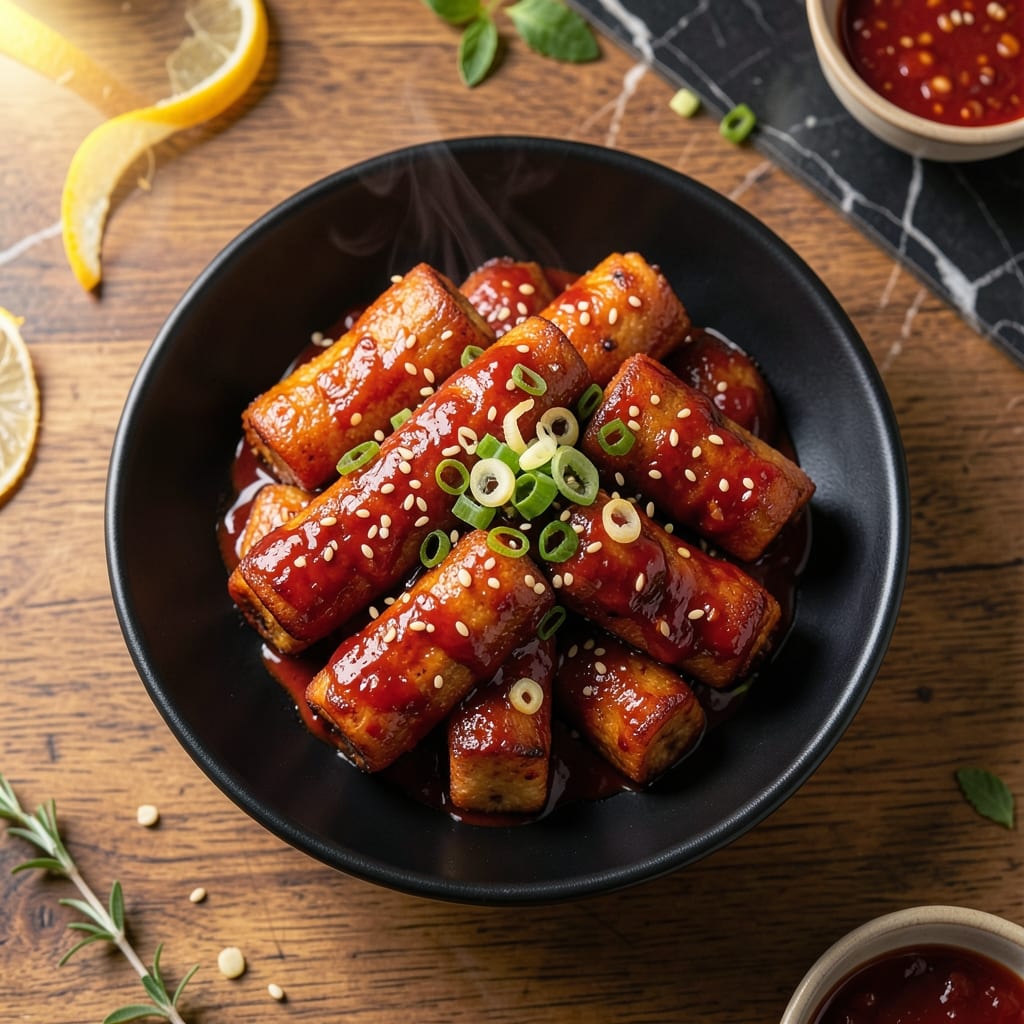
These chewy rice cakes transform into pillowy bites swimming in a sweet-spicy gochujang glaze that’s irresistibly addictive.
I perfected this traditional method through careful testing, balancing heat and sweetness while maintaining the rice cakes’ signature bouncy texture. The sauce clings perfectly to each piece.
Ingredients for Gochujang Rice Cake
Fresh rice cakes and a bold gochujang glaze create these irresistibly chewy, sweet-spicy bites everyone loves.
| Ingredient | Amount | Notes |
|---|---|---|
| Korean Rice Cakes 🍚 | 1 lb | Cylindrical, fresh or thawed |
| Gochujang 🌶️ | ½ cup | Korean red pepper paste |
| Soy Sauce 🥜 | 3 tbsp | Low-sodium preferred |
| Brown Sugar 🍚 | 3 tbsp | Packed for sweetness |
| Garlic Cloves 🧄 | 4 cloves | Minced for depth |
| Fresh Ginger 🌿 | 1 tbsp | Grated for zing |
| Rice Vinegar 🍶 | 2 tbsp | For acid balance |
| Sesame Oil 🫒 | 1 tbsp | Toasted for aroma |
| Vegetable Broth 🥣 | ½ cup | Low-sodium preferred |
| Green Onions 🧅 | 4 whole | Thinly sliced for garnish |
| Sesame Seeds 🌰 | 2 tbsp | Toasted for crunch |
| Cornstarch 🌾 | 1 tbsp | For sauce thickening |
| Neutral Oil 🫒 | 2 tbsp | For pan-searing rice cakes |
The rice cakes are everything here. Fresh cylindrical rice cakes (tteok) from a Korean market are ideal—they’ve got that perfect chew. If you can’t find them fresh, frozen works fine (just thaw completely). For the gochujang, Sempio or Chongga brands are reliable. Look for the deep red paste in the refrigerated section—avoid the ones with added preservatives.
No gochujang? Sriracha plus miso paste gets you partway there but won’t have the same depth. Brown sugar can be swapped for honey (though it’s vegetarian, not vegan), but maple syrup works too. The rice vinegar is non-negotiable for balancing the heat and sweetness. If you’re in a pinch, apple cider vinegar will do, but use one-fourth less—it’s more assertive.
Leftovers keep 3-4 days in the fridge, though the rice cakes firm up as they cool. Reheat with a splash of water to restore the sauce’s cling. The sauce itself freezes beautifully for up to 3 months—just thaw and simmer with fresh rice cakes.
Why You’ll Love This Recipe
- One Pot Wonder: I just dump the rice cakes, gochujang, soy sauce, and brown sugar in a pan—minimal cleanup, maximum flavor.
- Sweet & Spicy Hook: That sticky, garlicky glaze clinging to the chewy rice cakes? I’ll fight anyone for the last bite.
- Feeds a Crowd: Honestly, it’s my go-to for potlucks or lazy Sundays—everyone from picky kids to spice-loving adults digs in.
- Leftovers? Better: Between us, the flavors deepen overnight, so I always make extra for tomorrow’s lunch.
Step-by-Step Instructions for Gochujang Rice Cakes
Master the technique for perfectly chewy rice cakes enveloped in a glossy, balanced sweet-spicy sauce.
Step 1: Prepare the Rice Cakes
If using frozen Korean rice cakes, soak them in warm water for 15-20 minutes until they’re pliable and no longer hard in the center. Drain thoroughly and pat completely dry with a clean towel—excess moisture will prevent proper searing.
Heat 2 tbsp neutral oil in a large skillet or wok over medium-high heat. Add the 1 lb Korean Rice Cakes and cook undisturbed for 3-4 minutes until the bottoms develop a light golden crust. This step creates textural contrast and prevents them from turning mushy in the sauce.
Step 2: Create the Gochujang Sauce Base
In a bowl, whisk together 0.5 cup Gochujang, 3 tbsp soy sauce, 3 tbsp brown sugar, minced 4 cloves garlic cloves, 1 tbsp fresh ginger, 2 tbsp rice vinegar, and 1 tbsp sesame oil until smooth. The mixture should be thick but pourable—this is your flavor foundation.
Pour in 0.5 cup vegetable broth and whisk vigorously to combine. The broth thins the sauce to the perfect consistency for coating the rice cakes without being watery. Taste and note the balance: you should detect heat, sweetness, and umami in equal measure.
In a small bowl, mix 1 tbsp cornstarch with 1 tbsp water to create a slurry. This will thicken your sauce to a glossy, clingy consistency that coats every rice cake beautifully.
Step 3: Finish the Sauce and Combine
Reduce heat to medium and carefully pour the Gochujang mixture into the skillet with the rice cakes. Stir gently to coat every piece. The sauce will begin to bubble and thicken as it comes to a simmer—this is when the flavors truly meld together.
Pour in the cornstarch slurry and stir constantly for 1-2 minutes until the sauce transforms from thin to a glossy, thick glaze that clings to your spoon. The rice cakes should be fully coated and slightly puffed from absorbing the sauce.
Step 4: Garnish and Serve
Remove from heat and sprinkle with thinly sliced 4 whole green onions and 2 tbsp sesame seeds. The green onions add a fresh, crisp contrast to the chewy rice cakes, while the sesame seeds provide a nutty crunch and visual appeal.
Let rest for 2-3 minutes off heat—the sauce will thicken slightly more as it cools. Serve immediately while hot, as the rice cakes are best when freshly coated in the warm, glossy sauce. Each bite should deliver the perfect balance of chewy texture and complex, layered flavors.
Pro Tips For Making Gochujang Rice Cake
- Soak Rice Cakes: If using dried Korean rice cakes, soak them in warm water for 15-20 minutes first—I learned this the hard way after ending up with chewy, undercooked centers.
- Bloom the Gochujang: Cook the gochujang with a little oil for 1-2 minutes before adding liquids. Sounds weird, but it deepens the flavor and removes the raw paste taste.
- Skip Uncooked Garlic: Always sauté the minced garlic cloves for 30 seconds until fragrant before adding other sauce ingredients—raw garlic can overpower the dish.
- Simmer Low and Slow: Once the sauce and rice cakes are combined, keep the heat at medium-low and simmer for 8-10 minutes, stirring occasionally, to let the flavors meld without burning the sugar.
Regional Styles of This Dish
Seoul Street Style
This is the classic version you’ll find at food stalls across Seoul. The sauce uses 1 cup anchovy or kelp broth instead of vegetable broth for deeper umami. Vendors often add 1 tbsp gochugaru (Korean chili flakes) for extra heat. 🗺️
Busan Spicy Version
In Korea’s southern port city, they amp up the spice with 2 extra tbsp gochujang and 1 tbsp sugar for balance. The rice cakes are often cut into smaller, bite-sized pieces for easier street food eating.
Jeonju Royal Style
This elegant variation comes from Korea’s ancient royal kitchens. It features clear broth instead of thick sauce, with thinly sliced beef and vegetables. The gochujang is mixed with 1 tbsp doenjang (fermented soybean paste) for complexity. 🌟
Modern Fusion
For a contemporary twist, add 1 cup sliced mushrooms and ½ cup sliced bell peppers when cooking the rice cakes. Some chefs even incorporate 1 tbsp honey for a different sweetness profile.
Vegan Adaptation
Simply swap the soy sauce for tamari and use mushroom broth instead of vegetable broth. The rice cakes themselves are naturally vegan, making this an easy adaptation that doesn’t compromise on flavor.
Nutrition Facts
Frequently Asked Questions
Can I use fresh rice cakes instead of frozen?
Yes! Fresh rice cakes are ideal for this recipe. Skip the soaking step and just rinse them briefly under cold water to remove excess starch. They’ll cook faster, so reduce the searing time to 2-3 minutes.
How do I adjust the spice level?
For milder heat, use 1/4 cup gochujang and add 1 tbsp sugar to balance. For extra spice, include 1 tbsp gochugaru (Korean chili flakes) with the sauce. Always taste before serving!
Why did my sauce turn out watery?
This usually happens if the cornstarch slurry wasn’t cooked long enough. Simmer for a full 1-2 minutes after adding it, stirring constantly. If it’s still thin, mix another 1 tsp cornstarch with water and repeat.
Can I make this ahead of time?
The sauce can be prepped 1 day ahead and stored in the fridge. Cook the rice cakes fresh for best texture, as they firm up when chilled. Reheat sauce gently before combining.

- Gambia Jollof Rice Recipe: West African One-Pot Spice Fusion - October 5, 2026
- Cream of Wild Rice Soup Recipe Minnesota: Northwoods Creaminess With Foraged Grains - October 5, 2026
- Frozen Cauliflower Fried Rice Recipe: Quick Low-Carb Wok Magic - October 5, 2026