
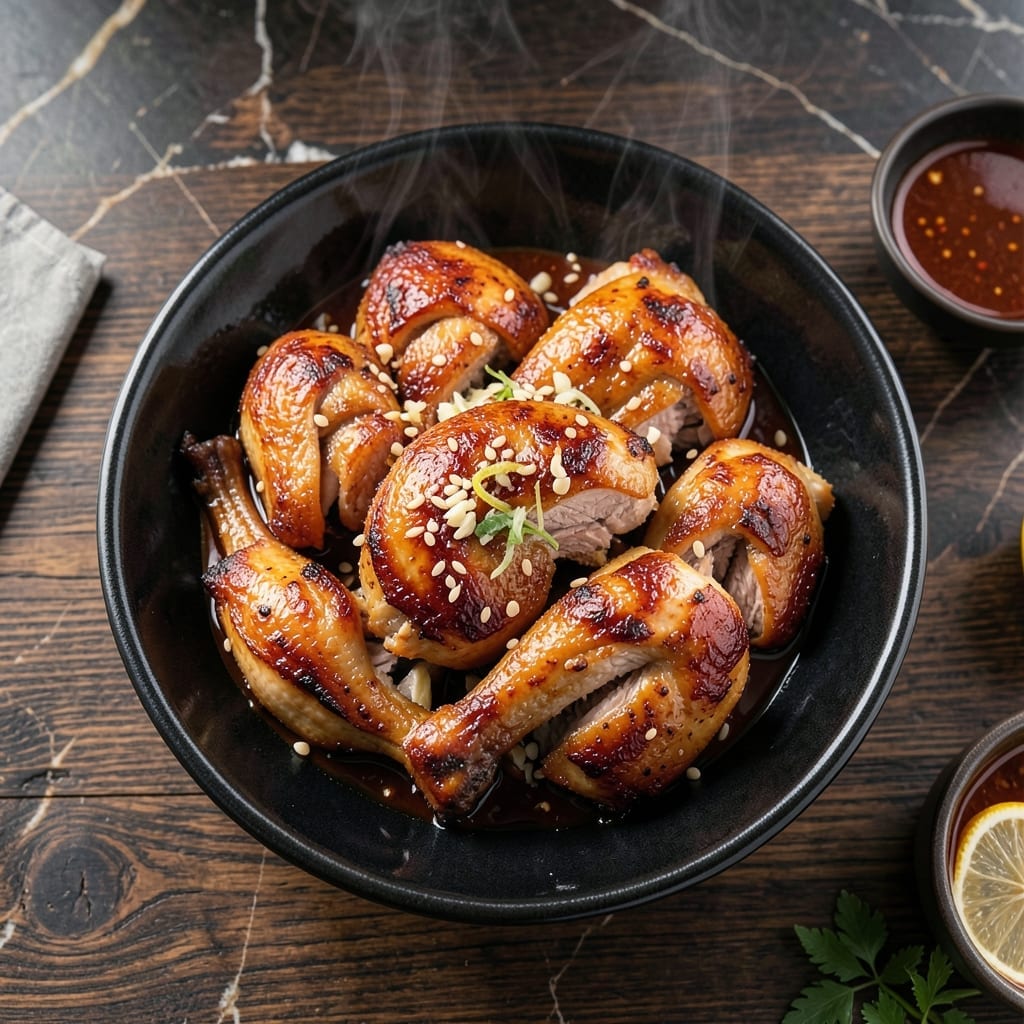
This Korean BBQ chicken delivers the authentic flavors of a Seoul street food stall right to your grill. The marinade combines sweet, smoky, and savory elements that caramelize beautifully over direct heat.
I developed this recipe after testing countless variations to perfect the balance of soy sauce, gochujang, and brown sugar. The result is tender, juicy chicken with a sticky, glossy glaze that’s impossible to resist.
The key is marinating for at least 4 hours to let the flavors penetrate deeply. When grilled over high heat, the sugars in the marinade create a crispy, charred exterior while keeping the meat moist inside.
Serve with steamed rice, kimchi, and grilled vegetables for a complete Korean BBQ experience. This method works on both gas and charcoal grills.
Ingredients for Kbbq Chicken
These ingredients capture Seoul’s bold flavors for your backyard grill.
| Ingredient | Amount | Notes |
|---|---|---|
| Chicken Thighs 🍗 | 2 lb | Boneless, skin-on preferred |
| Soy Sauce 🥫 | ½ cup | Low-sodium for balance |
| Gochujang 🌶️ | ¼ cup | Korean chili paste, essential |
| Brown Sugar 🍚 | ⅓ cup | Packed, for caramelization |
| Garlic Cloves 🧄 | 6 cloves | Minced for maximum flavor |
| Fresh Ginger 🌿 | 1 tbsp | Peeled and grated |
| Sesame Oil 🫒 | 2 tbsp | Toasted for depth |
| Rice Vinegar 🍯 | 2 tbsp | Balances sweetness |
| Green Onions 🧅 | 4 whole | Thinly sliced for garnish |
| Sesame Seeds 🌰 | 2 tbsp | Toasted for garnish |
| Black Pepper 🌶️ | 1 tsp | Freshly ground preferred |
| Vegetable Oil 🫒 | 1 tbsp | For grilling, neutral flavor |
| Honey 🍯 | 2 tbsp | Optional, for extra sweetness |
The gochujang is non-negotiable—H Mart or Korean markets carry authentic brands like Sempio. For soy sauce, Kikkoman low-sodium is widely available and consistent. Chicken thighs (skin-on, bone-in) give the juiciest results, but boneless works in a pinch. Organic brown sugar adds depth, though regular is fine. Fresh ginger and garlic are essential; pre-minced versions lack intensity.
No gochujang? Sriracha plus miso paste can substitute, though the flavor profile changes. Brown sugar can be swapped for coconut sugar at a 1:1 ratio. For a gluten-free version, tamari replaces soy sauce. The sesame oil adds authenticity—don’t skip it. If you’re out of rice vinegar, apple cider vinegar works, but use slightly less to avoid overpowering the marinade.
Marinated chicken keeps 2 days in the fridge (flavor improves overnight). Cooked leftovers stay fresh for 3-4 days; reheat gently to avoid drying. Freeze marinated chicken for up to 3 months—thaw before grilling. Always store gochujang in the fridge after opening.
Why You’ll Love This Recipe
- One Pan Wonder: I toss everything in a bowl, let it marinate, and the oven does the rest—no stovetop babysitting required.
- Sweet & Spicy Magic: The gochujang and brown sugar caramelize into this sticky, finger-licking glaze that clings to every bite.
- Weeknight MVP: Between us, this is my Tuesday night lifesaver when I need dinner ready before soccer practice.
- Budget Stretcher: Chicken thighs stay juicy and cost half what breasts do, so I can feed my whole crew without breaking the bank.
Step-by-Step Instructions for KBBQ Chicken
Master the technique for perfectly charred, caramelized chicken with authentic Korean flavors.
Step 1: Create the Marinade Base
In a large bowl, combine the 0.5 cup soy sauce, 0.25 cup gochujang, 0.33 cup brown sugar, 2 tbsp rice vinegar, and 2 tbsp honey. Whisk vigorously until the brown sugar fully dissolves and the mixture becomes smooth and glossy.
This balance of salty, spicy, sweet, and tangy creates the signature Korean BBQ profile. The gochujang provides deep umami and heat, while the brown sugar ensures beautiful caramelization during grilling.
Step 2: Incorporate Aromatics and Oils
Add the 6 cloves minced garlic, 1 tbsp grated fresh ginger, 2 tbsp sesame oil, and 1 tsp black pepper to the marinade. Stir well to distribute the aromatics evenly throughout the liquid.
The sesame oil adds nutty depth, while the garlic and ginger infuse the marinade with pungent, warm notes. Let the mixture sit for 5 minutes to allow the flavors to meld before adding the chicken.
Step 3: Marinate the Chicken Thoroughly
Place the 2 lb chicken thighs in a resealable plastic bag or shallow dish and pour the marinade over them. Massage the marinade into the meat, ensuring every piece is fully coated. Seal and refrigerate for at least 4 hours, or preferably overnight.
For maximum flavor penetration, turn the chicken occasionally during marinating. The longer it marinates, the more tender and flavorful it becomes. The skin-on thighs will absorb the marinade while retaining moisture during cooking.
Step 4: Grill to Charred Perfection
Preheat your grill to medium-high heat and oil the grates with 1 tbsp vegetable oil. Remove the chicken from the marinade (reserve excess marinade) and grill for 6-7 minutes per side, basting occasionally with reserved marinade.
Cook until the internal temperature reaches 165°F and the skin develops deep char marks with a sticky, caramelized glaze. Avoid flaring by keeping the grill lid closed as much as possible.
Step 5: Rest and Garnish
Transfer the grilled chicken to a cutting board and let it rest for 5 minutes. This allows the juices to redistribute, ensuring moist, flavorful meat. Slice the chicken into bite-sized pieces if desired.
Garnish with thinly sliced green onions and toasted sesame seeds just before serving. The fresh green onions add a bright contrast, while the sesame seeds provide a satisfying crunch and visual appeal.
Pro Tips For Making Kbbq Chicken
- Score the Thighs: Cut 2-3 shallow slits into each thigh before marinating—this lets the gochujang and soy sauce penetrate deeper and gives you more crispy edges when grilling.
- Bloom the Gochujang: I learned this the hard way—sauté the gochujang with the garlic for 1-2 minutes in a little oil before adding liquids; it mellows the raw fermented bite and deepens the flavor.
- Skip the Overcrowding: Resist the urge to pack the pan or grill; if the thighs steam instead of sear, you’ll lose that sticky, caramelized crust the brown sugar should create.
- Rest Before Serving: Give the chicken a solid 5 minutes off the heat under loose foil—this keeps the juices inside where they belong, not all over your cutting board.
Storing and Reheating This Dish
Refrigerator Storage
Let your grilled chicken cool completely before storing—this prevents condensation in the container. I use airtight glass containers to preserve freshness. Refrigerated leftovers stay delicious for 3-4 days. ❄️
Freezer Storage
For longer storage, freeze cooked chicken in heavy-duty ziplock bags with excess air removed. It keeps well for up to 3 months without losing flavor. Label with the date—I always forget when I stored things otherwise.
Stovetop Reheating
My preferred method: warm leftovers in a skillet over medium-low heat with a splash of water or chicken broth. Cover and heat for 5-7 minutes, stirring occasionally. This keeps the chicken moist and revives that sticky glaze. 🔥
Microwave Reheating
Place chicken on a microwave-safe plate, cover with a damp paper towel, and heat on 50% power in 1-minute intervals. This prevents the sauce from burning. Stir between intervals until reaching 165°F.
Meal Prep Tip
Marinate raw chicken in portions before freezing—it thaws and cooks beautifully straight from frozen. Just add 30 minutes to your marinating time after thawing. Perfect for busy weeknights when you crave that Korean BBQ flavor without the prep.
Nutrition Facts
Frequently Asked Questions
Can I use chicken breasts instead of thighs?
Yes, but thighs stay juicier due to their higher fat content. If using breasts, reduce grilling time to 5-6 minutes per side and brine first to prevent dryness.
How spicy is this recipe?
Mild to medium—gochujang adds warmth without overwhelming heat. For less spice, reduce to 2 tbsp or replace half with miso paste. For more, add 1 tsp red pepper flakes.
Can I bake this instead of grilling?
Bake at 400°F for 25-30 minutes on a wire rack over a baking sheet. Broil the last 2-3 minutes for char. Turn halfway for even cooking.
What if my marinade is too thick?
Thin it with 1-2 tbsp water or pineapple juice. The sugar in the marinade can make it syrupy—this won’t affect flavor but helps coat the chicken evenly.

- Jollof Rice Sauce Recipe: West African Tomato and Spice Infusion - September 25, 2026
- Japanese Rice Soup Recipe: Umami-Rich Comfort in a Bowl - September 25, 2026
- Homemade Cream Of Rice Recipe: Silk-Smooth Breakfast in Minutes - September 25, 2026