
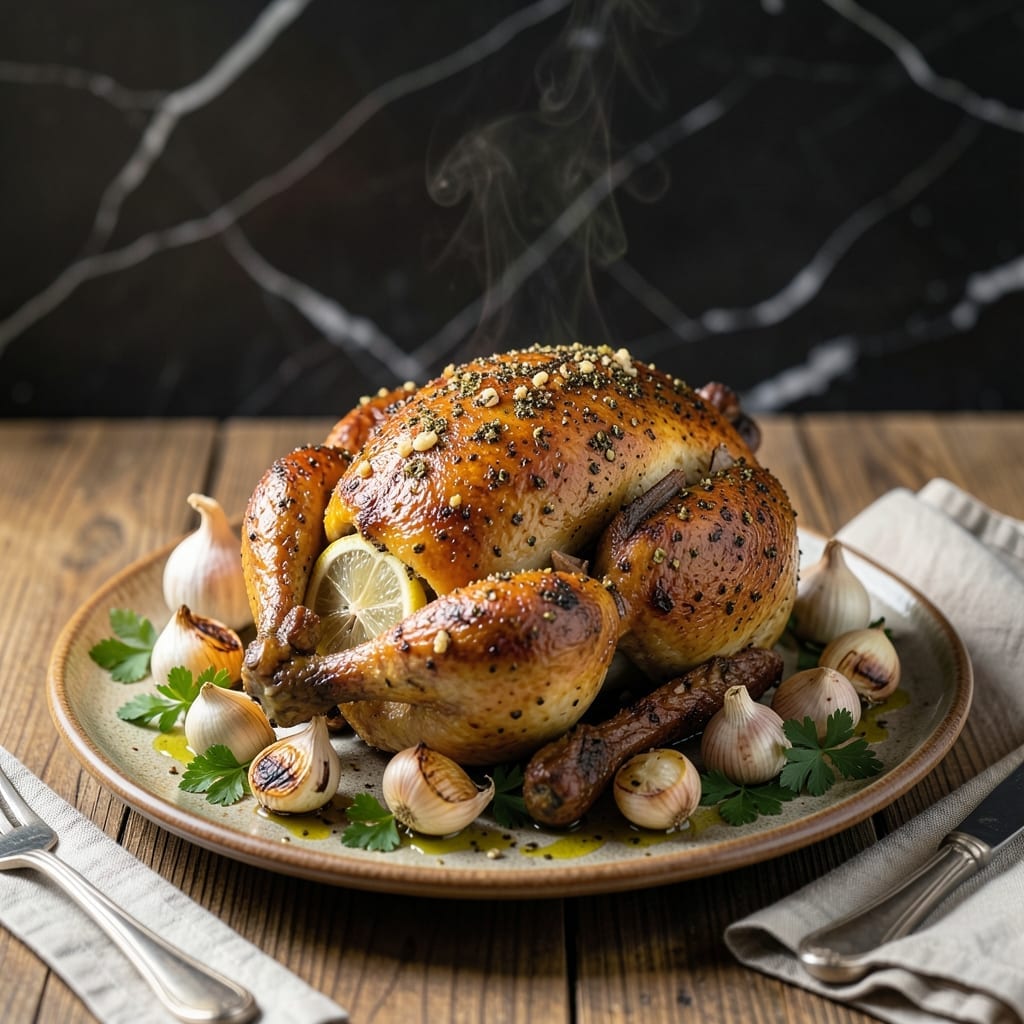
This Lebanese-style roast chicken delivers crispy skin and juicy meat with an aromatic blend of za’atar and garlic. A proven method for achieving restaurant-quality results at home with minimal effort.
The secret lies in a simple dry brine and generous seasoning under and over the skin. This ensures every bite carries the bold, earthy flavors of the Middle East. The chicken roasts at high heat for maximum crispiness.
What emerges from the oven is a golden bird with fragrant, herb-infused skin and tender meat beneath. The za’atar creates a crust that’s impossible to resist, while the garlic adds depth to each bite.
Serve with flatbread and a fresh salad for a complete meal. This technique guarantees consistent, impressive results every time.
Ingredients for Lebanese Roast Chicken
Whole chicken and Middle Eastern spices create this aromatic, crispy-skinned dish with minimal effort.
| Ingredient | Amount | Notes |
|---|---|---|
| Whole Chicken 🍗 | 4 lb | Pat dry inside and out |
| Za'atar Seasoning 🌿 | 3 tbsp | Divided for under and over skin |
| Garlic Cloves 🧄 | 8 cloves | Minced into paste |
| Kosher Salt 🧂 | 1 ½ tbsp | For dry brine |
| Black Pepper 🌶️ | 1 tsp | Freshly ground |
| Olive Oil 🫒 | 2 tbsp | Extra-virgin recommended |
| Sumac 🌶️ | 1 tsp | For tangy brightness |
| Dried Thyme 🍃 | 1 tsp | Crushed between fingers |
| Lemon 🍋 | 1 whole | Zest and juice |
| Fresh Parsley 🌿 | ¼ cup | Chopped for garnish |
| Unsalted Butter 🧈 | 2 tbsp | Melted for basting |
| Onion 🧅 | 1 whole | Quartered for cavity |
The chicken quality is non-negotiable. Air-chilled birds from Whole Foods or local butchers yield the crispiest skin—avoid those pre-brined in plastic bags. Za’atar varies wildly by brand; Al Wadi or Ziyad offer authentic blends with the right balance of sumac, sesame, and herbs. Look for vibrant green color with visible seeds. The garlic should be fresh, not jarred, for that sharp, sweet punch.
No za’atar? Mix equal parts dried thyme, sumac, and sesame seeds with a pinch of salt. Sumac can be swapped for lemon zest (double the amount). Fresh garlic paste is ideal, but garlic powder at half the quantity works in a rush. The dry brine step is essential—don’t skip it, even if you’re short on time. For extra crispiness, pat the skin dry again just before roasting.
The roasted chicken keeps beautifully—carve and store in an airtight container for up to 4 days. Reheat in a 350°F oven to maintain crispiness. Leftovers make incredible sandwiches or salads. The za’atar blend stays fresh for 6 months in a cool, dark place.
Why You’ll Love This Recipe
- One Pan Wonder: I toss everything together on a single sheet pan—chicken, za’atar, garlic—and let the oven do the work.
- Za’atar Magic: That earthy, herby za’atar crust with roasted garlic? Ridiculously good.
- Feeds a Crowd: I made this for a Sunday dinner with six people and everyone went back for seconds.
- Leftovers Gold: Honestly, the chicken tastes even better the next day in wraps or salads.
Step-by-Step Instructions for Lebanese Roast Chicken
This method ensures maximum flavor penetration and perfectly crispy skin every time.
Step 1: Prepare and Dry Brine the Chicken
Pat the 4 lb Whole Chicken completely dry inside and out with paper towels. This step is non-negotiable—moisture prevents crispy skin. Place the chicken on a rack set over a plate to allow air circulation.
Rub 1.5 tbsp Kosher Salt and 1 tsp Black Pepper all over the chicken, including inside the cavity. I also add 1 tsp Dried Thyme, crushed between my fingers to release its oils. Let it dry brine uncovered in the refrigerator for 12-24 hours. This draws out excess moisture while seasoning deep into the meat.
An hour before cooking, remove the chicken from the fridge to bring it to room temperature. This ensures even cooking throughout.
Step 2: Create the Aromatic cavity and First Za’atar Layer
Quarter the 1 whole Onion and place it in the chicken cavity along with half of the 1 whole Lemon. This will infuse the meat with subtle flavor as it roasts. Zest the remaining lemon half and set the zest aside for later.
Carefully loosen the skin over the breast and thighs by sliding your fingers underneath. Spread 1 tbsp of the 3 tbsp Za’atar Seasoning directly onto the meat under the skin. This direct contact maximizes flavor. Drizzle 1 tbsp of the 2 tbsp Olive Oil over the skin to help the seasoning adhere.
Step 3: Season the Exterior and Prep for Roasting
Mince the 8 cloves Garlic Cloves into a paste using a knife or mortar and pestle. Mix this paste with the remaining 2 tbsp Za’atar Seasoning, the reserved lemon zest, 1 tsp Sumac, and the remaining 1 tbsp Olive Oil. This creates a thick, fragrant paste.
Rub this garlic-za’atar mixture all over the outside of the chicken, making sure to coat every surface evenly. The paste should form a visible layer—this is what creates that signature Lebanese flavor and beautiful golden crust. Melt the 2 tbsp Unsalted Butter and set aside for basting during cooking.
Step 4: Roast to Golden Perfection
Preheat your oven to 425°F. Place the chicken breast-side up on a rack in a roasting pan. Pour ½ cup of water in the bottom of the pan to prevent drippings from burning and to create steam that helps cook the chicken evenly.
Roast for 20 minutes, then baste with the melted butter. Reduce the heat to 375°F and continue roasting for another 40-50 minutes, basting every 15 minutes. The chicken is done when the internal temperature reaches 165°F in the thickest part of the thigh and the juices run clear.
Look for deep golden-brown skin that’s crisp to the touch. If the breast starts browning too quickly, tent it loosely with foil to prevent burning.
Step 5: Rest and Garnish
Transfer the chicken to a cutting board and let it rest for 15 minutes before carving. This allows the juices to redistribute, ensuring moist, flavorful meat. Tent it loosely with foil to keep it warm.
While the chicken rests, juice the remaining lemon half. Carve the chicken and arrange on a platter. Drizzle with the lemon juice and sprinkle with 0.25 cup Fresh Parsley, chopped. The bright acidity of the lemon and freshness of the parsley balance the rich, earthy flavors of the za’atar and garlic perfectly.
Pro Tips For Making Lebanese Roast Chicken
- Pat the Chicken Dry: I learned this the hard way—skip this and your za’atar won’t stick properly, and the skin won’t crisp up like it should. Use paper towels and get every nook, even inside the cavity.
- Slash the Garlic: Don’t just toss whole cloves in. Smash them lightly with the side of your knife first, or slice them thin—it releases way more flavor into the chicken as it roasts.
- Start Breast-Side Up: After burning a few batches, I finally figured out that starting breast-side up for the first 45 minutes keeps it juicy, then flip to crisp the back and thighs evenly.
- Rest Before Carving: Sounds weird, but it works: let the chicken rest 10-15 minutes under foil after roasting. It keeps all those za’atar and garlic juices inside where they belong.
Essential Equipment for This Dish
Roasting Pan Essentials
A sturdy stainless steel roasting pan with a rack is my top choice—it distributes heat evenly and elevates the chicken for air circulation. I swear by All-Clad for durability. The rack prevents the bird from steaming in its own juices, ensuring that coveted crispy skin. 🔥
Thermometer Accuracy
An instant-read thermometer is non-negotiable for perfect doneness. I use the ThermoWorks Thermapen for its 2-3 second read time. Check the thickest part of the thigh—it should read 165°F when done. This tool eliminates all guesswork.
Basting Tools
A pastry brush or silicon basting brush helps distribute melted butter evenly during roasting. I prefer OXO’s silicone brush—it won’t melt and cleans easily. Baste every 15 minutes for maximum flavor and glossy skin.
Prep Bowls and Knives
Have mixing bowls ready for your za’atar-garlic paste. I use Pyrex glass bowls because they’re sturdy and easy to clean. A sharp 8-inch chef’s knife makes quick work of mincing garlic and quartering onions.
Resting and Carving
Use a wooden cutting board for resting and carving. The board’s natural fibers are gentle on knife edges. Let the chicken rest for 15 minutes before carving to retain juices. A carving fork helps steady the bird while you slice.
Optional but Helpful
A fat separator lets you skim drippings for homemade gravy. I like the OXO fat separator—it pours clean broth while leaving fat behind. For extra crispiness, a kitchen torch can brown any pale spots before serving.
Nutrition Facts
Frequently Asked Questions
What can I use if I don’t have za’atar?
Mix 1 tsp dried thyme, 1 tsp sumac, and 1 tsp sesame seeds with a pinch of salt. This creates a close approximation of za’atar’s earthy flavor.
Can I use chicken pieces instead of a whole bird?
Yes! Use bone-in, skin-on thighs and breasts. Reduce roasting time to 30-35 minutes at 425°F and baste with the same za’atar-garlic paste. The skin will still get crispy.
Why is my skin not crispy?
Ensure the chicken is completely dry before roasting. Also, don’t skip the dry brine step—it’s essential for removing moisture. Roast at 425°F initially for maximum crispiness.
How do I store leftovers?
Carve and store in an airtight container for up to 4 days. Reheat in a 350°F oven to maintain crispiness. Leftovers make great sandwiches or salads.

- Jollof Rice Sauce Recipe: West African Tomato and Spice Infusion - September 25, 2026
- Japanese Rice Soup Recipe: Umami-Rich Comfort in a Bowl - September 25, 2026
- Homemade Cream Of Rice Recipe: Silk-Smooth Breakfast in Minutes - September 25, 2026