
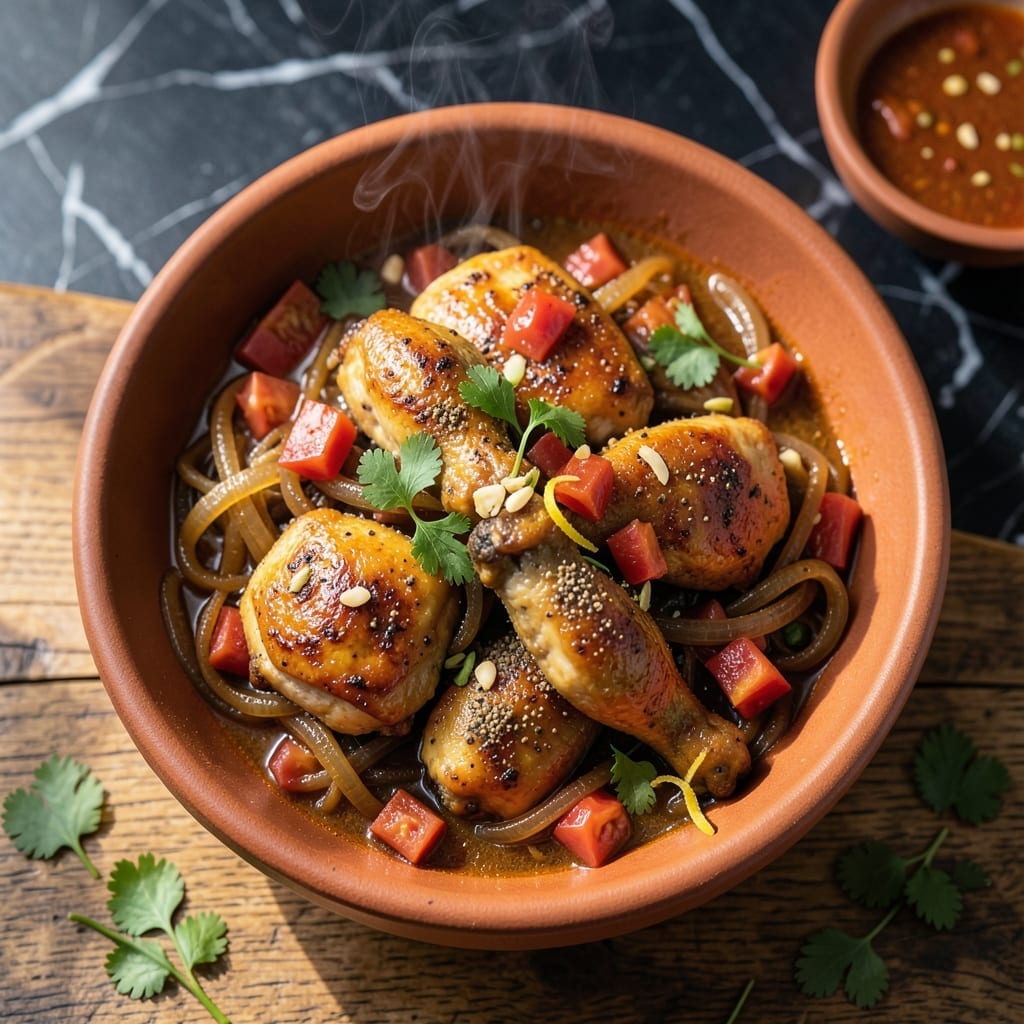
This Nepali chicken curry delivers authentic flavors with a blend of traditional spices that create a deeply aromatic experience. The dish combines tender chicken pieces with a rich, spiced sauce that’s both comforting and complex.
I’ve refined this recipe to balance warmth and depth, using a mix of cumin, coriander, and turmeric for that signature Nepali taste. The slow simmering process ensures every bite is infused with bold, layered flavors.
What you’ll get is a hearty, fragrant curry with chicken so tender it falls apart, all enveloped in a sauce that’s both smooth and robust. It’s a dish that feels special yet remains approachable for home cooks.
Serve it with steamed rice or naan to soak up every last drop of the sauce. Here’s how to bring this taste of Nepal to your table.
Ingredients for Nepali Chicken Curry
Authentic Nepali spices and tender chicken come together for a rich, fragrant dish.
| Ingredient | Amount | Notes |
|---|---|---|
| Chicken Thighs 🍗 | 1 ½ lb | Boneless, skinless, cut into bite-sized pieces |
| Onion 🧅 | 1 whole | Medium, finely chopped |
| Garlic Cloves 🧄 | 4 cloves | Minced for depth of flavor |
| Fresh Ginger 🌿 | 1 tbsp | Peeled and grated |
| Tomatoes 🍅 | 2 whole | Medium, finely diced |
| Ground Cumin 🌿 | 1 ½ tsp | Toasted for aroma |
| Ground Coriander 🌿 | 1 ½ tsp | Freshly ground preferred |
| Ground Turmeric 🌶️ | 1 tsp | For color and earthiness |
| Garam Masala 🌿 | 1 tsp | Essential for Nepali flavor |
| Cayenne Pepper 🔥 | ½ tsp | Adjust for heat preference |
| Vegetable Oil 🫒 | 2 tbsp | For sautéing aromatics |
| Water 💧 | 1 ½ cups | For simmering sauce |
| Fresh Cilantro 🌿 | ¼ cup | Chopped, for garnish |
| Salt 🧂 | 1 tsp | Adjust to taste |
| Black Pepper 🌶️ | ½ tsp | Freshly ground |
The chicken matters most here. Thighs stay juicy through the long simmer—breasts will dry out. I grab mine from Whole Foods or the local butcher for the best quality. Look for skin-on, bone-in if you want extra depth, but boneless, skinless works fine for a quicker weeknight version. The spices? Penzeys or a well-stocked Indian market will have the freshest garam masala.
No fresh ginger? Ground ginger at half the amount works in a pinch. Short on tomatoes? Canned crushed tomatoes (about 1 cup) are a great backup. Want more heat? Add an extra half teaspoon of cayenne or a pinch of red pepper flakes. If you don’t have garam masala, a mix of cinnamon, cardamom, and cloves gets you close. Frozen cilantro works too (use double the amount).
This curry tastes even better the next day. Keeps 4-5 days in the fridge, freezes for 3 months. Store leftovers in an airtight container—the flavors just keep developing. Reheat gently on the stove (don’t microwave—it dulls the spices).
Why You’ll Love This Recipe
- One Pot Wonder: I just toss the chicken thighs with onions, garlic, and ginger in a single pot—minimal mess, maximum flavor.
- Rich and Aromatic: The fresh ginger and garlic give this curry a warm, deep taste that’s honestly addictive.
- Meal Prep Magic: It reheats beautifully, so I make a big batch for lunches all week.
- Budget Friendly: Chicken thighs are affordable, and the spices stretch the flavor without stretching my wallet.
Step-by-Step Instructions for Nepali Chicken Curry
This method builds layers of flavor that will transport you straight to Kathmandu.
Step 1: Bloom the Spices in Hot Oil
Heat the 2 tbsp vegetable oil in a deep, heavy pot over medium heat. Add the 1 whole onion (finely chopped) and sauté for 5-7 minutes until it turns golden brown and translucent. This is your flavor foundation—don’t rush it.
Stir in the 4 cloves garlic cloves (minced), 1 tbsp fresh ginger (grated), 1.5 tsp ground cumin, 1.5 tsp ground coriander, 1 tsp ground turmeric, and 0.5 tsp cayenne pepper. Cook for 2-3 minutes until the spices become fragrant and the garlic starts to sizzle. The turmeric will turn the oil a beautiful golden color—that’s how you know it’s working.
Step 2: Build the Curry Base
Add the 2 whole tomatoes (finely diced) to the pot along with the 1 tsp salt and 0.5 tsp black pepper. Cook for 5-6 minutes, stirring occasionally, until the tomatoes break down completely and the mixture thickens slightly. You’re looking for a rich, paste-like consistency.
This step transforms the raw spices into a cohesive, aromatic base. If the mixture starts to stick, add a splash of the 1.5 cups water to deglaze the pan. The tomatoes should lose their bright red color and meld into the spice mixture, creating a deep, rust-colored paste.
Step 3: Cook the Chicken Until Tender
Add the 1.5 lb chicken thighs (cut into bite-sized pieces) to the pot and stir to coat every piece in the spice mixture. Cook for 5 minutes over medium-high heat, stirring frequently, until the chicken starts to brown on the edges.
Pour in the remaining 1.5 cups water and stir well, scraping up any browned bits from the bottom of the pot. Bring the mixture to a boil, then reduce heat to low, cover, and let it simmer for 25-30 minutes. The chicken is done when it’s fork-tender and the sauce has thickened to your desired consistency.
Step 4: Finish with Garam Masala and Cilantro
Stir in the 1 tsp garam masala and let the curry simmer uncovered for 5 more minutes. This final spice addition brightens the dish and adds that signature Nepali depth. Taste and adjust the salt if needed—remember, the flavors will continue to develop as it rests.
Remove from heat and stir in the 0.25 cup fresh cilantro (chopped). Let the curry rest for 10 minutes before serving. The cilantro adds a fresh, herbal note that balances the rich, warm spices. Serve hot with steamed rice or naan bread for the full experience.
Pro Tips For Making Nepali Chicken Curry
- Brown the Chicken Well: Sear the chicken thighs on medium-high heat until deeply golden—about 4-5 minutes per side. I learned this the hard way: under-browned chicken gives a watery curry with less depth.
- Grate the Ginger: Skip the mincing and grate fresh ginger instead—it releases more juice and blends seamlessly into the sauce. Sounds weird, but it works.
- Cook Onions Slow: Let the onions caramelize for at least 10-12 minutes on medium-low heat. After burning three batches, I finally figured out that rushing this step makes the curry taste raw and harsh.
- Use Ripe Tomatoes: Pick the reddest, softest tomatoes you can find—they break down faster and sweeten the curry naturally. My grandmother swore by this, and she was right.
Pro Cooking Tips for This Dish
Spice Toasting Technique
Always toast your cumin and coriander in dry heat for 30-45 seconds before adding oil. This releases their essential oils and deepens their aroma. I use a heavy cast iron skillet for even heat distribution. 🌡️
Low and Slow Simmer
Keep the heat at low after adding the 1.5 cups water. A gentle simmer prevents the chicken from toughening while allowing the flavors to meld beautifully. I check the temperature occasionally with an instant-read thermometer to maintain 180-190°F.
Layer Your Aromatics
Bloom the onion first until golden, then add garlic and ginger. This sequential approach prevents burning and builds complex flavors. The turmeric should go in with the other spices to infuse the oil completely.
Sauce Consistency Control
If your curry is too thin, simmer uncovered for 5-10 extra minutes. For a thinner sauce, add ¼ cup water at a time. I prefer a medium-thick consistency that clings to the chicken and rice without being soupy.
Garam Masala Timing
Add the garam masala at the very end of cooking. This delicate spice blend loses its potency if cooked too long. Just 5 minutes of simmering is perfect to wake up its flavors without bitterness.
Resting Period
Let the curry rest for 10 minutes after cooking. This allows the chicken to reabsorb some of the sauce and the flavors to harmonize. I use this time to prepare the rice or warm the naan. 💡
Nutrition Facts
Frequently Asked Questions
Can I use chicken breast instead of thighs?
Yes, but thighs stay juicier during the 25-30 minute simmer. Breast meat dries out faster, so reduce cooking time to 20 minutes max.
What if I don’t have garam masala?
Mix ¼ tsp each of cinnamon, cardamom and cloves as a substitute. It won’t be identical but adds similar warmth.
How do I adjust the spice level?
Reduce or omit the ½ tsp cayenne for milder heat. Add a pinch of red pepper flakes for extra kick.
Can this curry be made ahead?
It tastes even better the next day. Store in an airtight container for up to 5 days in the fridge.

- Jollof Rice Sauce Recipe: West African Tomato and Spice Infusion - September 25, 2026
- Japanese Rice Soup Recipe: Umami-Rich Comfort in a Bowl - September 25, 2026
- Homemade Cream Of Rice Recipe: Silk-Smooth Breakfast in Minutes - September 25, 2026