
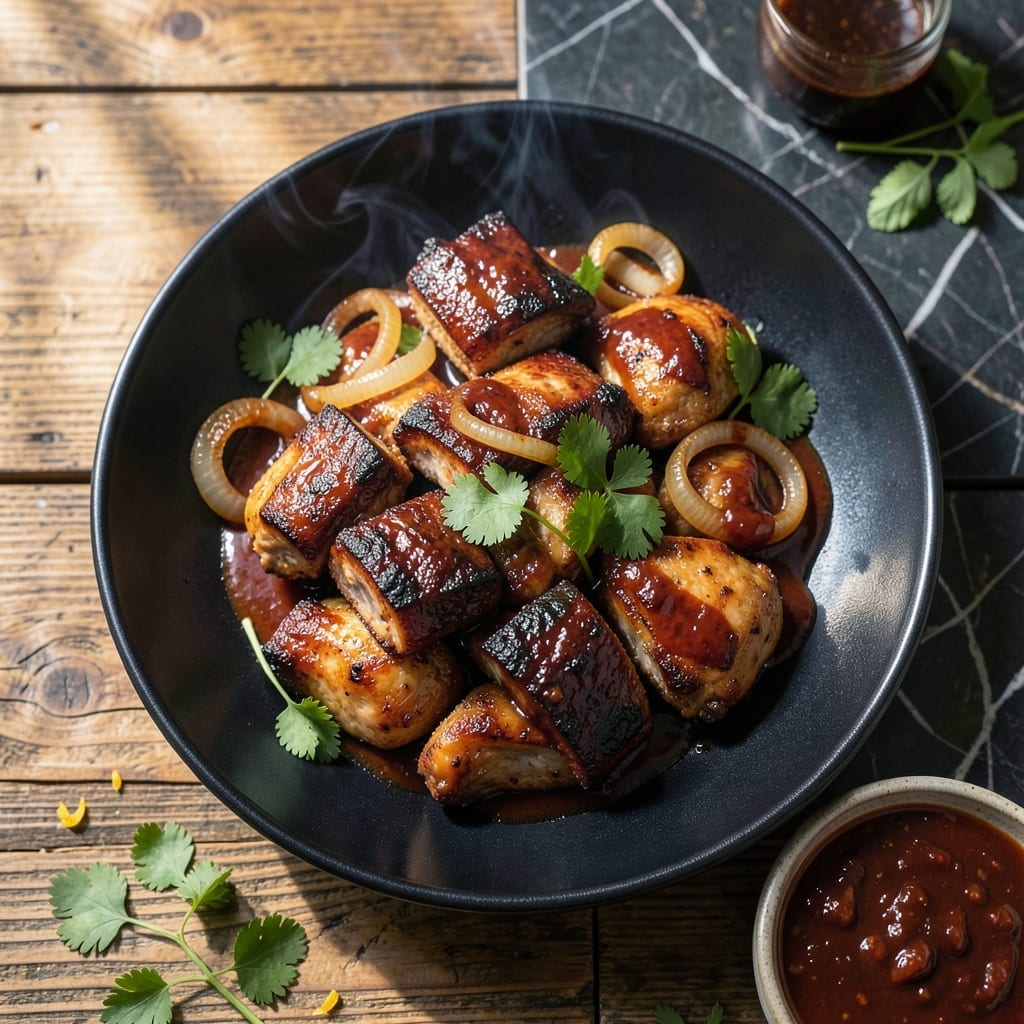
There’s nothing quite like the aroma of smoky barbecue filling the air on a warm evening. This recipe brings together tender pork and juicy chicken, both kissed by flames and glazed with a sweet, tangy sauce that clings to every bite.
I’ve refined this method over years of backyard cookouts, ensuring both meats cook evenly without drying out. The secret lies in a two-zone fire—direct heat for searing, indirect for slow finishing—so the pork stays succulent while the chicken picks up a perfect char.
The sauce ties it all together, balancing sweetness with a subtle heat that lingers. It’s brushed on at the end to caramelize, creating a glossy, finger-licking finish that’s impossible to resist.
Serve with classic sides like cornbread or coleslaw to round out the meal. Here’s how to make it right every time.
Ingredients for Pork and Chicken Barbecue
Pork, chicken, and a smoky-sweet sauce come together for the ultimate grill experience.
| Ingredient | Amount | Notes |
|---|---|---|
| Pork Shoulder 🥩 | 2 lb | Bone-in, cut into chunks |
| Chicken Thighs 🍗 | 2 lb | Boneless, skin-on preferred |
| Barbecue Sauce 🥫 | 1 ½ cups | Sweet and tangy variety |
| Apple Cider Vinegar 🍏 | ¼ cup | Balances sweetness in sauce |
| Brown Sugar 🍚 | ½ cup | Light or dark works |
| Ketchup 🥫 | 1 cup | Base for barbecue sauce |
| Worcestershire Sauce 🥫 | 2 tbsp | Adds depth to sauce |
| Garlic Powder 🧄 | 1 tbsp | For dry rub on meats |
| Onion Powder 🧅 | 1 tbsp | Complements garlic in rub |
| Smoked Paprika 🌶️ | 1 tbsp | Key for smoky flavor |
| Salt 🧂 | 1 tbsp | Kosher or sea salt |
| Black Pepper 🌶️ | 1 tsp | Freshly ground preferred |
| Olive Oil 🫒 | 2 tbsp | For coating meats before grilling |
| Red Pepper Flakes 🔥 | ½ tsp | Adjust for heat preference |
The pork shoulder is non-negotiable for that melt-in-your-mouth texture. Look for good marbling at your butcher or Costco for consistent quality. Bone-in adds flavor, but boneless works in a pinch. Chicken thighs stay juicier than breasts on the grill—skin-on gives you that crispy finish. Most grocery stores carry both, but ask them to cut the pork into chunks if you’re short on time.
No pork shoulder? Pork ribs at double the cook time work too. Chicken breasts can swap for thighs, but watch them closely—they dry out fast. For the sauce, San Marzano tomatoes blended with vinegar and sugar make a great base if you’re starting from scratch. Stubb’s or Sweet Baby Ray’s are solid store-bought options. The smoked paprika is key—don’t skip it, but regular works if that’s all you’ve got.
Both meats can marinate overnight in the dry rub, but even 30 minutes makes a difference. Leftovers keep for 4 days in the fridge, or freeze the sauce separately for up to 3 months. Reheat gently to avoid drying out the meat.
Why You’ll Love This Recipe
- I’ll be real: the flavors taste even better the next day, so I always make extra for easy lunches.
- One Pan Wonder: I toss the pork shoulder and chicken thighs with the sauce, then let the oven do the work—minimal cleanup, maximum flavor.
- Sweet and Tangy: That mix of brown sugar and apple cider vinegar in the barbecue sauce? It hits the perfect balance of rich and zesty.
- Feeds a Crowd: Honestly, this is my go-to for backyard get-togethers—everyone loves the combo of tender pork and juicy chicken.
Step-by-Step Instructions for Pork and Chicken Barbecue
Master the grill with this method for tender, smoky, and perfectly sauced meats every time.
Step 1: Season the Meats with a Bold Dry Rub
In a small bowl, combine the 1 tbsp Garlic Powder, 1 tbsp Onion Powder, 1 tbsp Smoked Paprika, 1 tbsp Salt, 1 tsp Black Pepper, and 0.5 tsp Red Pepper Flakes. This rub delivers deep, smoky heat that complements both the pork and chicken.
Pat the 2 lb Pork Shoulder chunks and 2 lb Chicken Thighs dry with paper towels, then coat them lightly with 2 tbsp Olive Oil. Rub the spice mixture evenly over all surfaces of the meats, pressing gently so it adheres. This ensures every bite is packed with flavor.
Step 2: Grill Over Indirect Heat for Tenderness
Preheat your grill to medium-high heat (around 375-400°F) and set it up for indirect cooking. Sear the pork shoulder and chicken thighs for 2-3 minutes per side over direct heat to develop a rich crust.
Move the meats to the indirect heat side of the grill, cover, and cook for 25-30 minutes. The pork should reach an internal temperature of 145°F, and the chicken should hit 165°F. This method keeps the meats juicy while infusing them with smoky flavor.
Step 3: Build the Homemade Barbecue Sauce
In a saucepan, combine the 1 cup Ketchup, 0.5 cup Brown Sugar, 0.25 cup Apple Cider Vinegar, 2 tbsp Worcestershire Sauce, and 1.5 cups Barbecue Sauce. Stir well to blend the sweet, tangy, and smoky elements.
Simmer over medium-low heat for 10-12 minutes, stirring occasionally, until the sauce thickens slightly and the flavors meld. Taste and adjust the balance if needed—this sauce will tie everything together beautifully.
Step 4: Glaze and Finish on the Grill
Transfer the meats back to direct heat and brush generously with the barbecue sauce. Cook for an additional 3-4 minutes per side, basting frequently, until the sauce caramelizes into a sticky, glossy glaze.
Watch closely to prevent burning—the sauce’s sugars can char quickly. Remove the meats from the grill when they’re fully coated and have reached their ideal internal temperatures. Let them rest for 5-10 minutes before serving to allow the juices to redistribute.
Pro Tips For Making Pork And Chicken Barbecue
- Low and Slow First: Cook the pork shoulder and chicken thighs at 225°F for 2-3 hours before saucing—I learned this the hard way after burning the sugar in the barbecue sauce by rushing it.
- Score the Pork: Cut 1/4-inch slits into the pork shoulder fat cap so the apple cider vinegar and brown sugar penetrate deeper, making a real difference in flavor.
- Sauce Last, Not First: Skip coating the meat in barbecue sauce until the final 30 minutes, or it’ll burn before the meat cooks through.
- Rest Under Foil: Give both meats a solid 10 minutes wrapped in foil after grilling—this locks in the juices, especially for the chicken thighs.
Troubleshooting pork and chicken barbecue
Sauce Too Thin
If your sauce isn’t thickening after 10-12 minutes, mix 1 tbsp cornstarch with 2 tbsp cold water and stir into the sauce. Simmer for 2-3 more minutes until it reaches your desired consistency. I keep cornstarch in my pantry just for this. 💡
Meat Drying Out
If the pork or chicken is drying out, you likely cooked it too long over direct heat. Next time, sear for only 2 minutes per side, then move to indirect heat. Brushing with extra sauce during cooking adds moisture too.
Uneven Cooking
Uneven cooking often means your grill has hot spots. Rotate the meats halfway through the 25-30 minute indirect cooking phase. If using charcoal, spread the coals evenly or add a few more for consistent heat.
Sauce Burning
Sauce burning is common because of its sugar content. Keep the heat at medium-low when simmering, and move meats to indirect heat after basting. If it starts to char, move them away from direct flames immediately. 🔥
Lack of Smoky Flavor
For more smokiness, add 1 tsp liquid smoke to your sauce, or use wood chips on the grill. Hickory or applewood pairs perfectly with pork and chicken. Soak the chips for 30 minutes before adding to the coals.
Chicken Overcooking
Chicken thighs are forgiving, but they can overcook if left too long. Pull them off the grill as soon as they hit 165°F internal temperature. Use a meat thermometer for accuracy—I never grill without mine.
Nutrition Facts
Frequently Asked Questions
Can I use chicken breast instead of thighs?
Yes, but thighs stay juicier. If using breasts, reduce cooking time by 5-7 minutes and pull at 165°F to prevent dryness. Brining them first helps too.
How do I store leftovers?
Seal in an airtight container and refrigerate for up to 4 days. Reheat gently on the grill or in a skillet to maintain texture. Freezing is not recommended.
What’s the best wood for smoking?
Hickory or applewood chips add ideal smokiness. Soak for 30 minutes before using, and add directly to coals for consistent flavor.
Why is my sauce too sweet?
Balance it with 1-2 tbsp apple cider vinegar or a pinch of salt. Simmer for 3-5 minutes to blend flavors before applying.

- Jollof Rice Sauce Recipe: West African Tomato and Spice Infusion - September 25, 2026
- Japanese Rice Soup Recipe: Umami-Rich Comfort in a Bowl - September 25, 2026
- Homemade Cream Of Rice Recipe: Silk-Smooth Breakfast in Minutes - September 25, 2026