
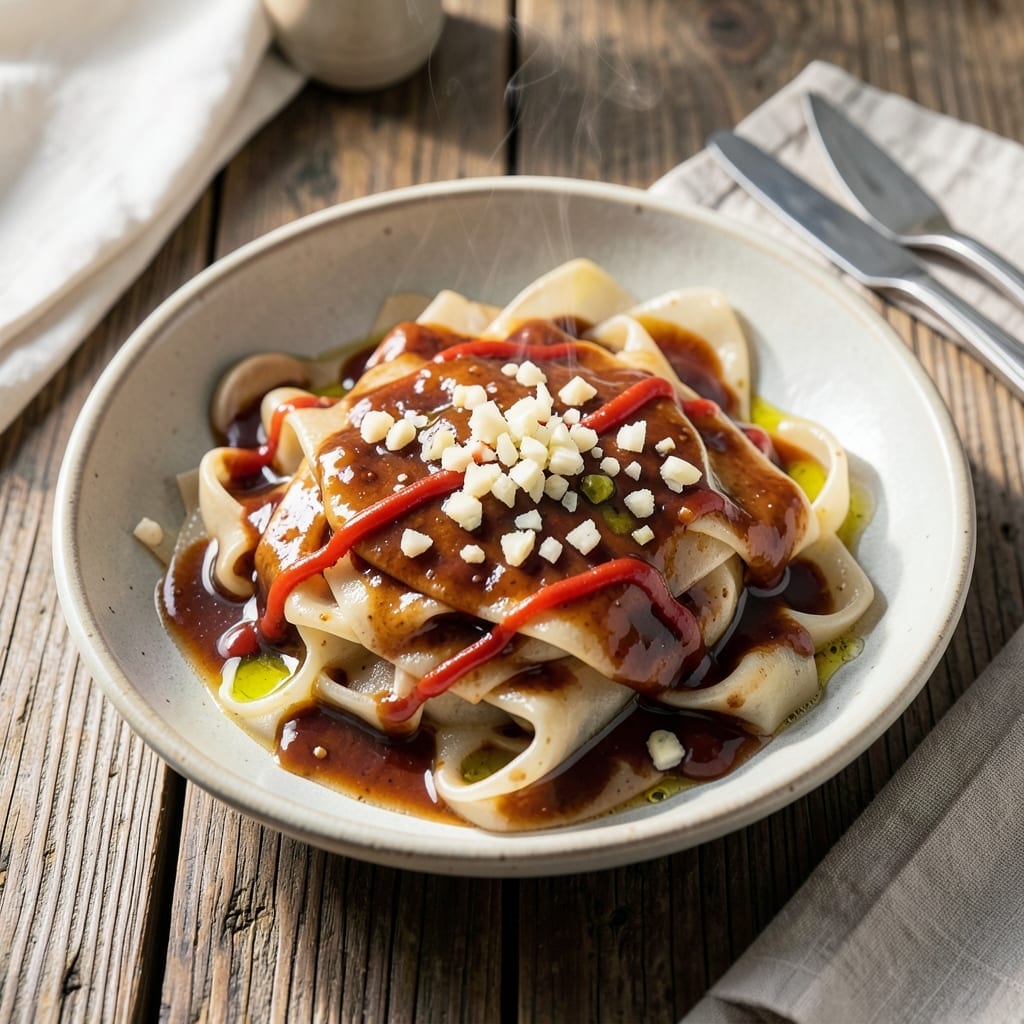
This sauce transforms simple rice paper rolls into a restaurant-worthy experience. I developed it after testing countless combinations to find the perfect balance of sweet, tangy, and umami flavors.
The secret lies in combining traditional Vietnamese ingredients with a simple mixing method. Hoi sin sauce provides depth, while rice vinegar adds the necessary brightness to cut through richness.
What results is a vibrant, versatile dipping sauce that enhances every bite without overpowering. The consistency is ideal for clinging to noodles and fresh vegetables in your rolls.
Make a batch ahead and store it in the fridge for up to 5 days. The flavors only improve with time, making it perfect for meal prep and gatherings.
Ingredients for Rice Paper Noodles Sauce
A vibrant blend of traditional Vietnamese ingredients creates this balanced dipping sauce for fresh rolls.
| Ingredient | Amount | Notes |
|---|---|---|
| Hoisin Sauce 🥫 | ½ cup | Traditional Vietnamese variety preferred |
| Rice Vinegar 🍶 | ¼ cup | Unseasoned for clean acidity |
| Soy Sauce 🥫 | 2 tbsp | Use tamari for gluten-free |
| Peanut Butter 🥜 | 2 tbsp | Smooth, natural variety |
| Sriracha Sauce 🌶️ | 1 tbsp | Adjust for desired heat level |
| Lime Juice 🍈 | 2 tbsp | Freshly squeezed for brightness |
| Maple Syrup 🍁 | 1 tbsp | Pure for balanced sweetness |
| Garlic Clove 🧄 | 1 clove | Minced for depth of flavor |
| Fresh Ginger 🌿 | ½ tbsp | Finely grated for zing |
| Sesame Oil 🫒 | ½ tsp | Toasted for nutty aroma |
The hoisin sauce is non-negotiable here. Koon Chun or Lee Kum Kee are reliable brands you’ll find at most Asian markets or the international aisle. Look for a thick, dark sauce without added preservatives. Rice vinegar should be unseasoned—Marukan or Kikkoman are solid choices. For peanut butter, natural unsweetened ensures the sauce doesn’t become cloying. Skip the pre-ground ginger—fresh makes all the difference.
No hoisin? Substitute with 2 tbsp soy sauce plus 1 tbsp molasses, though the depth won’t be identical. Sriracha can be swapped for gochujang or sambal oelek—start with half the amount. Maple syrup can be replaced with agave nectar or coconut sugar. If you’re nut-free, sunflower seed butter works as a peanut butter alternative. Always taste and adjust—this sauce should balance sweet, salty, and tangy.
This sauce keeps beautifully in an airtight container. Refrigerate for up to 5 days—the flavors meld and deepen over time. For longer storage, freeze in ice cube trays for up to 3 months. Shake or stir well before using, as the peanut butter may separate slightly.
Why You’ll Love This Recipe
- One-Bowl Wonder: I just dump hoisin, peanut butter, vinegar, soy, and sriracha in a bowl, whisk, and it’s done—no stove, no fuss.
- Sweet-Spicy Kick: That peanut butter and hoisin combo? Rich and nutty, then sriracha brings the heat I crave every time.
- Meal Prep MVP: Toss it with cold noodles for lunch or drizzle over hot rolls at dinner—honestly, it works both ways.
- Stretches for Days: A single batch coats four servings of noodles, and leftover sauce keeps a week in the fridge.
Step-by-Step Instructions for Rice Paper Noodles Sauce
Master this vibrant dipping sauce with precise technique and balanced flavor development.
Step 1: Bloom the Aromatics in Sesame Oil
Heat a small saucepan over medium-low heat and add the 0.5 tsp Sesame Oil. Once the oil shimmers, add the minced 1 clove Garlic Clove and finely grated 0.5 tbsp Fresh Ginger.
Sauté the mixture for 30-45 seconds until the garlic turns fragile and translucent but does not brown. Browning the garlic will impart a bitter flavor, so maintain consistent heat control. The aroma should be potent and inviting, signaling the base flavors are ready.
Step 2: Combine the Wet Ingredients
Pour in the 0.5 cup Hoisin Sauce, 0.25 cup Rice Vinegar, 2 tbsp Soy Sauce, 2 tbsp Lime Juice, and 1 tbsp Maple Syrup. Stir well to incorporate the aromatics fully into the liquid mixture.
Increase the heat to medium and bring to a gentle simmer. You should see small bubbles forming at the edges of the pan. Allow it to cook for 2-3 minutes to meld the flavors together, stirring occasionally to prevent sticking.
Step 3: Incorporate the Peanut Butter and Sriracha
Reduce the heat to low and add the 2 tbsp Peanut Butter and 1 tbsp Sriracha Sauce. Whisk vigorously to dissolve the peanut butter completely into the sauce, ensuring a smooth, uniform consistency without lumps.
Continue whisking for another 1-2 minutes until the sauce thickens slightly and becomes glossy. The peanut butter will create a rich, creamy texture, while the Sriracha adds a subtle heat that complements the sweet and tangy notes.
Step 4: Adjust and Finish the Sauce
Taste the sauce and adjust the seasoning if necessary. If you prefer a sweeter profile, add a touch more Maple Syrup, or for additional tang, include a few drops of extra Lime Juice. The balance should be harmonious, with no single flavor overpowering.
Remove the saucepan from the heat and let it cool to room temperature. The sauce will thicken slightly as it cools. Transfer to a serving bowl and drizzle with an additional touch of Sesame Oil for enhanced aroma if desired.
Pro Tips For Making Rice Paper Noodles Sauce
- Warm the Hoisin: I learned this the hard way—cold hoisin blends poorly with peanut butter. Heat it for 10 seconds in the microwave first, then whisk in the peanut butter for a silky sauce.
- Thin with Vinegar: If your sauce thickens too much, don’t add water. A splash of rice vinegar restores the right consistency while keeping the flavor bold.
- Balance the Sriracha: After burning my tongue twice, I now add sriracha in ½ teaspoon increments and taste as I go—it’s easier to add heat than to take it away.
- Use Smooth Peanut Butter: Sounds obvious, but crunchy peanut butter makes the sauce gritty. Stick with smooth for a restaurant-quality finish every time.
Dietary Considerations for This Recipe
Vegan and Vegetarian
This sauce is naturally 100% plant-based, making it perfect for vegan and vegetarian diets. I love how it adds protein through peanut butter while keeping it completely animal-free. It pairs beautifully with tofu or tempeh in your rolls. 🌱
Gluten-Free Adaptation
For gluten-free diets, simply swap soy sauce for tamari. I always keep San-J tamari on hand—it’s widely available at regular grocery stores and has the same rich umami flavor. Always check hoisin labels, as some brands contain wheat.
Nut-Free Version
If nut allergies are a concern, replace peanut butter with sunflower seed butter. I’ve tested this with SunButter and it works wonderfully, though the flavor is slightly earthier. The texture remains just as creamy and satisfying.
Low-Sodium Option
To reduce sodium, use low-sodium soy sauce and cut hoisin by 2 tbsp, replacing it with extra maple syrup. I find Kikkoman Low-Sodium Soy Sauce maintains great flavor. Taste and adjust—you might need a pinch of salt to balance.
This version keeps all the complexity while being kinder to blood pressure. 💡
Sugar-Conscious Tweaks
For those watching sugar, reduce maple syrup by half and add 1 tsp erythritol or your preferred sweetener. I’ve had success with Lakanto—it dissolves well and doesn’t leave an aftertaste.
Nutrition Facts
Frequently Asked Questions
Can I make this sauce ahead of time?
The flavors deepen when refrigerated for 24-48 hours. Store in an airtight container for up to 5 days. Stir before using as peanut butter may settle.
What if I don’t have rice vinegar?
Apple cider vinegar works in a pinch, though it’s slightly more assertive. Use the same 0.25 cup amount, and add a splash of water to mellow the flavor if needed.
How can I make it less sweet?
Reduce maple syrup to 1 tsp and add 1 tsp lime zest for brightness. For extra tang, increase rice vinegar by 1 tbsp.
Can I use crunchy peanut butter?
Yes, but the texture will be grainier. For smooth results, use creamy natural peanut butter. If using crunchy, strain out oil first to prevent separation.

- Rice Pudding Recipe With Eggs and Milk: Old-Fashioned Custard-Style Comfort - September 30, 2026
- Rice Noodle Sauce Recipe: Bold Umami Depth for Authentic Stir-Fry - September 30, 2026
- Rice Pilaf Recipe: Fragrant Basmati With Toasted Vermicelli - September 30, 2026