
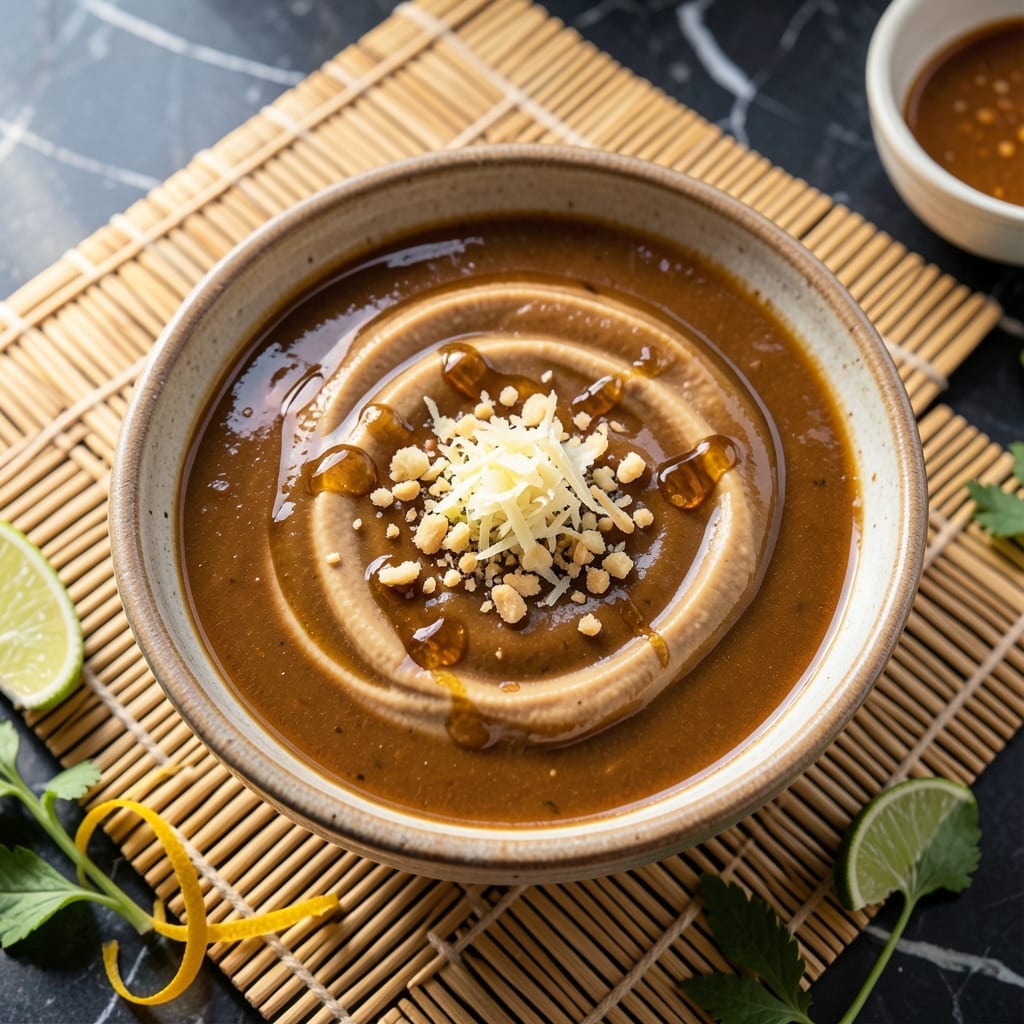
This dipping sauce transforms rice paper rolls from good to unforgettable. I developed this fusion after testing countless combinations in my small Boston kitchen, seeking that perfect balance of nutty, savory, and bright.
The combination of peanut butter, hoisin, and lime creates layers of flavor that complement the fresh, light taste of spring rolls. Each ingredient plays a crucial role—no shortcuts here.
What you get is a smooth, rich sauce with a tangy finish that cuts through the richness. It clings perfectly to every bite, elevating the entire dish without overpowering.
Make it ahead and store in the fridge for up to a week. The flavors only improve with time.
Ingredients for Dipping Sauce for Rice Paper Rolls
Nine ingredients blend into a nutty, tangy sauce that clings to every bite of your rolls.
| Ingredient | Amount | Notes |
|---|---|---|
| Creamy Peanut Butter 🥜 | ½ cup | Unsweetened, no stir-ins |
| Hoisin Sauce 🫕 | 3 tbsp | Look for Koon Chun brand |
| Fresh Lime Juice 🍋 | 2 tbsp | About 1 large lime |
| Soy Sauce 🫕 | 2 tbsp | Low-sodium preferred |
| Rice Vinegar 🍚 | 1 tbsp | Mild white variety |
| Honey 🍯 | 1 tbsp | Or agave for vegan |
| Fresh Garlic 🧄 | 2 cloves | Finely minced |
| Fresh Ginger 🌿 | 1 tsp | Finely grated |
| Sesame Oil 🫒 | ½ tsp | Toasted for depth |
| Red Pepper Flakes 🌶️ | ¼ tsp | Adjust to taste |
The peanut butter is the soul of this sauce—natural, no-sugar-added is key for that pure nutty base. I grab mine from Trader Joe’s (their creamy has just the right texture). Hoisin can vary wildly by brand; Koon Chun hits that perfect sweet-savory note. Fresh lime juice makes all the difference (bottled tastes flat). Don’t skip the ginger—it adds that subtle warmth that ties everything together.
No hoisin? Substitute equal parts soy sauce plus 1 tsp brown sugar. Out of lime? Rice vinegar with a pinch of zest works in a pinch. For nut allergies, sunflower seed butter is a great swap (taste is nearly identical). The honey can be agave or maple syrup—just avoid corn syrup. Want it spicier? Double the red pepper flakes (or add a dash of sriracha).
This keeps 5-7 days in the fridge—flavors deepen with time. Freeze for up to 3 months (though it may separate slightly). Always give it a good stir before using. The garlic and ginger mellow as it sits, so it’s actually better made ahead.
Why You’ll Love This Recipe
- 5-Minute Whip: I just dump all the ingredients in a bowl and stir—no cooking, no fuss. Honestly, it’s ready before the rolls are even prepped.
- Umami Bomb: The hoisin and peanut butter create this rich, nutty depth that’s balanced by the lime’s zing. Between us, I’ve caught people licking the bowl.
- Endless Pairings: It’s not just for rice paper rolls—I drizzle it on noodles, use it for satay, or even as a salad dressing.
- Budget Stretcher: A spoonful goes a long way, and the ingredients last forever in my pantry. I’ll be real: it’s cheaper than store-bought and twice as good.
Step-by-Step Instructions for Peanut-Hoisin Dipping Sauce
This method ensures a perfectly balanced sauce with layers of flavor that complement your rolls beautifully.
Step 1: Prepare the Aromatic Base
Finely mince the 2 cloves fresh garlic and grate the 1 tsp fresh ginger until you have a fine, almost paste-like consistency. I use a microplane for the ginger—it extracts maximum flavor and juice. These aromatics form the fragrant foundation of your sauce.
In a small bowl, combine the minced garlic and grated ginger. This step might seem simple, but proper preparation ensures even distribution throughout the sauce and prevents any large, overpowering bites of raw garlic or ginger.
Step 2: Whisk the Liquid Components
In a medium bowl, add the 3 tbsp hoisin sauce, 2 tbsp soy sauce, 1 tbsp rice vinegar, and 2 tbsp fresh lime juice. The hoisin brings sweetness and depth, while the soy sauce adds umami and saltiness. The rice vinegar and lime juice provide the bright, tangy contrast that makes this sauce special.
Whisk these ingredients together vigorously for 20-30 seconds until fully combined and slightly frothy. You want to see the colors blend into a uniform dark brown liquid with no separation. This step ensures the flavors start to meld before adding the remaining ingredients.
Step 3: Incorporate the Peanut Butter and Sweeteners
Add the 0.5 cup creamy peanut butter to the bowl. I recommend using unsweetened, no-stir varieties for the smoothest texture. The peanut butter will be thick, so use a spatula to press it into the liquid mixture as you whisk.
Next, add the 1 tbsp honey and continue whisking until the mixture becomes completely smooth. This might take 1-2 minutes of vigorous whisking. The honey not only sweetens but helps emulsify the peanut butter into the liquid. Watch for the sauce to transform from separated to a velvety, uniform consistency.
Step 4: Finish with Oil and Spice
Drizzle in the 0.5 tsp sesame oil while whisking continuously. Toasted sesame oil adds a nutty depth that complements the peanut butter beautifully. Then add the 0.25 tsp red pepper flakes for a subtle kick of heat.
Give the sauce one final whisk for 30 seconds to ensure all ingredients are fully incorporated. The finished sauce should be smooth, glossy, and have a pourable consistency. Taste and adjust the seasoning if needed—though with these proportions, you should achieve perfect balance.
Step 5: Rest and Serve
Let the sauce rest for 10 minutes at room temperature before serving. This allows the flavors to fully meld together. The sauce will thicken slightly as it sits, which is ideal for clinging to your rice paper rolls.
Transfer to a serving bowl and use immediately, or store in an airtight container in the refrigerator for up to 5 days. For the best texture, bring chilled sauce to room temperature and whisk in a splash of warm water if it’s too thick.
Pro Tips For Making Dipping Sauce For Rice Paper Rolls
- Warm the Peanut Butter: Microwave the creamy peanut butter for 10-15 seconds before mixing—it blends smoothly with the hoisin and soy without leaving stubborn clumps.
- Zest the Lime First: After juicing the lime, grate a little zest into the sauce; I learned this the hard way—it adds a bright, aromatic kick that juice alone can’t.
- Skip Cold Ingredients: Use room-temperature hoisin and soy sauce, or the oil in the peanut butter will seize up and turn your sauce into a greasy, separated mess.
- Balance with Vinegar: Taste before adding rice vinegar, then add it a teaspoon at a time—it sharpens the flavors but can overpower the nutty richness if you go heavy-handed.
Dietary Considerations for These Flavors
Gluten-Free Option
This sauce is naturally gluten-free if you use tamari instead of soy sauce. I grab San-J tamari from my local Boston market—it’s certified gluten-free and has that perfect umami kick. Always check hoisin labels too, as some brands contain wheat. 💪
Vegan Adaptation
Simply swap the honey for agave nectar or maple syrup. The flavor difference is minimal, and the texture remains identical. I’ve tested both options in my tiny kitchen, and honestly, guests couldn’t tell the difference.
Nut-Free Alternative
For nut allergies, sunflower seed butter works beautifully as a 1:1 substitute for peanut butter. The taste is nearly identical, and the sauce maintains its creamy texture. I discovered this trick after a friend’s nut allergy almost ruined a dinner party.
Lower Sugar Version
Reduce the honey to 1 tsp and add 1 tsp grated ginger for extra zing without sweetness. The hoisin already contributes sugar, so this adjustment balances the flavors. I prefer this version when serving with sweeter fillings.
Spice Adjustments
For heat-sensitive palates, omit the red pepper flakes entirely. For those who love spice, double the amount or add ½ tsp sriracha. I always keep both versions on hand—Boston palates vary wildly!
Allergy Note
This sauce contains peanuts and soy by default. For severe allergies, ensure all ingredients are processed in nut-free facilities. When in doubt, I call the manufacturer directly—better safe than sorry. 💡
Nutrition Facts
Frequently Asked Questions
Can I make this sauce ahead of time?
It keeps well in an airtight container in the fridge for 5-7 days. The flavors actually deepen as it sits.
What if I don’t have hoisin sauce?
Use 2 tbsp soy sauce plus 1 tsp brown sugar as a substitute. The flavor won’t be identical but still delicious.
How do I thin the sauce if it’s too thick?
Whisk in warm water 1 tsp at a time until it reaches your desired consistency. Avoid hot water as it can make the sauce grainy.
Is this sauce spicy?
It has a mild kick from ¼ tsp red pepper flakes. Omit for no heat or add ½ tsp sriracha for extra spice.

- Rice Pudding Recipe With Eggs and Milk: Old-Fashioned Custard-Style Comfort - September 30, 2026
- Rice Noodle Sauce Recipe: Bold Umami Depth for Authentic Stir-Fry - September 30, 2026
- Rice Pilaf Recipe: Fragrant Basmati With Toasted Vermicelli - September 30, 2026