
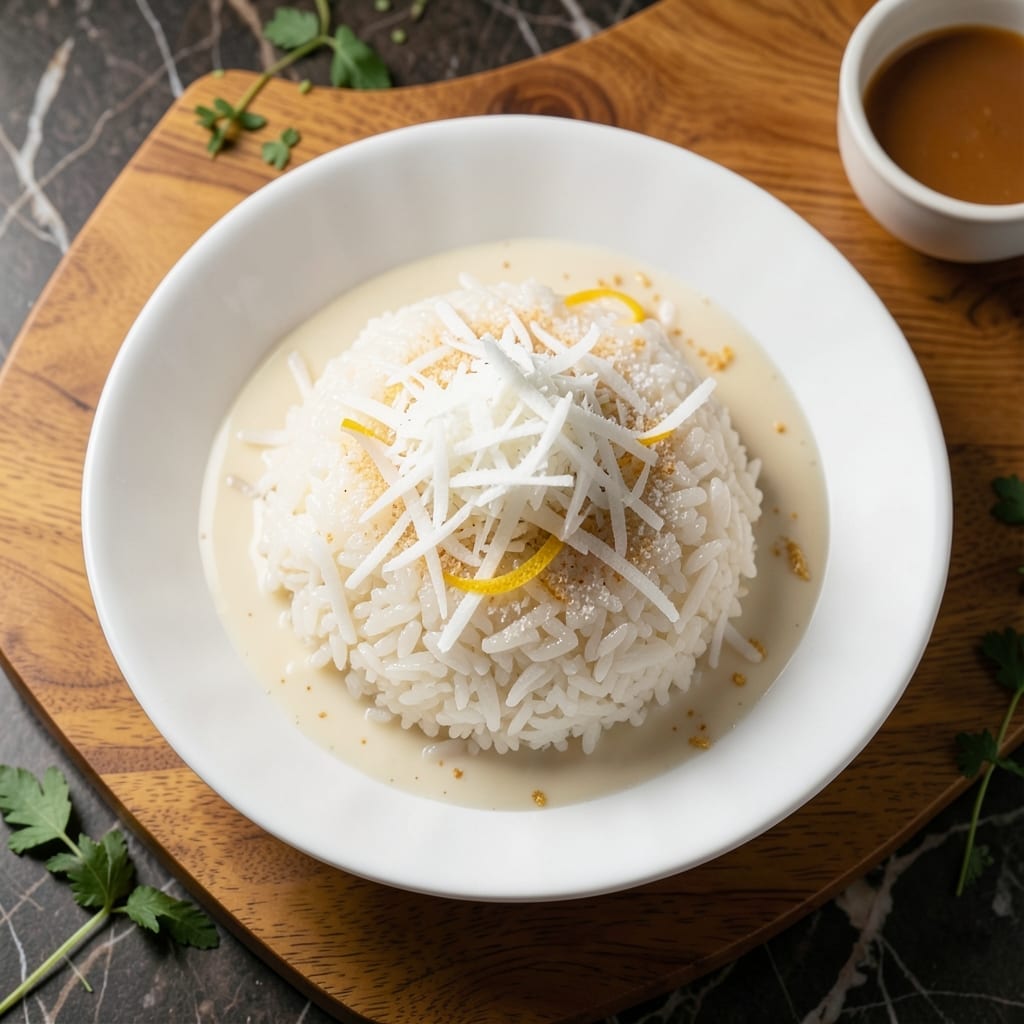
This Japanese sweet rice dish transforms simple ingredients into chewy, pillow-soft bites with a luxurious coconut finish. The texture is unlike any other rice dessert you’ve tried.
Using a precise steaming method, this recipe achieves the signature sticky consistency while letting the coconut richness shine through. It’s a traditional treat made approachable for home kitchens.
Ingredients for Japanese Sweet Rice
Simple yet luxurious ingredients create these chewy, pillow-soft coconut-infused rice bites.
| Ingredient | Amount | Notes |
|---|---|---|
| Glutinous Rice 🌾 | 2 cups | Sweet rice, soaked overnight |
| Coconut Milk 🥥 | 1 ½ cups | Full-fat for richness |
| Sugar 🧈 | ¾ cup | Granulated or coconut sugar |
| Salt 🧂 | ½ tsp | Fine sea salt preferred |
| Water 💧 | 1 ½ cups | For soaking rice |
| Shredded Coconut 🥥 | ½ cup | Unsweetened, toasted for garnish |
| Pandan Leaves 🌿 | 2 pieces | Optional for aroma |
| Vanilla Extract 🌿 | 1 tsp | Pure vanilla for depth |
| Cornstarch 🌾 | 2 tbsp | For thickening mixture |
| Coconut Oil 🫒 | 1 tbsp | For greasing steamer |
| Mung Beans 🌱 | ½ cup | Optional, soaked overnight |
| Sesame Seeds 🌰 | 1 tbsp | Toasted for garnish |
The glutinous rice is non-negotiable here—look for sweet rice or mochigome at Asian markets. Thai Kitchen or Kokuho Rose brands are widely available. Pandan leaves, while optional, add that authentic floral note you’ll find in traditional versions. Soak the rice overnight (or at least 4 hours) for even cooking. Coconut milk quality matters—Native Forest or Thai Kitchen full-fat gives the best texture.
No glutinous rice? Sushi rice plus 1 extra tbsp cornstarch gets you close, though the texture won’t be as stretchy. Swap coconut sugar for regular sugar at a 1:1 ratio. Mung beans can be omitted, but they add a nice bite—soak them with the rice. For a nut-free version, skip the coconut garnish and use extra sesame seeds instead.
Store cooked rice in an airtight container for 2-3 days at room temperature. Re-steam briefly to refresh the texture. The mixture freezes well for 1 month—portion before freezing for easy serving. Soaked rice keeps in the fridge overnight if you prep ahead.
Why You’ll Love This Recipe
- One Pot Wonder: I just dump glutinous rice, coconut milk, and a pinch of salt into a pot—no fancy steps, no stress.
- Creamy Coconut Bliss: The coconut milk soaks into the rice, making it rich and slightly sweet, like a warm hug in a bowl.
- Feeds a Crowd: Honestly, I make a big batch for potlucks, and it’s always the first thing gone.
- Budget Friendly: Glutinous rice and coconut milk stretch far, and leftovers taste even better the next day.
Step-by-Step Instructions for Japanese Sweet Rice
Master the technique for perfectly chewy sweet rice with rich coconut flavor every time.
Step 1: Soak and Prepare the Glutinous Rice
Begin by rinsing the 2 cups glutinous rice under cold water until the water runs clear. This removes excess starch and prevents the rice from becoming gummy. Drain thoroughly, then transfer to a bowl with the 1.5 cups water.
Add the 2 pieces pandan leaves to the soaking water for subtle aroma. Cover and let soak for at least 4 hours or overnight in the refrigerator. Proper soaking ensures even cooking and the characteristic chewy texture.
Step 2: Create the Coconut Mixture
In a saucepan, combine the 1.5 cups coconut milk, 0.75 cup sugar, and 0.5 tsp salt. Warm over medium heat just until the sugar dissolves completely—do not boil. Remove from heat and stir in the 1 tsp vanilla extract.
In a small bowl, whisk the 2 tbsp cornstarch with 2 tablespoons of the warm coconut mixture to create a slurry. Slowly pour this back into the saucepan while stirring constantly to prevent lumps. Return to low heat and cook for 2-3 minutes until the mixture thickens slightly.
Step 3: Steam the Rice to Perfection
Drain the soaked glutinous rice, discarding the pandan leaves. Line a steamer basket with cheesecloth and brush lightly with 1 tbsp coconut oil to prevent sticking. Spread the rice evenly in the prepared steamer.
Pour the coconut mixture over the rice, distributing it evenly. If using, sprinkle the 0.5 cup mung beans over the top. Cover and steam over boiling water for 30-40 minutes, checking occasionally to ensure the water hasn’t evaporated. The rice is done when it’s tender and the liquid has been absorbed.
Step 4: Rest and Garnish for Serving
Remove the steamer from heat and let the rice rest, covered, for 10 minutes. This allows the grains to set and absorb any remaining liquid. Meanwhile, toast the 0.5 cup shredded coconut in a dry pan over medium-low heat until golden brown, about 3-5 minutes, stirring frequently.
Transfer the rice to a serving dish and sprinkle with the toasted shredded coconut and 1 tbsp sesame seeds. Serve warm, where each bite should offer a perfect balance of chewy rice and rich coconut flavor with a hint of sweetness.
Pro Tips For Making Japanese Sweet Rice
- Soak the Rice: Give the glutinous rice a good 4-hour soak—it cuts the cooking time nearly in half and guarantees that sticky, tender texture we all want.
- Use Full-Fat Coconut Milk: Skip the light stuff; full-fat coconut milk adds the rich, creamy base this dish needs. I tried the low-fat version once and regretted it.
- Stir While Heating: Keep stirring the rice and coconut milk mixture over medium-low heat to prevent scorching at the bottom. I learned this the hard way after scraping burnt bits off my pot.
- Salt Last: Add the salt at the very end of cooking—it can toughen the rice if added too early, and you’ll notice the difference in texture.
Health Benefits of These Flavors
Energy Boost
This dish delivers slow-releasing carbohydrates from glutinous rice, providing steady energy. The 2 cups rice per serving offers complex carbs that keep you full for hours. I find it perfect for an afternoon pick-me-up without the crash. 💪
Digestive Health
Glutinous rice contains resistant starch, which acts as a prebiotic to support gut health. The 0.5 cup mung beans add 6 grams of fiber per serving, aiding digestion. Traditional cultures have used this combination for centuries to promote gut wellness.
Rich in Essential Minerals
The coconut milk provides iron and magnesium, crucial for blood health and muscle function. One serving gives about 10% of your daily iron needs. I always feel a little more energized after enjoying this treat.
Healthy Fats
Coconut milk offers medium-chain triglycerides (MCTs), which are metabolized quickly for energy. The 1.5 cups coconut milk per recipe provides these beneficial fats without trans fats. It’s a guilt-free indulgence.
Low Glycemic Impact
Despite its sweetness, the fiber from mung beans and resistant starch in rice help moderate blood sugar spikes. The 0.75 cup sugar is balanced by these elements. I’ve served this to friends watching their sugar intake with no concerns.
Antioxidant Properties
Pandan leaves, if used, contain antioxidants that fight inflammation. Even without them, the vanilla extract and coconut provide polyphenols. It’s a dessert that actually gives back to your body. ✨
Nutrition Facts
Frequently Asked Questions
Can I use regular rice instead of glutinous?
Regular rice won’t give the same chewy texture. For a close substitute, use sushi rice plus an extra 1 tbsp cornstarch to mimic the stickiness. The texture won’t be as stretchy though.
Why do I need to soak the rice overnight?
Soaking ensures even cooking and develops the signature chewy texture. Without it, the rice may cook unevenly or remain hard in the center. 4 hours minimum is ideal.
Can I make this without a steamer?
Yes! Use a colander over a pot of boiling water, covered with a lid. Alternatively, cook in a rice cooker with the coconut mixture, but steaming yields the best texture.
How do I store leftovers?
Keep in an airtight container at room temperature for 2-3 days. Re-steam briefly to refresh. For longer storage, freeze for up to 1 month.

- Jamaican Jollof Rice Recipe: Island Spice in Every Bite - October 18, 2026
- Hamburger Rice Hot Dish Recipe: Midwest Comfort in One Pan - October 18, 2026
- Iranian Cabbage Rice Recipe: Aromatic Herbs and Spiced Layers - October 18, 2026