
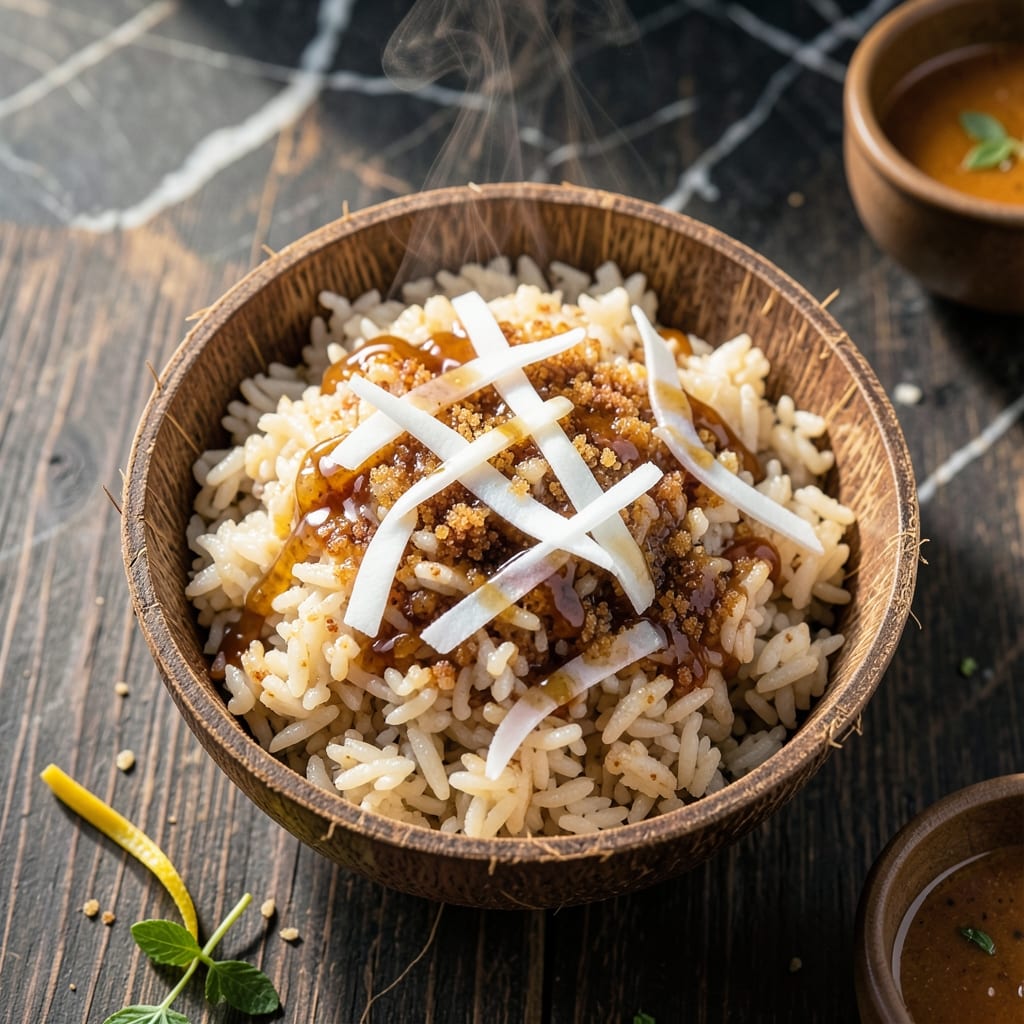
This traditional Filipino dessert transforms simple ingredients into a rich, sticky treat that’s beloved across generations. Glutinous rice meets creamy coconut milk for a texture that’s both chewy and tender.
The secret lies in slow cooking the rice in coconut milk until every grain absorbs the sweet, fragrant liquid. A pinch of salt balances the sweetness, creating layers of flavor in each bite.
You’ll end up with a dish that’s perfect for celebrations or everyday indulgence—warm, comforting, and deeply satisfying. The coconut aroma alone makes it irresistible.
Serve warm or at room temperature for a taste of authentic Filipino tradition. Here’s how to make it at home.
Ingredients for Filipino Sweet Rice
A handful of pantry staples creates this authentic Filipino dessert with rich coconut flavor.
| Ingredient | Amount | Notes |
|---|---|---|
| Glutinous Rice 🌾 | 2 cups | Sweet or sticky rice variety |
| Coconut Milk 🥥 | 2 cups | Full-fat canned for creaminess |
| Brown Sugar 🍚 | ¾ cup | Packed, light or dark |
| Granulated Sugar 🍬 | ¼ cup | For additional sweetness balance |
| Salt 🧂 | ½ tsp | Fine sea salt preferred |
| Water 💧 | 1 ½ cups | For initial rice soaking |
| Pandan Leaves 🌿 | 2 pieces | Optional, for authentic aroma |
| Vanilla Extract 🌿 | 1 tsp | Pure extract for depth |
| Coconut Oil 🥥 | 1 tbsp | For greasing the pan |
| Toasted Coconut Flakes 🥥 | ¼ cup | For garnish and texture |
The glutinous rice is non-negotiable here. Look for Thai sticky rice or sweet rice at Asian markets or the international aisle—regular long-grain won’t give you that signature chew. Full-fat coconut milk (like Thai Kitchen or Chaokoh brands) is essential for the creamy texture. The brown sugar adds depth, but coconut sugar works too if you want a more traditional touch.
Out of pandan leaves? A drop of pandan extract (available at Filipino grocers) does the trick. No brown sugar? Coconut sugar or white sugar in a pinch, though the flavor profile shifts slightly. The toasted coconut flakes are optional but highly recommended—they add a perfect crunch. If you can’t find glutinous rice, sushi rice is the closest substitute, though the texture will be slightly different.
Store uncooked glutinous rice in an airtight container for up to 1 year. Once made, this keeps 3-4 days at room temperature, though it’s best served warm. The coconut milk can be frozen for 1 month if unopened (trust me, it’s worth keeping on hand).
Why You’ll Love This Recipe
- I’ll be real: it tastes even better the next day when the flavors really sink in.
- One Pot Wonder: I just dump everything in, let the glutinous rice soak up the coconut milk, and walk away.
- Rich Coconut Bliss: The combination of brown sugar and coconut milk gives it that deep, caramelized sweetness with a creamy finish.
- Feeds a Crowd: Honestly, it’s my go-to for potlucks—everyone loves the sticky, sweet texture, and it stretches easily.
Step-by-Step Instructions for Filipino Sweet Rice
Master the technique for perfectly sticky, coconut-infused sweet rice with these precise steps.
Step 1: Soak the Glutinous Rice
Rinse the 2 cups glutinous rice under cold water until the water runs clear, removing excess starch. This prevents a gummy texture in the final dish. Transfer the rice to a large bowl and cover with the 1.5 cups water.
Add the 2 pieces pandan leaves to the water for an authentic aromatic infusion. Let the rice soak for at least 4 hours or preferably overnight. The grains should double in size and become slightly translucent. This soaking step ensures even cooking and proper absorption of the coconut liquid later.
Step 2: Prepare the Coconut Mixture
In a saucepan, combine the 2 cups coconut milk, 0.75 cup brown sugar, 0.25 cup granulated sugar, and 0.5 tsp salt. Heat over medium heat while stirring constantly until the sugars fully dissolve and the mixture just begins to simmer.
Remove from heat and stir in the 1 tsp vanilla extract. This creates the rich, sweet coconut base that will infuse the rice during cooking. The mixture should be smooth with no visible sugar granules. Set aside to cool slightly while you prepare the rice for steaming.
Step 3: Steam the Rice with Coconut Mixture
Drain the soaked glutinous rice thoroughly, discarding the soaking water and pandan leaves. Transfer the rice to a heatproof dish that fits inside your steamer. Pour the warm coconut mixture evenly over the rice, stirring gently to distribute the liquid.
Place the dish in a steamer over boiling water, cover tightly, and steam for 45-50 minutes. Check occasionally to ensure there’s enough water in the steamer. The rice is done when all the liquid has been absorbed and the grains are tender but still maintain their shape.
Step 4: Finish and Serve
Once steamed, let the rice sit covered for 10 minutes to allow the flavors to meld. The texture should be sticky and slightly chewy, with a glossy sheen from the coconut milk. Gently fold the rice to distribute any remaining liquid at the bottom of the dish.
To serve, grease a shallow dish with the 1 tbsp coconut oil and press the sweet rice into it, creating an even layer. Sprinkle the 0.25 cup toasted coconut flakes evenly over the top for added texture and visual appeal. Cut into squares or scoop into individual portions while still warm.
Pro Tips For Making Filipino Sweet Rice
- Soak the Rice: Give the glutinous rice a good 4-hour soak in cold water—this cuts the cooking time in half and guarantees even tenderness.
- Simmer Low and Slow: Keep the heat at a gentle simmer once the coconut milk goes in; boiling it hard makes the sugars separate and the rice turn gluey.
- Use Full-Fat Coconut Milk: I learned this the hard way—light coconut milk just doesn’t give that rich, creamy texture that makes this dish special.
- Stir in the End: Skip stirring while it cooks, but give it one good mix after turning off the heat to distribute the sugars and prevent a sticky bottom layer.
Serving Suggestions for Leftovers
Traditional Presentation
For an authentic touch, press the sweet rice into a greased 9×9-inch baking dish and let it cool slightly before cutting into diamond shapes. This method creates the classic look served at Filipino fiestas. I use a plastic knife for cleaner cuts.
Garnish Ideas
Beyond toasted coconut, try sprinkling with sesame seeds or crushed peanuts for extra crunch. A drizzle of latik (coconut curds) adds rich, nutty flavor. Fresh mango slices on the side provide a refreshing contrast to the sticky sweetness. 💛
Serving Temperature
This dessert tastes best warm or at room temperature. If serving later, reheat in the microwave with a splash of coconut milk for 20-30 seconds to restore moisture. The texture becomes more cohesive as it sits.
Accompaniments
Pair with Filipino hot chocolate (made with tablea cocoa tablets) for a cozy treat. Strong black coffee also complements the sweetness perfectly. For contrast, serve with salty snacks like chichirya (Filipino-style crackers).
Portioning Tips
Use small banana leaves as natural serving cups for individual portions at gatherings. Or scoop into coconut shells for a rustic presentation. These methods enhance the tropical vibe of the dish. ✨
Make It Festive
For special occasions, shape the rice into small balls and roll in toasted coconut or crushed pinipig (toasted young glutinous rice). These bite-sized versions are perfect for potlucks and celebrations.
Nutrition Facts
Frequently Asked Questions
Can I use regular rice instead of glutinous rice?
No, regular rice won’t give the same sticky texture. Glutinous rice is essential for that signature chewy consistency. Sushi rice is the closest substitute, but the result won’t be identical.
How do I know when the rice is fully cooked?
The rice is done when all the coconut liquid is absorbed and the grains are tender but still hold their shape. This usually takes 45-50 minutes of steaming.
Can I make this ahead of time?
Yes! It keeps well at room temperature for 3-4 days. Reheat with a splash of coconut milk to restore moisture and serve warm for the best texture.
What if I don’t have pandan leaves?
Use a drop of pandan extract for a similar aroma. If unavailable, the dish will still taste great—just less aromatic. Vanilla extract adds depth but isn’t a direct substitute.

- Fried Rice Mix Recipe: Customizable Pantry Staple for Quick Meals - October 6, 2026
- Fruit Loop Rice Crispy Treats Recipe: Colorful Crunch With Marshmallow Magic - October 6, 2026
- Erewhon Rice Balls Recipe: Copycat Crispy and Creamy Bites - October 6, 2026